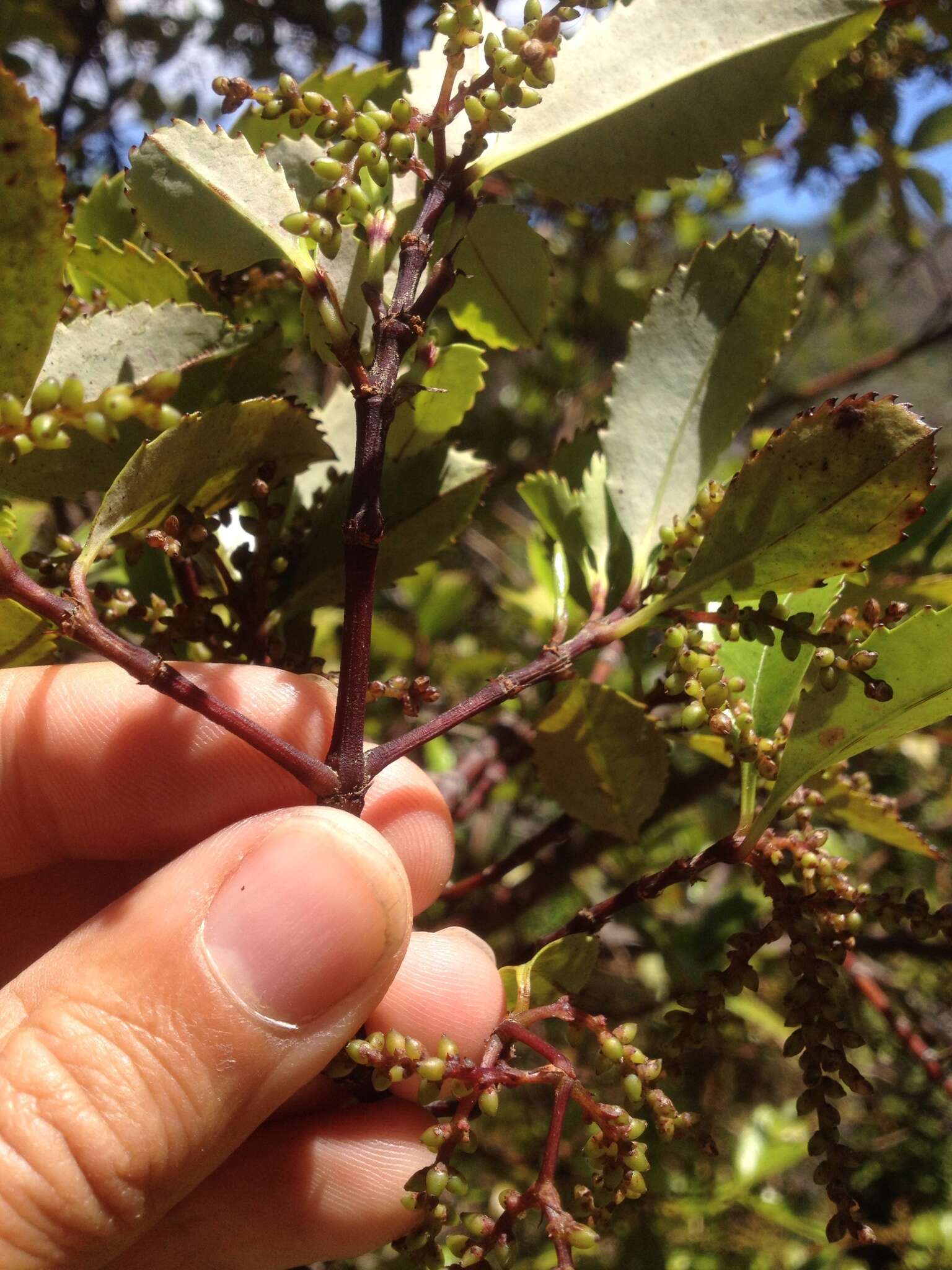
Encyclopedia of Life · EOL (see source)
Ascarina
Sign in to saveAscarina is an ancient, woody, angiosperm genus. It is a distinct genus of the family Chloranthaceae, consisting of less than twenty species, found in the Australian region, the Pacific Islands and Madagascar. They can grow up to six metres tall and have a spread of approximately three metres. Ascarina are usually tropical cloud forest species which need high humidity to thrive, and are vulnerable to both frost and drought. There has been discussion and research on whether or not this genus and its family are primitive, or have become reduced over time. Another controversial topic for the genu
Species
GENUS
- KingdomPlantae
- PhylumTracheophyta
- ClassMagnoliopsida
- OrderChloranthales
- FamilyChloranthaceae
蛔形蘭是金粟蘭科中包括略少於20個物種的小型樹。蛔形蘭通常生長在熱帶雨林中,需要高度的濕度和規律的降雨。蛔形蘭此一名稱是因為其花藥看起來和蛔蟲相似。之中的許多物種是雌雄異株的,各株植物上都只有雄性或雌性單一個性別而已。但 Ascarina lucida 除外,是本屬中唯一雌雄同株的物種。 此屬基本的染色體數為13,不過有些物種的為14。其染色體的形態和金粟蘭屬的相似。
via GBIF · Kew POWO
Museum specimens
- Specimen records
- 110
- With media
- 96
- Family
- Chloranthaceae
- Collections
- US, A, VT, UTEP, BRIT, RSA
- Recorded in
- Papua New Guinea, Indonesia, Philippines, New Caledonia, Fiji
Wikidata facts
- Instance of
- taxon
- Parent taxon
- Chloranthaceae
- Image
- Ascarina polystachya.jpg
Show 5 more facts
- Commons category
- Ascarina
- taxon name
- Ascarina
- taxon rank
- genus
- topic's main category
- Category:Ascarina
Sources (1)
via Wikidata · CC0
~7 min read
Encyclopedic overview
8 sectionsContents
- Morphology
- Ecology
- Species
- Research
- Flower morphology and reduction
- ''Clavatipollenites hughesii''
- References
- External links
Ascarina is an ancient, woody, angiosperm genus. It is a distinct genus of the family Chloranthaceae, consisting of less than twenty species, found in the Australian region, the Pacific Islands and Madagascar. They can grow up to six metres tall and have a spread of approximately three metres. Ascarina are usually tropical cloud forest species which need high humidity to thrive, and are vulnerable to both frost and drought. There has been discussion and research on whether or not this genus and its family are primitive, or have become reduced over time. Another controversial topic for the genus is its relation to the Clavatipollenites, a fossilized pollen.
== Morphology == Ascarina plants are divided into three major species groups, based on the number of stamens per male flower, number of supporting flower bracts and geographic location. The flowers of the Ascarina species are unisexual, containing one to five stamens in male flowers, and a single carpel in females. The exception to this is A. lucida, which can have monoecious flowers. Ascarina plants differ from the other members of the Chloranthaceae family in that male flowers can have more than one stamen, indicative of a reduction from a more advanced form. Ascarina flowers are anemophilous, meaning they pollinate by wind rather than by symbiosis with insects. That trait is an indication of the primitive nature of the plant.
Excerpted from Wikipedia’s “Ascarina” article, available under the CC BY-SA 4.0 licence.
Gallery (3)
Available in 14 languages
- Español
- 中文
- Português
- العربية
- Bahasa Indonesia
- Cebuano
- Croatian
- Egyptian Arabic
- Nederlands
- Polski
- Svenska
- Ukrainian
- Waray
via Wikidata sitelinks · CC0