Encyclopedia of Life · EOL (see source)
Aspalathus
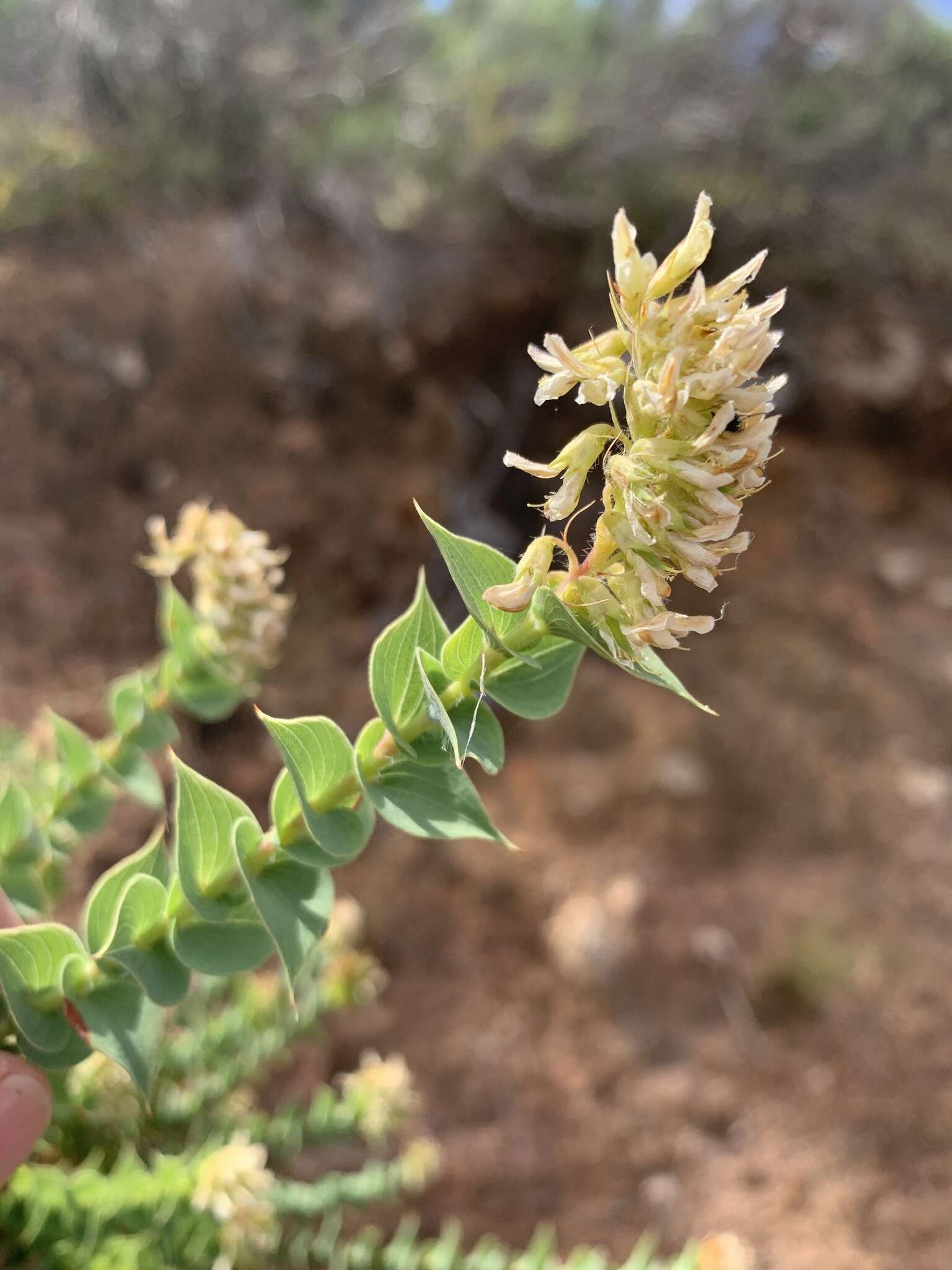
Sign in to saveAspalathus is a genus of flowering plants in the family Fabaceae. The yellow flowers and spiny habit of some species have suggested a resemblance to Ulex europaeus, the thorny "English gorse" Accordingly, "Cape Gorse" has been proposed as a common name although the resemblance is largely superficial; for instance, gorse is thorny, whereas Aspalathus species are variously spiny or unarmed. The genus belongs to the subfamily Faboideae. There are over 270 species, mainly endemic to southwestern fynbos regions in South Africa, with over fifty occurring on the Cape Peninsula alone. The species Aspa
Species
GENUS
- KingdomPlantae
- PhylumTracheophyta
- ClassMagnoliopsida
- OrderFabales
- FamilyFabaceae
Aspalat, jasplin, czerwonokrzew (Aspalathus L.) – rodzaj roślin należący do rodziny bobowatych. Występuje w stanie dzikim w południowej Afryce, liczy 200-250 gatunków. Z ziela aspalatu prostego wytwarza się herbatę rooibos.
via GBIF · Kew POWO
Museum specimens
- Specimen records
- 1,249
- With media
- 511
- Family
- Fabaceae
- Collections
- NY, A, RSA, DAV, GH
- Recorded in
- South Africa
Research
339 papers- Rooibos (Aspalathus linearis) influence on health and ovarian functions.Journal of animal physiology and animal nutrition · 2022
- Aspalathus linearis (Rooibos) - a functional food targeting cardiovascular disease.Food & function · 2018
- Pharmacological activity of Aspalathus linearis extracts: pre-clinical research in view of prospective neuroprotection.Nutritional neuroscience · 2023
- The toxic contaminants of Aspalathus linearis plant material as well as herb-drug interactions may constitute the health risk factors in daily rooibos tea consumers.International journal of environmental health research · 2023
- Aspalathus linearis (Rooibos) Targets Adipocytes and Obesity-Associated Inflammation.Nutrients · 2023
via PubMed
Wikidata facts
- Instance of
- taxon
- Parent taxon
- Crotalarieae
- Image
- Rooibos (Aspalathus linearis).jpg
Show 7 more facts
- Commons category
- Aspalathus
- taxon name
- Aspalathus
- taxon rank
- genus
- topic's main category
- Category:Aspalathus
- taxon common name
- 松雀花属
- described by source
- Brockhaus and Efron Encyclopedic Dictionary
Sources (2)
via Wikidata · CC0
~13 min read
Encyclopedic overview
2 sectionsContents
- Species
- References
Aspalathus is a genus of flowering plants in the family Fabaceae. The yellow flowers and spiny habit of some species have suggested a resemblance to Ulex europaeus, the thorny "English gorse" Accordingly, "Cape Gorse" has been proposed as a common name although the resemblance is largely superficial; for instance, gorse is thorny, whereas Aspalathus species are variously spiny or unarmed. The genus belongs to the subfamily Faboideae. There are over 270 species, mainly endemic to southwestern fynbos regions in South Africa, with over fifty occurring on the Cape Peninsula alone. The species Aspalathus linearis is commercially important, being farmed as the source of Rooibos tea.
Aspalathus species generally are shrubs or sometimes shrublets. They are normally bushy, however some species can grow sprawling or upright with branches that stand on their own. The flowers of most species are plentiful in season, a rich, showy yellow very common in the Western Cape mountains in particular. The flowers of some yellow-flowering species (such as Aspalathus cordata) turn bright red as they fade. Some species, such as Aspalathus forbesii have white or cream flowers, and others, such as Aspalathus costulata and Aspalathus cordata have flowers in various shades ranging from pink to pale violet, whereas Aspalathus nigra commonly has slate-blue flowers.
Excerpted from Wikipedia’s “Aspalathus” article, available under the CC BY-SA 4.0 licence.