(c) Spark, all rights reserved, uploaded by Spark
Ateuchosaurus
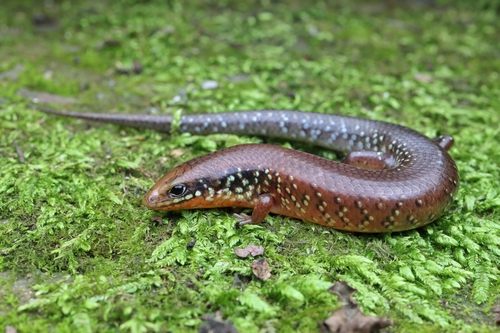
Sign in to saveAteuchosaurus is a genus of skinks, lizards in the family Scincidae. The genus contains only two species which are indigenous to East Asia and Southeast Asia.
Species
Chinese Ateuchosaurus
GENUS
- KingdomAnimalia
- PhylumChordata
- ClassSquamata
- FamilyScincidae
Multimedia w Wikimedia Commons Ateuchosaurus – rodzaj jaszczurki z podrodziny Scincinae w rodzinie scynkowatych (Scincidae). Zasięg występowania Rodzaj obejmuje gatunki występujące w Chinach, Wietnamie i Japonii[2]. Systematyka Etymologia Ateuchosaurus: gr. ἀτευχης ateukhēs „nieuzbrojony”[3]; σαυρος sauros „jaszczurka”[4]. Podział systematyczny Do rodzaju należą następujące gatunki[2]: Ateuchosaurus chinensis Ateuchosaurus pellopleurus Przypisy ↑ J.E. Gray: Catalogue of the Specimens of lizards in the collection of the British museum. London: The Trustees, 1845, s. 107. (ang.) ↑ a b P. Uetz & J. Hallermann: Genus: Ateuchosaurus (ang.). The Reptile Database. [dostęp 2019-02-01]. ↑ Jaeger 1944 ↓, s. 25. ↑ Jaeger 1944 ↓, s. 203. Bibliografia E.C. Jaeger: Source-book of biological names and terms. Springfield: Charles C. Thomas, 1944, s. 1–256. (ang.)
via GBIF
Wikidata facts
- Instance of
- taxon
- Parent taxon
- Lygosominae
- Image
- Ateuchosaurus chinensis.jpg
Show 4 more facts
- Commons category
- Ateuchosaurus
- taxon name
- Ateuchosaurus
- taxon rank
- genus
- topic's main category
- Category:Ateuchosaurus
Sources (1)
via Wikidata · CC0
~2 min read
Encyclopedic overview
4 sectionsContents
- Taxonomy
- Species
- References
- Further reading
Ateuchosaurus is a genus of skinks, lizards in the family Scincidae. The genus contains only two species which are indigenous to East Asia and Southeast Asia.
==Taxonomy== The genus Ateuchosaurus is usually placed in the subfamily Scincinae. This group seems to be paraphyletic however, and the present genus is apparently not closely related to most or all of them. Different molecular studies find Ateuchosarus to instead to be more closely related either to Acontias or to lygosomine skinks, and it is therefore sometimes considered to represent a distinct family or subfamily.
Excerpted from Wikipedia’s “Ateuchosaurus” article, available under the CC BY-SA 4.0 licence.