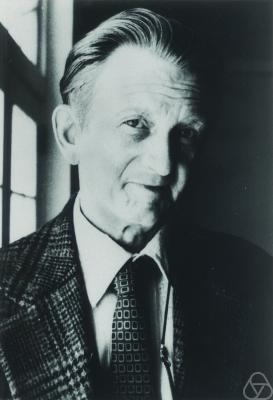
File:Atle_Selberg.jpg · Wikimedia Commons · See Wikimedia Commons
Atle Selberg
Sign in to saveNorwegian mathematician (1917–2007)
OverviewAI-generated
Atle Selberg was a Norwegian-American mathematician and university teacher specializing in number theory. Born in Langesund in 1917, he was educated at the University of Oslo. His professional career included positions at Syracuse University and the Institute for Advanced Study, where he served as a professor emeritus. He was influenced by Srinivasa Ramanujan and held an Erdős number of 2.
Selberg is known for notable works including the Selberg trace formula, Selberg zeta function, Selberg class, and Selberg sieve. He received the Fields medal and the Wolf Prize in Mathematics. He was a member of the Norwegian Academy of Science and Letters, the Royal Swedish Academy of Sciences, the Royal Danish Academy of Sciences and Letters, and the American Academy of Arts and Sciences. He died of natural causes due to heart failure in Princeton in 2007.
Synthesized by Vinony from 24 facts across 2 sources: Wikidata, Vinony collections. Generated from structured data (not the Wikipedia text) and checked against those facts — may still contain errors.
Key facts
- Born
- ( 1917-06-14 ) 14 June 1917, Langesund , Norway
- Died
- 6 August 2007 (2007-08-06) (aged 90), Princeton , New Jersey , United States
- Citizenship
- Norwegian
- Alma mater
- University of Oslo
- Known for
- Critical line theorem , Local rigidity , Parity problem , Weakly symmetric space , Chowla–Selberg formula , Maass–Selberg relations , Rankin–Selberg method , Selberg class , Selberg's conjecture , Selberg's identity , Selberg integral , Selberg trace formula , Selberg zeta function , Selberg sieve
- Spouse s
- Hedvig Liebermann, Betty Frances Compton
- Awards
- Abel Prize (honorary) (2002), Fields Medal (1950), Wolf Prize (1986), Gunnerus Medal (2002)
- Fields
- Mathematics
- Institutions
- Syracuse University Institute for Advanced Study
via Wikipedia infobox
Wikidata facts
- Instance of
- human
- Given name
- Atle
- Gender
- male
- Citizenship
- United States
- Place of birth
- Langesund
- Place of death
- Princeton
- Occupation
- university teacher
- Position held
- professor emeritus
- Educated at
- University of Oslo
- Employer
- Institute for Advanced Study
- Languages spoken
- English language
- Field of work
- number theory
- Image
- Atle Selberg.jpg
Show 10 more facts
- date of birth
- 1917-06-14
- date of death
- 2007-08-06
- Commons category
- Atle Selberg
- Erdős number
- 2
- cause of death
- heart failure
- influenced by
- Srinivasa Ramanujan
- manner of death
- natural causes
- archives at
- Institute for Advanced Study
- maintained by WikiProject
- WikiProject Mathematics
via Wikidata · CC0
~9 min read
Encyclopedic overview
Atle Selberg (14 June 1917 – 6 August 2007) was a Norwegian mathematician known for his work in analytic number theory and the theory of automorphic forms, and in particular for bringing them into relation with spectral theory. He was awarded the Fields Medal in 1950 and an honorary Abel Prize in 2002.
Early years
Excerpted from Wikipedia’s “Atle Selberg” article, available under the CC BY-SA 4.0 licence.