
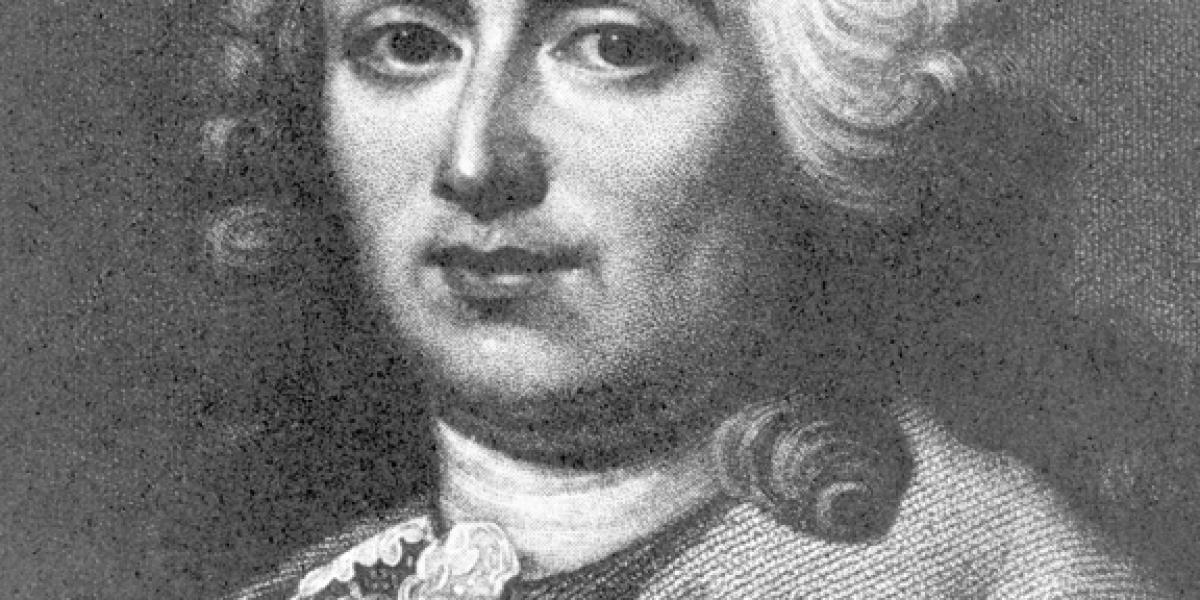
File:1Bawerk.png · Wikimedia Commons · See Wikimedia Commons
Austrian school
Sign in to saveAlso known as Austrian economics, Austrian school of economics
school of economic thought that advocates strict adherence to methodological individualism rather than focusing on aggregate variables, equilibrium analysis and societal groups
The Austrian school is an approach to economics that focuses on understanding how individuals make decisions rather than analyzing broad economic trends or group behavior. It matters because it offers a different perspective on how economies actually work, emphasizing individual choice over the statistical patterns that most mainstream economists study.
AI-generated from the Wikipedia summary — may contain errors.
Described at
What is Austrian Economics? | Mises Institute
The story of the Austrian School begins in the fifteenth century, when the followers of St. Thomas Aquinas, writing and teaching at the University of Salamanca
mises.org →Get Your July Rothbard Giveaway Book! The Origins of the Federal Reserve The story of the Austrian School begins in the fifteenth century, when the followers of St. Thomas Aquinas, writing and teaching at the University of Salamanca in Spain, sought to explain the full range of human action and social organization. These Late Scholastics observed the existence of economic law, inexorable forces of cause and effect that operate very much as other natural laws. Over the course of several generations, they discovered and explained the laws of supply and demand, the cause of inflation, the operation of foreign exchange rates, and the subjective nature of economic value—all reasons Joseph Schumpeter celebrated them as the first real economists. The Late Scholastics were advocates of property rights and the freedom to contract and trade. They celebrated the contribution of business to society, while doggedly opposing taxes, price controls, and regulations that inhibited enterprise. As moral theologians, they urged governments to obey ethical strictures against theft and murder. And they lived up to Ludwig von Mises’s rule: the first job of an economist is to tell governments what they cannot do. Cantillon was followed by Anne Robert Jacques Turgot, the pro-market French aristocrat and finance minister under the ancien regime . His economic writings were few but profound. His paper “Value and Money” spelled out the origins of money, and the nature of economic choice: that it reflects the subjective rankings of an individual’s preferences. Turgot solved the famous diamond-water paradox that baffled later classical economists, articulated the law of diminishing returns, and criticized usury laws (a sticking point with the Late Scholastics). He favored a classical liberal approach to economic policy, recommending a repeal of all special privileges granted to government-connected industries. Turgot was the intellectual father of a long line of great French economists of the eighteenth and nineteenth century, most prominently Jean Baptiste Say and Claude-Frederic Bastiat. Say was the first economist to think deeply about economic method. He realized that economics is not about the amassing of data, but rather about the verbal elucidation of universal facts (for example, wants are unlimited, means are scarce) and their logical implications. Say discovered the productivity theory of resource pricing, the role of capital in the division of labor, and “Say’s Law”: there can never be sustained “overproduction” or “underconsumption” on the free market if prices are allowed to adjust. He was a defender of laissez-faire and the industrial revolution, as was Bastiat. As a free-market journalist, Bastiat also argued that nonmaterial services are subject to the same economic laws as material goods. In one of his many economic allegories, Bastiat spelled out the “broken-window fallacy” later popularized by Henry Hazlitt. Despite the theoretical sophistication of this developing pre-Austrian tradition, the British school of the late eighteenth and early nineteenth centuries won the day, mostly for political reasons. This British tradition (based on the objective-cost and labor-productivity theory of value) ultimately led to the rise of the Marxist doctrine of capitalist exploitation. The dominant British tradition received its first serious challenge in many years when Carl Menger’s Principles of Economics was published in 1871. Menger, the founder of the Austrian School proper, resurrected the Scholastic-French approach to economics, and put it on firmer ground. Together with the contemporaneous writings of Leon Walras and Stanley Jevons, Menger spelled out the subjective basis of economic value, and fully explained, for the first time, the theory of marginal utility (the greater the number of units of a good that an individual possesses, the less he will value any given unit). In addition, Menger showed how money originates in a free market
Excerpt from a page describing this subject · 20,943 chars · not written by Vinony
Wikidata facts
- Instance of
- school of economic thought
- Part of
- heterodox economics
- Has part
- Ludwig von Mises
Show 8 more facts
- Commons category
- Austrian School
- topic's main category
- Category:Austrian School
- described at URL
- www.exploring-economics.org/fr/orientation/austrian-economics
- topic has template
- Template:Austrian School economists
- facet of
- free market
- different from
- economics
- social media followers
- 21275
via Wikidata · CC0
~40 min read
Encyclopedic overview
The Austrian school of economics is a school of economic thought that advocates strict adherence to methodological individualism, the concept that social phenomena result primarily from the motivations and actions of individuals along with their self-interest. Austrian-school theorists hold that economic theory should be exclusively derived from basic axioms of human action, known as praxeology, rather than primarily from statistical analysis.
The Austrian school originated in 1871 in Vienna with the work of Carl Menger, Eugen von Böhm-Bawerk, Friedrich von Wieser, and others. It was methodologically opposed to the Historical school, in a dispute known as Methodenstreit, or methodology quarrel. Current-day economists working in this tradition are located in many countries, but their work is still referred to as Austrian economics. Among the theoretical contributions of the early years of the Austrian school are the subjective theory of value, marginalism in price theory and the formulation of the economic calculation problem.
Excerpted from Wikipedia’s “Austrian school” article, available under the CC BY-SA 4.0 licence.
Gallery (11)
Available in 59 languages
- Español
- Français
- Deutsch
- 中文
- 日本語
- Русский
- Português
- Italiano
- العربية
- Albanian
- Armenian
- Asturian
- azb
- Azerbaijani
- Bahasa Indonesia
- Bangla
- Basque
- be_x_old
Show 40 more
- Belarusian
- Bosnian
- Bulgarian
- Catalan
- Central Kurdish
- Croatian
- Czech
- Danish
- Esperanto
- Estonian
- Faroese
- Filipino
- Finnish
- Galician
- Georgian
- Greek
- Hebrew
- Hungarian
- Icelandic
- Kyrgyz
- Latvian
- Lithuanian
- Lombard
- Nederlands
- Norwegian
- Pashto
- Polski
- Romanian
- Serbian
- simple
- Slovak
- Svenska
- Swahili
- Tiếng Việt
- Türkçe
- Ukrainian
- Uzbek
- zh_min_nan
- فارسی
- 한국어
via Wikidata sitelinks · CC0