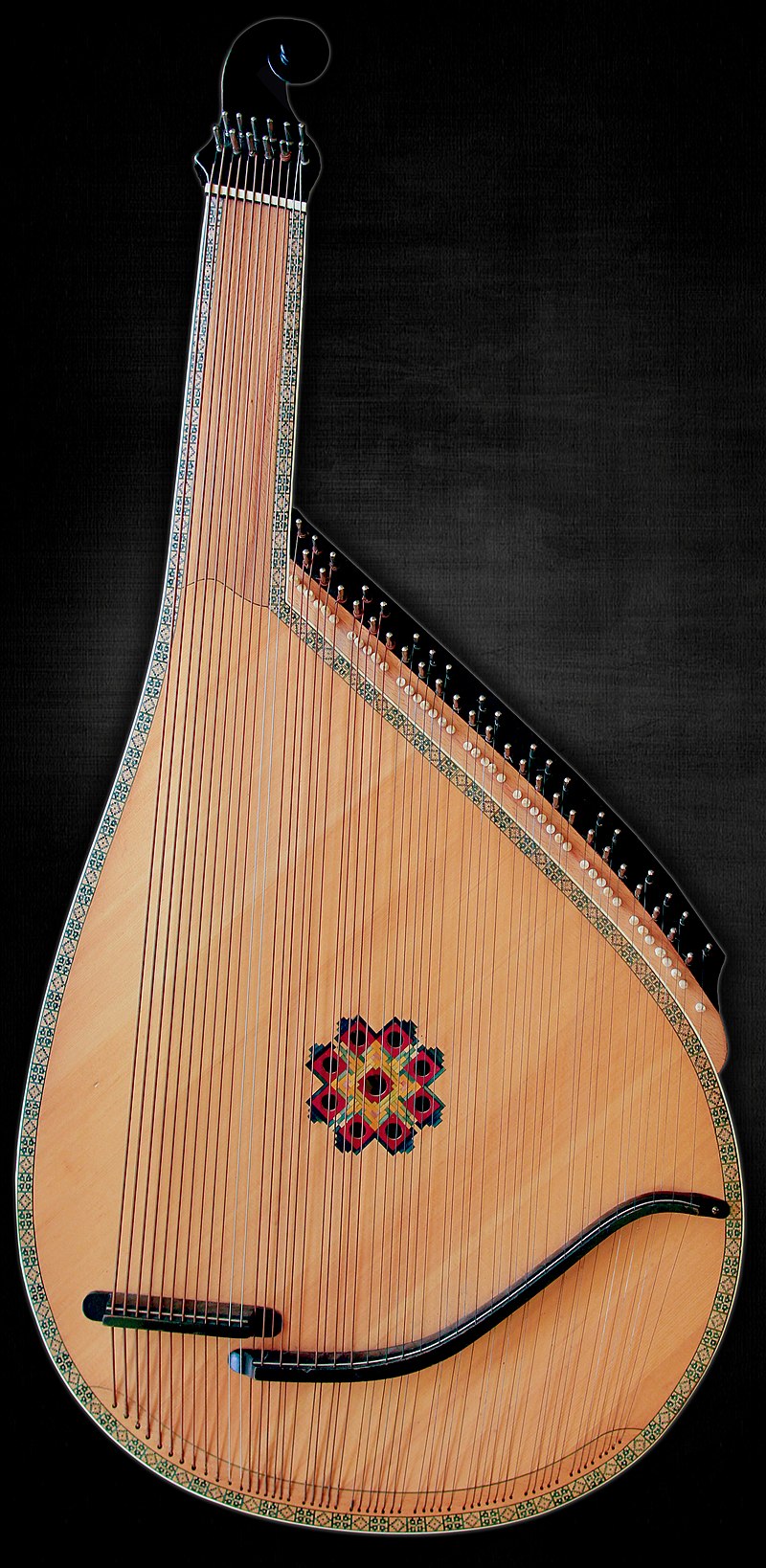
File:Chernihiv-style_bandura.jpg · Wikimedia Commons · See Wikimedia Commons
bandura
Sign in to saveA bandura ( ) is a Ukrainian plucked-string folk-instrument. It combines elements of the zither and lute and, up until the 1940s, was also often called a kobza. Early instruments () had 5 to 12 strings and resembled lutes. In the 20th century, the number of strings increased initially to 31 strings (1926), then to 56 strings – 68 strings on modern "concert" instruments (1954).
Key facts
- Instrument.name
- Bandura
- Instrument.image
- Chernihiv-style bandura.jpg
- Instrument.classification
- Chordophone
- Instrument.hornbostel_sachs
- 321.321
- Instrument.range
- 200px|center (modern Kyivan and Kharkivian-style banduras)
- Instrument.related
- Kobza Torban Gusli
via Wikipedia infobox
Wikidata facts
Show 7 more facts
- Commons category
- Banduras
- Hornbostel-Sachs classification
- 314.122
- described by source
- Brockhaus and Efron Encyclopedic Dictionary
- used by
- bandurist
- different from
- bandora
- on focus list of Wikimedia project
- WikiProject Ukraine
- native label
- Бандура
Sources (2)
via Wikidata · CC0
~37 min read
Encyclopedic overview
24 sectionsContents
- Etymology and terminology
- History
- Early years
- Court years
- Years of suppression
- Tsarist sanctions
- Period of tolerance
- Years of persecution
- Mass murder
- Years of stagnation
- Restoration years
- Present
- Construction
- Folk or ''Starosvitska bandura''
- Kyiv-style bandura
- Kyiv-style bandura
- Kharkiv-style bandura
- Kyiv-Kharkiv Hybrid bandura
- Orchestral banduras
- Ensembles
- See also
- References
- Further reading
- External links
A bandura ( ) is a Ukrainian plucked-string folk-instrument. It combines elements of the zither and lute and, up until the 1940s, was also often called a kobza. Early instruments () had 5 to 12 strings and resembled lutes. In the 20th century, the number of strings increased initially to 31 strings (1926), then to 56 strings – 68 strings on modern "concert" instruments (1954).
Musicians who play the bandura are referred to as bandurists. In the 19th and early 20th centuries traditional bandura players, often blind, were called kobzars. It is suggested that the instrument developed as a hybrid of gusli (Eastern-European psaltery) and kobza (Eastern-European lute). Some also consider the kobza as a type or an instrument resembling the bandura. The term bandura occurs in Polish chronicles from 1441. The hybridization, however, occurred in the late-18th or early-19th centuries.
Excerpted from Wikipedia’s “bandura” article, available under the CC BY-SA 4.0 licence.