AI overview
Banff National Park is Canada's oldest national park, located in the Canadian Rocky Mountains in Alberta. It protects a vast wilderness area known for its stunning mountain scenery, glaciers, and diverse wildlife, making it one of Canada's most visited and iconic natural destinations.
AI-generated from the Wikipedia summary — may contain errors.
Wikidata facts
- Official website
- parks.canada.ca/pn-np/ab/banff
- Image
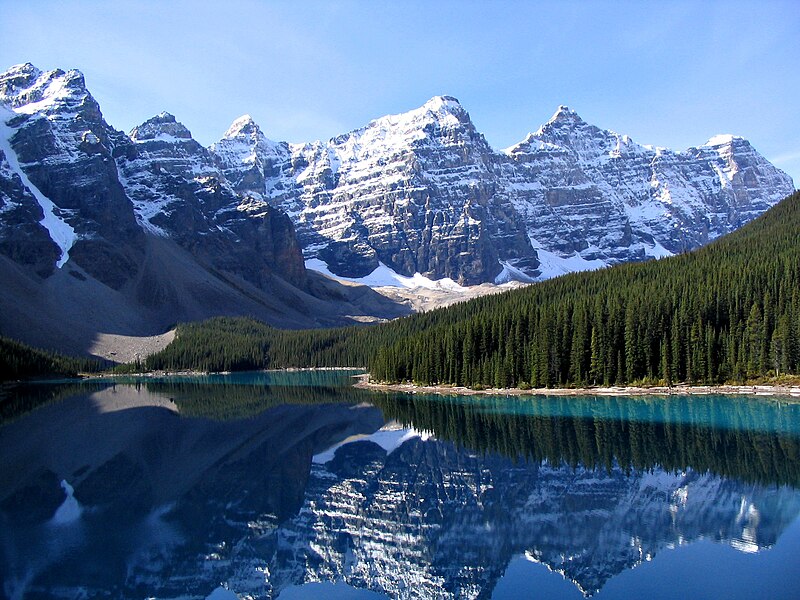
- Moraine Lake 17092005.jpg
Article
Banff National Park is Canada's first national park, established in 1885 as Rocky Mountains Park. Located in Alberta's Rocky Mountains, 110–180 kilometres (68–112 mi) west of Calgary, Banff encompasses 6,641 square kilometres (2,564 sq mi) of mountainous terrain, with many glaciers and ice fields, dense coniferous forest, and alpine landscapes. Provincial forests and Yoho National Park are neighbours to the west, while Kootenay National Park is located to the south and Kananaskis Country to the southeast. The main commercial centre of the park is the town of Banff, in the Bow River valley.
Lower Consolation Lake The mountains were formed from sedimentary rocks that were pushed east over newer rock strata, between 80 million and 55 million years ago. Over the past few million years, glaciers have at times covered most of the park; today they are found only on the mountain slopes, though they include the Columbia Icefield, the largest uninterrupted glacial mass in the Rockies. Erosion from water and ice have carved the mountains into their current shapes. Archaeological evidence at Vermilion Lakes indicates presence of Indigenous peoples for more than 10,000 years in the Banff area.
Gallery (12)
On the map
3 mapped locations