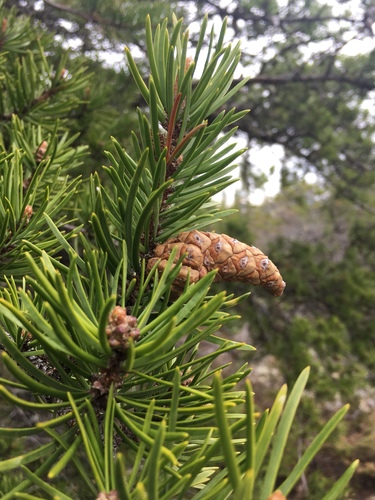
(c) pampoum, all rights reserved
Banksia
Sign in to saveBanksia is a genus of around 170 species of flowering plants in the family Proteaceae. These Australian wildflowers and popular garden plants are easily recognised by their characteristic flower spikes, and woody fruiting "cones" and heads. Banksias range in size from prostrate woody shrubs to trees up to 30 metres (100 ft) tall. They are found in a wide variety of landscapes: sclerophyll forest, (occasionally) rainforest, shrubland, and some more arid landscapes, though not in Australia's deserts.
OverviewAI-generated
Banksia is a genus of plants within the family Proteaceae. It is classified under the kingdom Plantae. The common name Jack pine is associated with this taxon.
The genus is native to New Guinea, New South Wales, Northern Territory, Queensland, South Australia, Tasmania, Victoria, and Western Australia. With the exception of Banksia dentata L.f., which also occurs in New Guinea, the species are found in Australia. Banksia has been introduced to the Azores.
Records for this genus are held by institutions including SDNHM, RSA, and MEL. These records are located in the United States and Australia.
Synthesized by Vinony from 21 facts across 5 sources: Wikidata, iNaturalist, Plants of the World, iDigBio, Vinony graph. Generated from structured data (not the Wikipedia text) and checked against those facts — may still contain errors.
Species
Jack pine
species
General: to Australia except one, Banksia dentata L.f., which also occurs in New
via · Kew POWO
Museum specimens
- Specimen records
- 278
- With media
- 111
- Family
- Brachyopidae
- Collections
- SDNHM, RSA, MEL
- Recorded in
- United States, Australia
Wikidata facts
- Instance of
- taxon
- Parent taxon
- Proteaceae
- Named after
- Joseph Banks
- Image
- Banksia in the Blue Mountains.jpg
Show 10 more facts
- taxon common name
- البَنْكِسِيَّة
- taxon name
- Banksia
- taxon rank
- genus
- Commons category
- Banksia
- topic's main category
- Category:Banksia
- Commons gallery
- Banksia
- different from
- Banksia Island
- described by source
- Encyclopædia Britannica 11th edition
- taxonomic type
- Banksia serrata
Sources (2)
via Wikidata · CC0
~27 min read
Encyclopedic overview
22 sectionsContents
- Description
- Taxonomy
- Subgeneric arrangement
- Distribution and habitat
- Evolutionary history and fossil record
- Ecology
- Response to fire
- Dieback
- Uses
- Gardening
- Cut flower industry
- Woodworking
- Indigenous uses
- Cultural references
- Field guides and other technical resources
- May Gibb's "Banksia men"
- Other cultural references
- Selected species
- See also
- Notes
- References
- External links
Banksia is a genus of around 170 species of flowering plants in the family Proteaceae. These Australian wildflowers and popular garden plants are easily recognised by their characteristic flower spikes, and woody fruiting "cones" and heads. Banksias range in size from prostrate woody shrubs to trees up to 30 metres (100 ft) tall. They are found in a wide variety of landscapes: sclerophyll forest, (occasionally) rainforest, shrubland, and some more arid landscapes, though not in Australia's deserts.
Heavy producers of nectar, banksias are a vital part of the food chain in the Australian bush. They are an important food source for nectarivorous animals, including birds, bats, rats, possums, stingless bees and a host of invertebrates. Further, they are of economic importance to Australia's nursery and cut flower industries. However, these plants are threatened by a number of processes including land clearing, frequent burning and disease, and a number of species are rare and endangered.
Excerpted from Wikipedia’s “Banksia” article, available under the CC BY-SA 4.0 licence.