Bath School disaster
Sign in to save1927 bombing attacks in Bath Township, Michigan
Described at
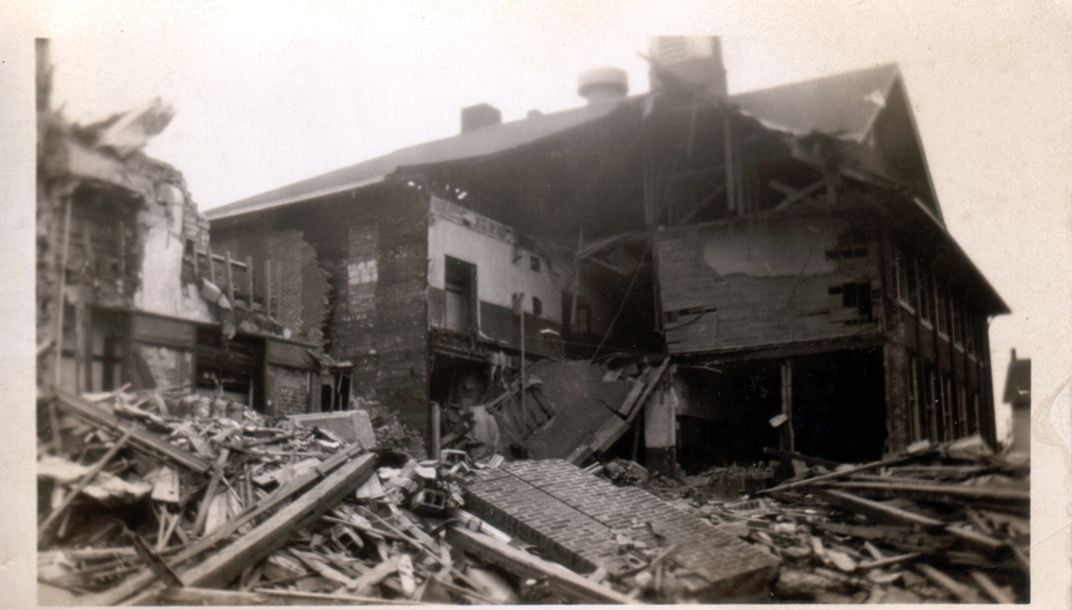
The 1927 Bombing That Remains America’s Deadliest School Massacre
More than 90 years ago, a school in Bath, Michigan was rigged with explosives in a brutal act that stunned the town
smithsonianmag.com →The Bath School bombing in 1927 remains the deadliest school massacre in U.S. history. Courtesy of Arnie Bernstein Columbine. Virginia Tech. University of Texas. Sandy Hook. America’s terrible history of school shootings is a list whose members can’t be named alone. Talk about any single one, and the others always hover on the periphery. But one name rarely gets mentioned among the others, the oldest and deadliest school massacre in U.S. history: the Bath School bombing. In 1927, Bath was a rural village of 300 people despite its location ten miles from Lansing, the state capital. The local institute of learning was Bath Consolidated School, built only five years earlier to replace the scattered one-room schools of the surrounding farmland. It had 314 students from around the region, many the sons and daughters of farmers. Some students were bused in, and all took classes with their peers over the course of elementary and high school. May 18 was the last day of classes for students that year, but at 8:45 the north wing of the three-story structure exploded with such force that the boom was heard miles away. “There was a pile of children about five or six under the roof and some of them had arms sticking out, some had legs, and some just their heads sticking out. They were unrecognizable because they were covered with dust, plaster and blood,” wrote local author Monty J. Ellsworth in his 1927 account, The Bath School Disaster . “It is a miracle that many parents didn’t lose their minds before the task of getting their children out of the ruins was completed. It was between five and six o’clock that evening before the last child was taken out.” As community members rushed to help after the explosion, getting rope to lift up the collapsed roof and pull the students and teachers from the rubble, a member of the school board named Andrew Kehoe drove up to the site. Kehoe stepped out of his truck filled with dynamite and shrapnel, aimed his rifle at it, and fired. The ensuing explosion killed the school superintendent, several other bystanders, and Kehoe himself. In addition to the hundreds of pounds of explosives that had set off the blast at the school, fire department personnel and police officers found another 500 pounds of unexploded pyrotol dynamite rigged up around the school’s basement, along with a container of gasoline that may have been placed there to cause a fire if the dynamite failed. Kehoe had also burned his farmhouse and killed his wife and two horses; their bodies were discovered at the farm, along with a sign attached to the property fence that read, “Criminals are made, not born.” The new memorial park, in which stands the cupola that was once at the top of the school. Courtesy of Arnie Bernstein A car that was near the school, destroyed by the bombing. Courtesy of Arnie Bernstein The remains of Andrew Kehoe's house, where he killed his wife, Nellie. Courtesy of Arnie Bernstein Prior to the massacre, Kehoe had been just another community member. He lived with his wife, Nellie, on a farm, and held the position of treasurer on the Bath school board. The one-time electrician had a large supply of explosives—World War I surplus—bought from the government that he used to help farmers remove tree stumps. There’d been several unusual incidents prior to the bombing: Kehoe killed his neighbor’s dog, beat one of his horses to death, and argued with members of the school board over the cost of ongoing taxes for the consolidated school. But it had never been anything so alarming that other villagers had any suspicion of what was coming. “A lot of the stupid things he did were just stupid things people did,” says Arnie Bernstein, the author of Bath Massacre: America’s First School Bombing . Newspapers rushed to make sense of the tragedy. They called Kehoe insane, demented, a madman. Although there was little understanding of mental illness at that point, the media still tried to find reasons for the bombing. “He
Excerpt from a page describing this subject · 12,523 chars · not written by Vinony
Wikidata facts
- Country
- United States
- Located in
- Bath Township
- Location
- Bath Township
- Image
- Bath School disaster showing front of school.png
- Number of deaths
- 45
- Number of injured
- 58
Show 4 more facts
- Commons category
- Bath School disaster
- point in time
- 1927-05-18
- described at URL
- www.smithsonianmag.com/history/1927-bombing-remains-americas-deadliest-school-massacre-180963355
- perpetrator
- Andrew Kehoe
Sources (2)
via Wikidata · CC0