Bathurst Street
Sign in to savestreet in Ontario, Canada
Described at
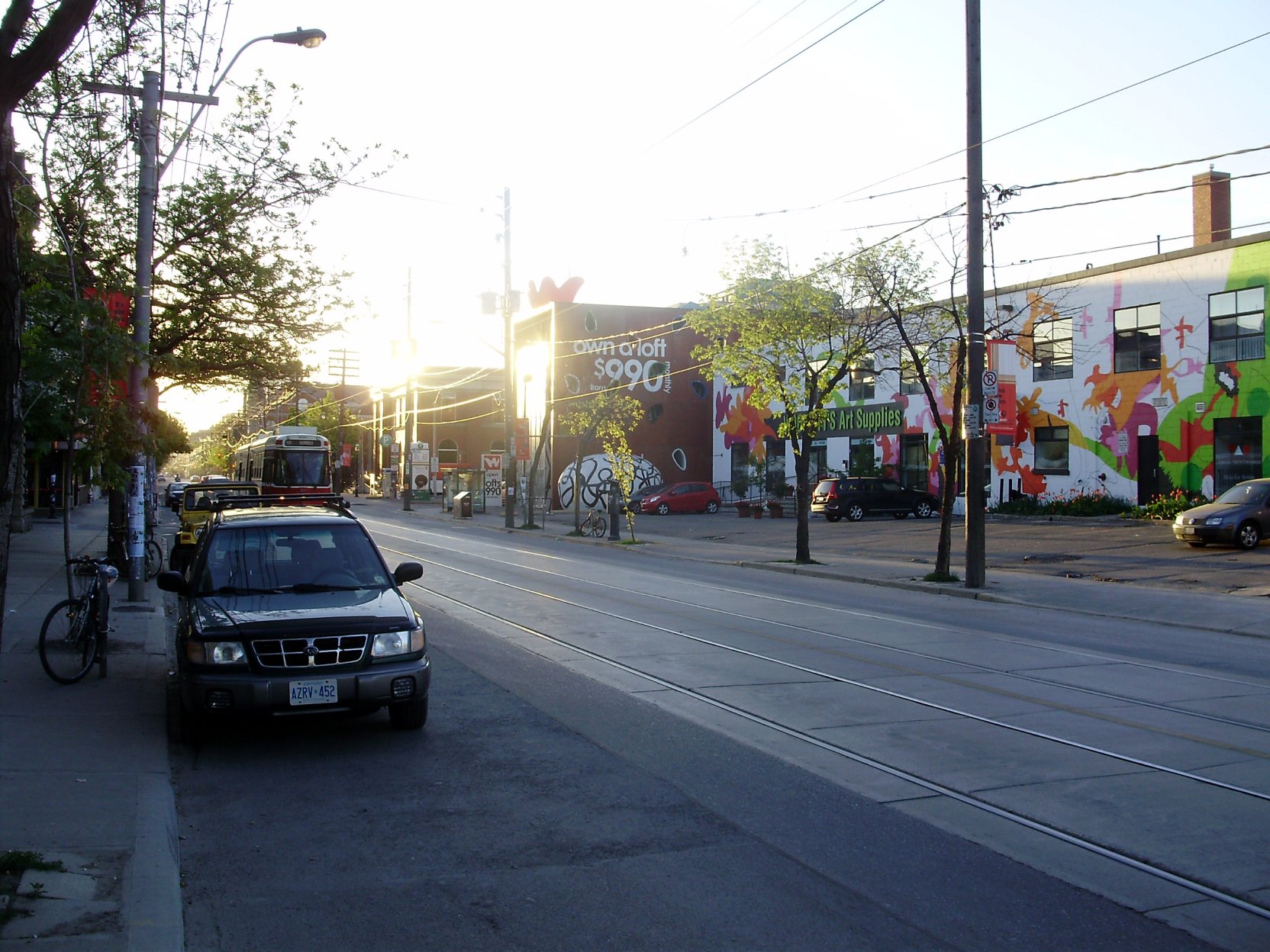
Bathurst Street in Toronto: Canada's strangest street - Blog State of Vancouver
In the heart of Toronto, stretching an impressive 57.4 kilometers from south to north, lies Bathurst Street, a street that not only connects the city's
francesbula.com →In the heart of Toronto, stretching an impressive 57.4 kilometers from south to north, lies Bathurst Street, a street that not only connects the city’s various neighborhoods, but is a living testament to the cultural diversity, immigration history and uniqueness of Canada’s capital city. Named after Henry Bathurst, the 3rd Earl of Bathurst, who never visited Canada, this thoroughfare has become home to numerous communities, quaint establishments and cultural centers making it one of the most unusual and interesting streets not only in Toronto but in all of Canada. Bathurst Street begins at its intersection with Queens Quay, just north of the shore of Lake Ontario, and continues across Toronto to the city limits at Steeles Avenue. The street then extends beyond the city limits into York Region, where it is designated as York Regional Road 38, and ends at Holland Marsh. Throughout its length, Bathurst Street crosses many significant arterials in the City, including Lake Shore Boulevard, King Street, Queen Street, Dundas Street, Bloor Street, St. Clair Avenue, Eglinton Avenue, Lawrence Avenue, Highway 401, Sheppard Avenue, Finch Avenue, and Steeles Avenue. The street is a four-lane thoroughfare for its entire length within Toronto, and widens to six lanes in some sections after Steeles Avenue. The history of Bathurst Street begins long before modern development. Originally, this street existed only between Government Wharf and Queen Street, and the section to the north was called Crookshank’s Lane, a semi-private road named in honor of George Crookshank. At the junction with Davenport was the location of the No. 3 toll booth. The toll collector’s cottage, built in 1835, survives today and is located at the northwest corner of this intersection, restored to its original form. Crookshank’s Lane was renamed “Bathurst Street” in 1870. North of Bloor Street, Bathurst Street remained a dirt path for a long time. This street gradually developed with the city, becoming one of its main arteries. Interestingly, until the late 1980s, the section of Bathurst Street between Centre Street and Langstaff Road / York Regional Road 7 (formerly Highway 7) was part of Highway 7, which made a bend between the concession roads. This bend along Bathurst was eliminated when a diagonal connector road was built to the west to combine the two sections of highway into a single road. One of the most significant cultural features of Bathurst Street is its role in Toronto’s Jewish community. For decades, the street has been considered the heart of the city’s Jewish community. It has even been called the “longest Jewish neighborhood” in the Diaspora, as virtually all of Toronto’s Jewish communities are concentrated along this street. From the early 20th century, many Jews lived around Bathurst Street south of Bloor Street, east to Spadina Avenue (especially in the Kensington Market area) and west to Christie Pits. After World War II, as the community became more affluent, it moved north along Bathurst Street. Wealthier members of the community moved to Forest Hill, while others settled near the intersection of Bathurst and St. Clair Avenue or Bathurst and Eglinton Avenue. Currently, a significant portion of the Jewish community resides along the street from north of St. Clair Avenue and, in higher concentrations, south of Lawrence Avenue to the city limits at Steeles Avenue and beyond to approximately Elgin Mills Road in Richmond Hill. Bathurst Street is home to many synagogues and other Jewish community institutions. Few people know that for over 150 years, the Bloor and Bathurst neighborhood was a center for black immigrants who not only lived here, but also created successful businesses. This aspect of the street’s history is often overshadowed by more famous landmarks. The neighborhood has been given the unofficial name “Blackhurst” due to its importance to the black community. One of the earliest settlers is believed to be a woman named Deborah B
Excerpt from a page describing this subject · 14,003 chars · not written by Vinony
Wikidata facts
- Instance of
- street
- Named after
- Henry Bathurst, 3rd Earl Bathurst
- Country
- Canada
- Located in
- Vaughan
- Image
- BathurstTWH.JPG
- Length
- 57.4
- Connects with
- College Street
Show 3 more facts
- Commons category
- Bathurst Street, Toronto
- native label
- Bathurst Street
Sources (1)
via Wikidata · CC0