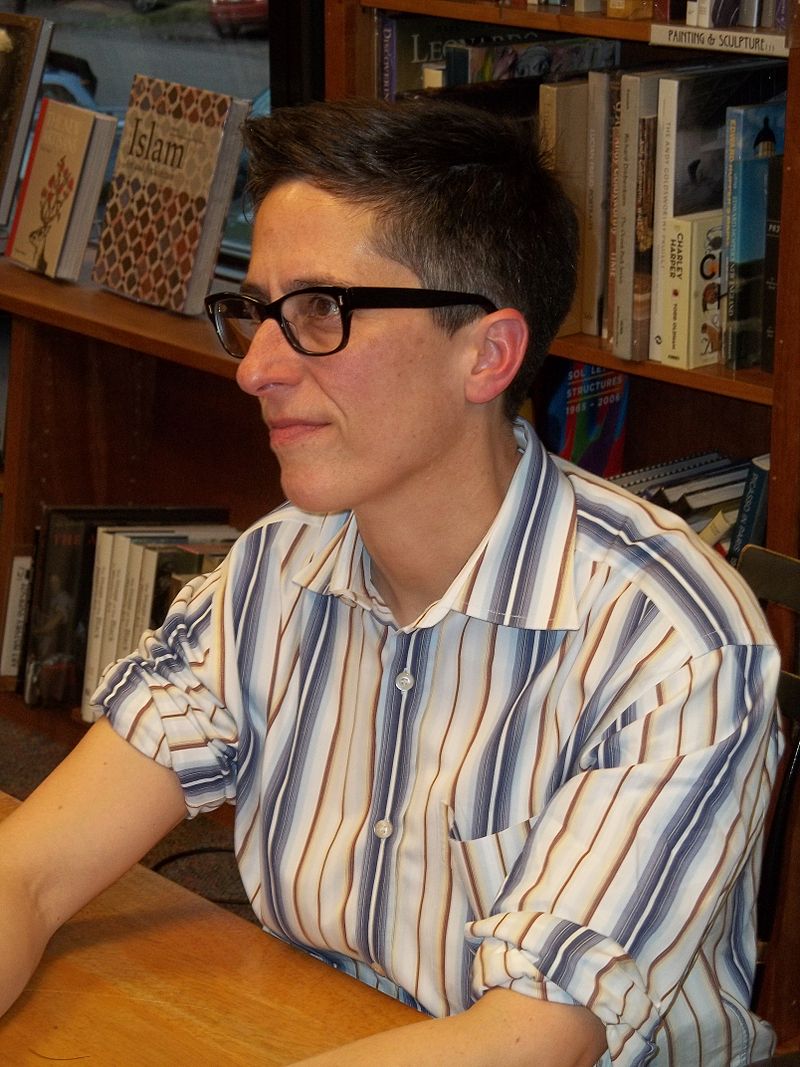
File:Alison_Bechdel_at_Politics_and_Prose.jpg · Wikimedia Commons · See Wikimedia Commons
Bechdel test
Sign in to saveAlso known as Bechdel/Wallace test, Bechdel rule, Bechdel's law, Mo Movie Measure, Bechdel–Wallace test
test if a fictional work features at least two women who discuss something other than a man
Wikidata facts
- Image
- Alison Bechdel at Politics and Prose.jpg
Show 3 more facts
- time of discovery or invention
- 1985-00-00
- Commons category
- Bechdel test
- inception
- 1985-00-00
Sources (3)
via Wikidata · CC0
~25 min read
Article
The American cartoonist Alison Bechdel incorporated her friend's "test" into a strip in Dykes to Watch Out For. The Bechdel test (/ˈbɛkdəl/ BEK-dəl), also known as the Bechdel–Wallace test, is a measure of the representation of women in film and other fiction. The test asks whether a work features at least two women who have a conversation about something other than a man. Some versions of the test also require that those two women have names.
A work of fiction passing or failing the test does not necessarily indicate the overall representation of women in the work. Instead, the test is used as an indicator of the active presence (or lack thereof) of women in fiction, and to call attention to gender inequality in fiction.