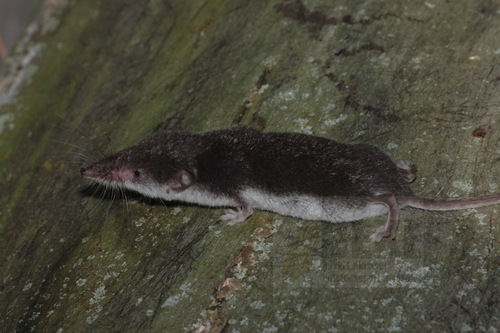
(c) Tamás Cserkész, some rights reserved (CC BY-NC) · cc-by-nc
OverviewAI-generated
The Bicolored Shrew, also known as the Bicoloured White-toothed Shrew, is a species of mammal classified under the genus *Crocidura*. Its scientific name is *Crocidura leucodon*, a taxon originally described by Hermann in 1780. The species has been assessed by the IUCN Red List as Least Concern, a status confirmed in 2021.
This shrew inhabits shrubland environments. Its gestation period lasts 29 days, and the longest observed lifespan for the species is 2.9 years. The organism is part of the class Mammalia and has recorded observations on the platform iNaturalist.
Synthesized by Vinony from 20 facts across 4 sources: Wikidata, iNaturalist, IUCN Red List, Vinony graph. Generated from structured data (not the Wikipedia text) and checked against those facts — may still contain errors.
Species
Least ConcernBicoloured Shrew
species
Maximum longevity: 2.9 years (captivity) Observations: In the wild these animals have been estimated to live about 3 years (Bernhard Grzimek 1990), which may be overestimated. It has been reported that they live up to 4 years in captivity (Ronald Nowak 1999), which is possible but unproven. One captive specimen that lived 2.9 years remains the record longevity for this species in captivity (Richard Weigl 2005).
via IUCN
Wikidata facts
Show 10 more facts
- taxon rank
- species
- IUCN conservation status
- Least Concern
- Commons category
- Crocidura leucodon
- taxon name
- Crocidura leucodon
- Commons gallery
- Crocidura leucodon
- gestation period
- 29
- taxon common name
- 白齿麝鼩
- longest observed lifespan
- 2.9
- habitat
- shrubland
- taxon author citation
- (Hermann, 1780)
via Wikidata · CC0
~3 min read
Encyclopedic overview
The bicolored shrew or bicoloured white-toothed shrew (Crocidura leucodon) is a species of mammal in the family Soricidae. It is found in eastern, central and southern Europe and in western Asia. It is a nocturnal species and feeds on insects and other small creatures. Several litters of young are born during the warmer months of the year in a nest of dry grasses in a concealed location.
Description
Excerpted from Wikipedia’s “Bicolored Shrew” article, available under the CC BY-SA 4.0 licence.
Gallery (2)
Available in 34 languages
- Español
- Français
- Deutsch
- 中文
- Русский
- Italiano
- Azerbaijani
- Bahasa Indonesia
- Basque
- be_x_old
- Belarusian
- Breton
- Bulgarian
- Catalan
- Cebuano
- Czech
- Egyptian Arabic
- Hebrew
Show 15 more
via Wikidata sitelinks · CC0