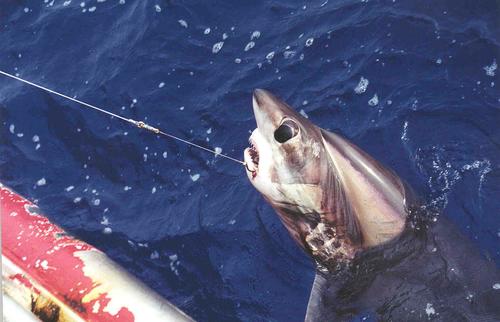
PIRO-NOAA Observer Program, no known copyright restrictions (public domain) · pd
bigeye thresher
Sign in to saveAlso known as Alopias superciliosus, Bigeye thresher shark
species of shark
Species
Vulnerablebigeye thresher
Species
- PhylumChordata
- ClassElasmobranchii
- OrderLamniformes
- FamilyAlopiidae
Maximum longevity: 21 years (wild)
via IUCN
Wikidata facts
Show 10 more facts
- taxon rank
- species
- IUCN conservation status
- Vulnerable
- Commons category
- Alopias superciliosus
- taxon name
- Alopias superciliosus
- taxon common name
- fuina de mar prieta
- longest observed lifespan
- 21
- start time
- 16000000-0
- taxon range
- New Guinea
- short name
- A. superciliosus
- external data available at URL
- www.gbif.org/dataset/abf8082d-c179-4cb2-acc4-3cdef16c4341
Sources (3)
via Wikidata · CC0
~12 min read
Encyclopedic overview
The bigeye thresher (Alopias superciliosus) is a species of thresher shark, family Alopiidae, found in temperate and tropical oceans worldwide. Like the other thresher sharks, nearly half its total length consists of the elongated upper lobe of the tail fin. Its common name comes from its enormous eyes, which are placed in keyhole-shaped sockets that allow them to be rotated upward. This species can also be distinguished by a pair of deep grooves on the top of its head, from which its scientific name is derived.
The large eyes of the bigeye thresher are adapted for hunting in low light conditions. It is one of the few sharks that conduct a diel vertical migration, staying in deep water during the day and moving into surface waters at night to feed. To protect its sensitive brain and eyes from the temperature changes accompanying these movements, the bigeye thresher has a vascular exchange system called the rete mirabile around those organs. This species feeds mainly on fish and squid, which are stunned via whip-like strikes of the long tail. Bigeye threshers are ovoviviparous, usually bearing litters of two pups. The embryos are oophagous and feed on ova produced by the mother while inside the uterus. This shark is caught by commercial fisheries across its range; the meat is not highly regarded but the skin, fins, and liver oil are valued. It has been assessed as Vulnerable by the International Union for Conservation of Nature (IUCN).
Excerpted from Wikipedia’s “bigeye thresher” article, available under the CC BY-SA 4.0 licence.