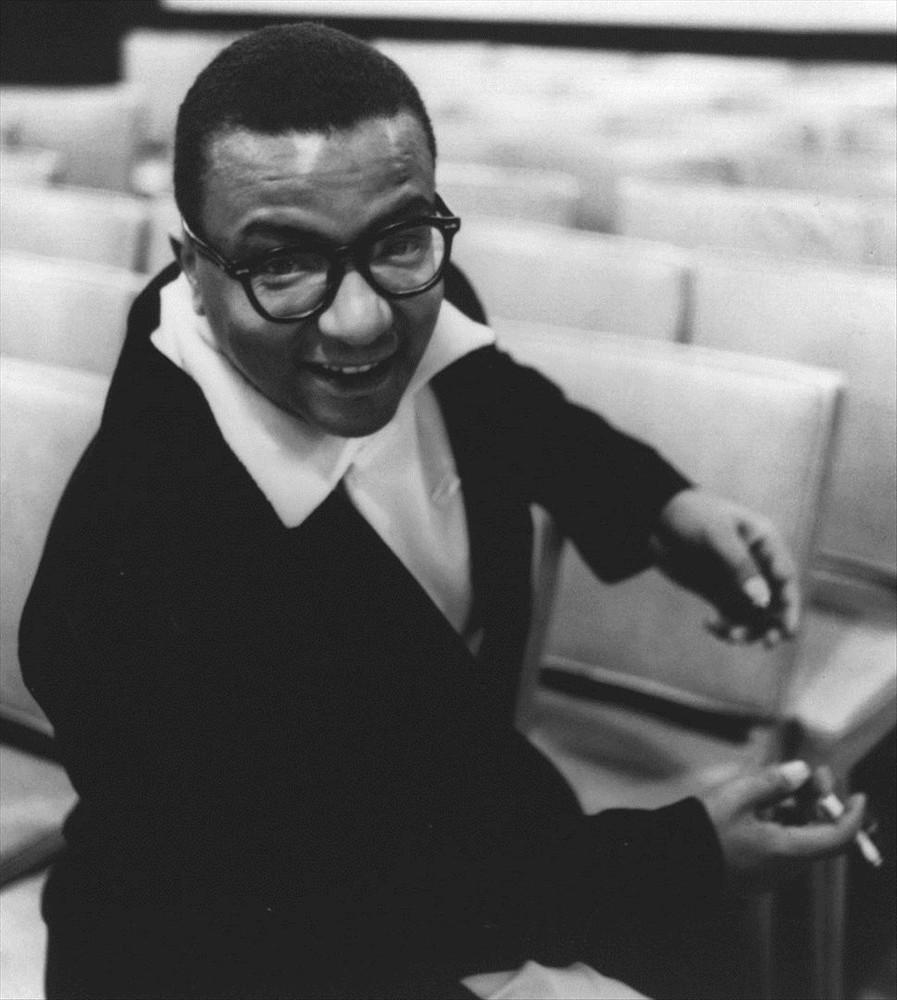
Billy Strayhorn · Spotify · Courtesy of Spotify
Billy Strayhorn
Sign in to saveAlso known as William Thomas "Billy" Strayhorn, William Strayhorn
American musician, composer, lyricist and arranger (1915–1967)
OverviewAI-generated
Billy Strayhorn was an American pianist, composer, and jazz musician. Born William Thomas Strayhorn in Dayton on November 29, 1915, he was a male member of the African American ethnic group. He spoke English and began his work period in 1934. Strayhorn was recognized with the Grammy Trustees Award for his contributions to the genre of jazz.
He died of esophageal cancer in New York City on May 31, 1967. His manner of death was natural causes. Strayhorn is primarily known for his role as a songwriter and his instrumentation on the piano. He held citizenship in the United States throughout his life.
Synthesized by Vinony from 28 facts across 4 sources: Wikidata, MusicBrainz, Last.fm, Firecrawl. Generated from structured data (not the Wikipedia text) and checked against those facts — may still contain errors.
Music · MusicBrainz
- Type
- Person
- Gender
- Male
- Country
- United States
- Active from
- 1915
- Active to
- 1967
Discography
Member of
via MusicBrainz · CC0
Listeners · Last.fm
- Listeners
- 54,613
- Total plays
- 288,468
Tags
William Thomas "Billy" Strayhorn (November 29, 1915 – May 31, 1967) was an American jazz composer, pianist, lyricist, and arranger, best known for his successful collaboration with bandleader and composer Duke Ellington lasting nearly three decades. His compositions include "Take the 'A' Train," "Chelsea Bridge," and "Lush Life." Strayhorn was born in Dayton, Ohio. His family soon moved to the Homewood section of Pittsburgh, Pennsylvania. However <a href="https://www.last.fm/music/Billy+Strayho
Official website
Billy Strayhorn
billystrayhorn.com →If you are familiar with the jazz composition, “Take the A Train,” then you know something about not only Duke Ellington, but also Billy “Sweet Pea” Strayhorn, its composer. Strayhorn joined Ellington’s band in 1939, at the age of twenty four. Ellington liked what he saw in Billy and took this shy, talented pianist under his wings. Neither one was sure what Strayhorn’s function in the band would be, but their musical talents had attracted each other. By the end of the year Strayhorn had become essential to the Duke Ellington Band; arranging, composing, sitting-in at the piano. Billy made a rapid and almost complete assimilation of Ellington’s style and technique. It was difficult to discern where one’s style ended and the other’s began. The results of the Ellington-Strayhorn collaboration brought much joy to the jazz world. The history of the family of William Thomas Strayhorn (his mother called him “Bill”) goes back over a hundred years in Hillsborough, North Carolina. One set of great grandparents, Mr. and Mrs. George Craig, lived behind the present Farmer’s Exchange. A great grand-mother was the cook for Robert E. Lee. Billy, however, was born in Dayton, Ohio in 1915. His mother, Lillian Young Strayhorn, brought her children to Hillsborough often. Billy was attracted to the piano that his grandmother, Elizabeth Craig Strayhorn owned. He played it from the moment he was tall enough to reach the keys. Even in those early years, when he played, his family would gather to listen and sing. In 1923 Billy entered the first grade in a little wooden school house, since destroyed. Soon after that, however, his mother moved her family to Pittsburgh to join Billy’s father, James Nathaniel Strayhorn. Mr. Strayhorn had gotten a job there as a gas-maker and wire-puller. Charlotte Catlin began to give Billy private piano lessons. He played the piano everyday, sometimes becoming so engrossed that he would be late for his job. He also played in the high school band. His father enrolled him in the Pittsburgh Musical Institute where he studied classical music. He had more classical training than most jazz musicians of his time. Strayhorn lived a tremendously productive life. He influenced many people that he met, and yet remained very modest and unassuming all the while. For a time he coached Lena Horne in classical music to broaden her knowledge and improve her style of singing. He toured the world with Ellington’s band and for a brief time lived in Paris. Strayhorn’s own music is internationally known and honored. It has been translated in French and Swedish. Some of Strayhorn’s compositions are: “Chelsea Bridge,” “Day Dream,” “Johnny Come Lately,” “Rain Check” and “Clementine.” The pieces most frequently played are Ellington’s theme song, “Take the A Train” and Ellington’s signatory, “Lotus Blossom”. Some of the suites on which he collaborated with Ellington are: “Deep South Suite,” 1947; the “Shakespearean Suite” or “Such Sweet Thunder,” 1957; an arrangement of the “Nutcracker Suite,” 1960; and the “Peer Gynt Suite,” 1962. He and Ellington composed the “Queen’s Suite” and gave the only pressing to Queen Elizabeth of England. Two of their suites, “Jump for Joy,” 1950 and “My People,” 1963 had as their themes the struggles and triumphs of blacks in the United States. Both included a narrative and choreography. The latter Strayhorn conducted at the Negro Exposition in Chicago in 1963. Another suite similar to these two was “A Drum Is a Woman.” The “Far East Suite” was written after the band’s tour of the East which was sponsored by the State Department. This superb box set celebrating the work of William Thomas Strayhorn echoes the basic paradox of this extraordinary jazz musician’s life and career. The richness and diversity of the music it contains will delight the most obsessive Strayhorn… Recorded for the Columbia label in 1960 featuring jazz interpretations of "The Nutcracker" by Pyotr Illyich Tchaikovsky, arranged by Ellington an
Read more on their site →Excerpt from the official site · 8,978 chars · not written by Vinony
Wikidata facts
- Instance of
- human
- Given name
- Thomas
- Gender
- male
- Citizenship
- United States
- Place of birth
- Dayton
- Place of death
- New York City
- Occupation
- songwriter
- Languages spoken
- English language
- Genre
- jazz
- Instrument
- piano
- Official website
- billystrayhorn.com
- Image
- Billy Strayhorn, New York, N.Y., between 1946 and 1948 (William P. Gottlieb 08211).jpg
Show 10 more facts
- date of birth
- 1915-11-29
- date of death
- 1967-05-31
- cause of death
- esophageal cancer
- manner of death
- natural causes
- ethnic group
- African Americans
- Commons gallery
- Billy Strayhorn
- Commons category
- Billy Strayhorn
- start of work period
- 1934-00-00
- birth name
- William Thomas Strayhorn
- name in native language
- Billy Strayhorn
via Wikidata · CC0