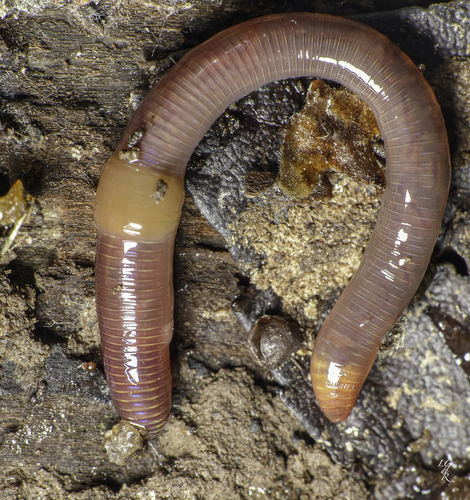
(c) Léo-Guy de Repentigny, some rights reserved (CC BY-NC), uploaded by Léo-Guy de Repentigny · cc-by-nc
Bimastos
Sign in to saveBimastos is a genus of lumbricid worm thought to be native to North America but has since been introduced to every continent apart from Antarctica. Recent molecular analysis has subsumed Dendrodrilus and Allolobophoridella under this genus. The clade holding Bimastos and Eisenoides seems to have diverged from Eurasian lumbricid Eisenia during the Late Cretaceous, approximately 69.2–76.1 million years ago. This, along with the discovery of an earthworm cocoon attributed to B. rubidus from lake sediment dated over 7,000 years old in Ontario, Canada contradicts the widely held notion that Bimasto
Species
Gilt-tail
GENUS
- KingdomAnimalia
- PhylumAnnelida
- ClassClitellata
- OrderCrassiclitellata
- FamilyLumbricidae
via GBIF
Museum specimens
- Specimen records
- 113
- With media
- 97
- Family
- Lumbricidae
- Collections
- UAM, USNM
- Recorded in
- United States
Wikidata facts
- Instance of
- taxon
- Parent taxon
- Lumbricidae
- Image
- Bimastos eiseni (Elspeeterbosch, Gelderland, Netherlands) 1.jpg
Show 4 more facts
- taxon name
- Bimastos
- taxon rank
- genus
- taxon author citation
- Moore, 1893
- Commons category
- Bimastos
Sources (2)
via Wikidata · CC0
~1 min read
Encyclopedic overview
1 sectionsContents
- References
Bimastos is a genus of lumbricid worm thought to be native to North America but has since been introduced to every continent apart from Antarctica. Recent molecular analysis has subsumed Dendrodrilus and Allolobophoridella under this genus. The clade holding Bimastos and Eisenoides seems to have diverged from Eurasian lumbricid Eisenia during the Late Cretaceous, approximately 69.2–76.1 million years ago. This, along with the discovery of an earthworm cocoon attributed to B. rubidus from lake sediment dated over 7,000 years old in Ontario, Canada contradicts the widely held notion that Bimastos and its junior synonyms are invasive worms from Europe which have colonized North America. Its ancestors likely entered North America via the Bering Land bridge or the De Geer route and colonized elsewhere after European contact. This genus is one of the few remaining native earthworms in many North American environments, for example it appears to be the only extant earthworm native to the Alaskan interior. thumb|Molecular phylogeny of selected lumbricid worms|387x387px
==References==
Excerpted from Wikipedia’s “Bimastos” article, available under the CC BY-SA 4.0 licence.