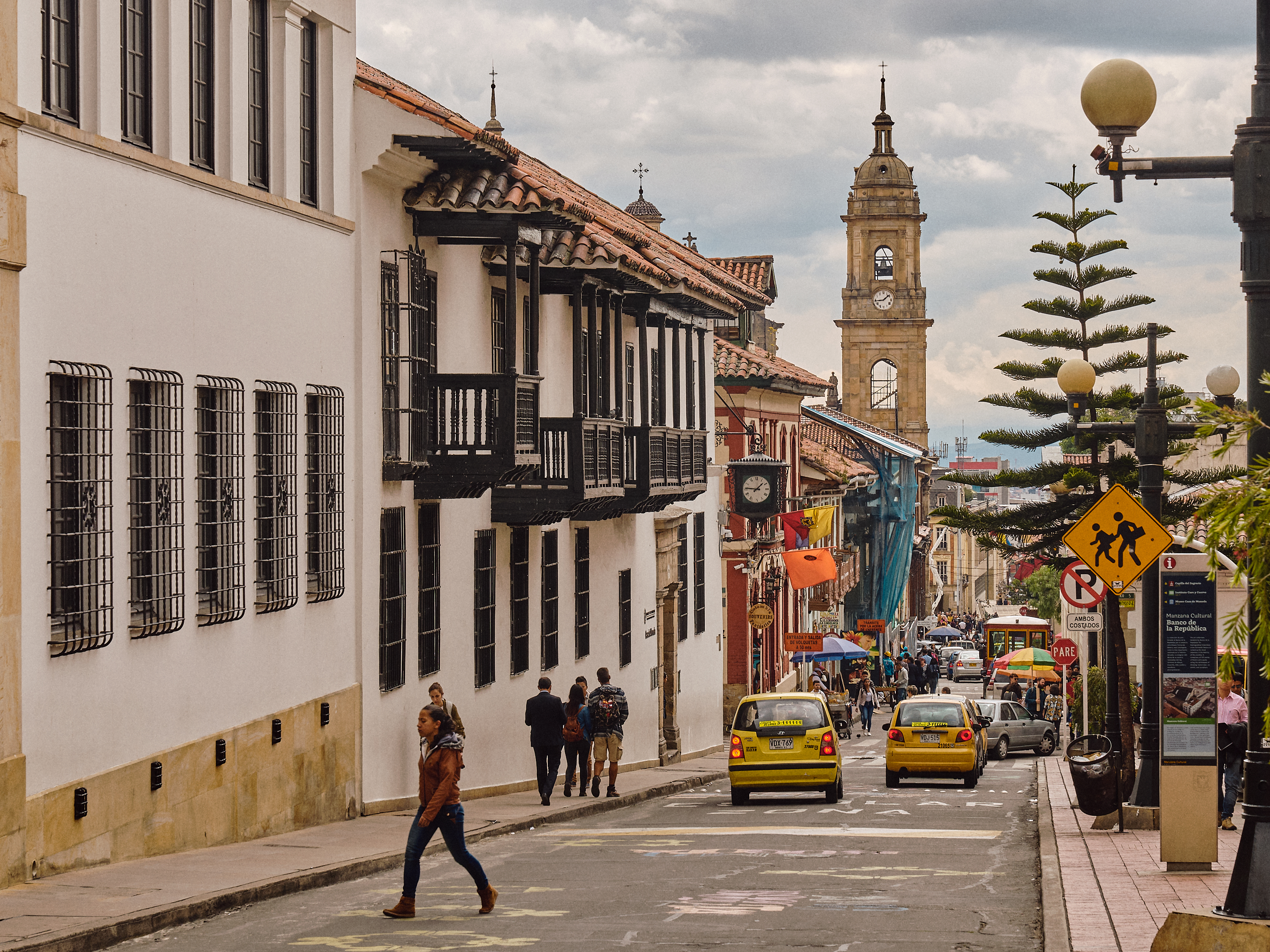
Also known as Santa Fe de Bogotá, Santafé de Bogotá, Bogota, Colombia, Bogotá, D.C.
stolica Kolumbii
Bogotá is a city located on a high plateau in the Andes Mountains that was formed by an ancient lake that existed until about 30,000 years ago. The city's location on this flat savanna landscape, created by the geological history of Lake Humboldt, has shaped its geography and development.
AI-generated from the Wikipedia summary — may contain errors.
via Open-Meteo
With a population of 15 million people, Bogota DC sits approximately 2,640 m (8,660 feet) above sea level in the Colombian Andes region. Its climate is cool year-round. Orientation is relatively easy, as the mountains located in the eastern parts of the city, are generally visible from most parts of the city.
Aside from being one of Latin America's great capital cities, Bogota is also one of the most modern, multicultural, and cosmopolitan cities on Earth. To understand the sheer size of this vast metropolis, consider that Mexico City and New York City are the only North American cities larger than the capital district. Bogota is the second most populous Spanish speaking city in the World and the fifth largest metropolitan area in the Western hemisphere.
Bogota is a city of many layers, and as such it offers a one-of-a-kind experience to its visitors. Described by the New York Times as one of the world's “greatest cities”', prepare to find a hectic balance between the new and the old; the avant-garde, the modern, and the historic. Encounter 500-year-old plazas overshadowed by towering skyscrapers. Find peaceful tree-lined bicycle routes running through the center dividers of 8-lane avenues. From internationally recognized universities and educational institutions to being one of the globe's leading financial, political, and cultural capitals, Bogota houses an endless number of museums, public parks, and cultural activities. Being the global and regional seat of hundreds of…
Many landmark events in the history of Colombian and South American independence took place in La Candelaria, the historic mid-16th-century colonial neighborhood that hosts the national government, including the near killing and escape of Simon Bolivar, the execution of revolutionary heroine Policarpa Salavarrieta, known as 'La Pola,' and the Grito de Libertad, known as the beginning of the region's revolution. The district is teeming with history, and there are a lot of interesting museums (arguably the best being the Gold Museum and the Botero Museum) and old churches. Some of its lovely streets are pedestrian-only. The most important places are Catedral Primada and Palacio de Nariño on Plaza de Bolívar, Iglesia del Carmen, Biblioteca Luis A Arango, the Colonial Art Museum, and the colonial architecture of the houses and buildings. Almost all the museums are free. La Candelaria also contains numerous Catholic churches, many of them centuries-old. The Colombian-American and Colombian-French cultural centers are located in La Candelaria, and a Colombian-Spanish cultural center is under construction.
Outside La Candelaria, the most famous site is up the mountains over Santa Fé at the Sanctuary of Monserrate, which you can see from virtually any place in the city. Take the funicular up, or if you are feeling brave and athletic, hike it. Santa Fé also is home to the National Museum and the Modern Art Museum.
Bogota (hiszp. Bogotá; poprzednia nazwa oficjalna Santa Fe de Bogotá) – miasto w Ameryce Południowej, stolica Kolumbii. Stanowi od 1995 Dystrykt Stołeczny Bogoty (Distrito Capital), a jest także stolicą departamentu Cundinamarca. W 2018 roku miasto liczyło ponad 7,3 mln mieszkańców. Jest to trzecie pod względem wielkości (po São Paulo i Limie) miasto w Ameryce Południowej.
Abstract from DBpedia / Wikipedia · CC BY-SA
6 mapped locations
Discovered by embedding cosine similarity (sentence-transformers MiniLM, 384-dim).
via OpenStreetMap · GeoNames
via Wikimedia Pageviews API
via Wikipedia infobox
via Wikidata · CC0
The northern neighborhoods that are so popular for dining and nightli…
Local products worth bringing home include : Inexpensive handicrafts and silver jewelry from vendors. One of the cheapest and picturesque places to buy handicrafts is Pasaje Rivas (Calle 9 no. 9). You can access the narrow hall filled with small stores crossing Plaza de Bolívar, where de Major's and president's office is located. Coffee-based products Leather handbags, shoes, and wallets. Uncut and cut emeralds brought in from the world's best emerald mines
In Usaquen you can find a huge flea market on Sundays.
Bogotá's varied gastronomy includes Michelin-starred restaurants serving traditional and innovative Colombian dishes and other cuisines from all corners of the globe.
Nightlife in Bogotá is very diverse, and you can almost certainly find whatever experience it is you are looking for. There are English pubs, Latin dance halls, electronic music clubs, quiet storefront bars, wacky themed clubs, salsa clubs, a huge indie-rock scene (if Cali is salsa, Bogotá is rock n' roll), megaclubs, cocktail lounges, etc.
The cosmopolitan side of Bogotá nightlife is overwhelmingly to be found in Zona Rosa and Bogotá/Parque 93. It's a little more spread out and sparse, but you'll find similar places in Chapinero Central, Usaquén, and even Santa Fé and La Candelaria. Chapinero Central and La Candelaria tend to be more bohemian/hipster/artsy/young. Chapinero is also the center of gay nightlife.
Because of the low temperatures at night you don't need air conditioning. If you are going to stay in Bogota, keep in mind the location; Most low-budget visitors choose to stay in La Candelaria, the colonial neighborhood in the center of the city. There are many cheap, nice hostels where you can meet travelers from all around the world. The historic district as well as all the major museums and some nightlife options are within walking distance. The deserted neighborhood streets are unsafe after dark on weeknights, though. Pressure from neighborhood groups to oust the remaining criminals has caused police presence to increase but you must always remain cautious. Check the location very carefully before you choose a place to stay, security is worse in the tiny deserted streets uphill and closer to Egypto neighborhood.
You'll find several hotels in the upscale northern districts like the Zona Rosa, Parque 93, as well as in Ciudad Salitre on the airport highway. Security won't be such an issue but prices are much higher. Nevertheless, you won't have any problem hailing a taxi at 6AM in the morning in the northern districts, because your hotel would be just around the corner from nightclub, or on the way to the airport. On the other hand, you can find low to medium priced hotels and hostels more expensive than La Candelaria's around downtown or near universities, especially in Chapinero Central.
Note than most hostels carry a strict no drugs due to the negative effects that the…
Bogotá is not at all as dangerous as it once was and as it may occasionally have been portrayed in certain movies. Its once high murder rate has dropped to exceedingly low levels. Bombings and kidnappings are a thing of the past, and should not be a concern to visitors at all.
The principal safety concerns for travelers are pickpockets and the occasional taxi crime. Occasional pickpocketing is still present in the city. Mugging rates have gone down by tremendous levels, due to recent governments' new policies, but while they are not frequent they still occur occasionally. In the eventuality that they do happen (not very common) muggers are usually armed with knives or guns, and you should simply give them what they ask for without a fight—it's never anything worth risking your personal safety for. Most districts and neighborhoods that are frequented by travelers have no problems like this whatsoever. But there are certain areas in neighborhoods, that have a certain problem with pickpocketers and the occasional mugging, these include some areas of La Candelaria (after dark on weeknights—daytime walks and F-Sa nights are perfectly fine, no matter where you are), some very small parts of Santa Fé, and to a much lesser extent the more southern parts of Chapinero close to Avenida Caracas. Visitors need to be just a bit more careful in the South. Trust the locals if they tell you an area is unsafe or dangerous.
Taxi crime is a weird problem here (see "Million Dollar Ride" below).…
Bogotá's tap water is safe to drink and of high quality. Beware of street foods that may cause an upset stomach. Bogotá has no tropical diseases like malaria because of its altitude.
Altitude sickness is, in fact, the largest health problem affecting foreigners—expect to be panting while going uphill or up stairs at first! Generally, a few days without hard physical activity or time spent in a mid-altitude city like Medellín or Fusagasugá (1½ hr) will do the trick. The nearest cities with a low altitude are Girardot (2½ hr) and Villavicencio (2½ hr). The travel time increases in the rush hour. To decrease the elevation, booking a last-minute flight for example to Cali or Medellin is also a possibility.
If you have heart disease or a respiratory condition, talk to your doctor. El Dorado Airport provides wheelchairs for travelers with special needs. Private hospitals offer excellent health care.
Doctor's offices with English speaking doctors: First Aid International, Dr. Peter Jasinski (private), Cell/Whatsapp: +57 3163008340
Visit nearby towns like Chia (for Andrés Carne de Res restaurant), La Calera, Cajica, Tabio, Zipaquira and La Vega. You can find cheap and fast transportation to any of this destinations either from the Terminal de transportes or the Transmilenio North Portal. From most, you can return the same day. But it's a good idea to get out, Bogotá is a chaotic city surrounded by lots of relaxed and peaceful places. Choachí is the best kept secret in town. This small village, 50 min by car east of Bogotá, is reached after climbing up and down a tall mountain, so tall you can see Monserrate at your feet. Local cooking, hot springs and a great Swiss restaurant await for you at your destination. Parque Nacional Sumapaz to the south of Bogota to see the Paramo. It is closed due to improvements of guides and infrastructure. (August 2016) Parque Nacional Chingaza to the east of the town Calera is a different place to see the Paramo. You'll need a 4x4 vehicle or go by a tour. Entrance fee is COP$13,500 for Colombians, COP$39,500 for foreigners and includes an obligatory guide. There are trails up to around 4 hours. Better to start early as you have to leave the parque at 3PM. Apart from the vegetation it's possible to see bears, deer and other animals. Bogotá as a hub to visit other places in Colombia As the capital city is centrally located you can easily visit many distinct destinations as the Amazon Jungle (1½ hr by plane), Spanish colonial cities Cartagena or Popayán (1-hr flight), modern…
Travel guide from Wikivoyage (CC BY-SA 4.0)
via Wikidata sitelinks · CC0