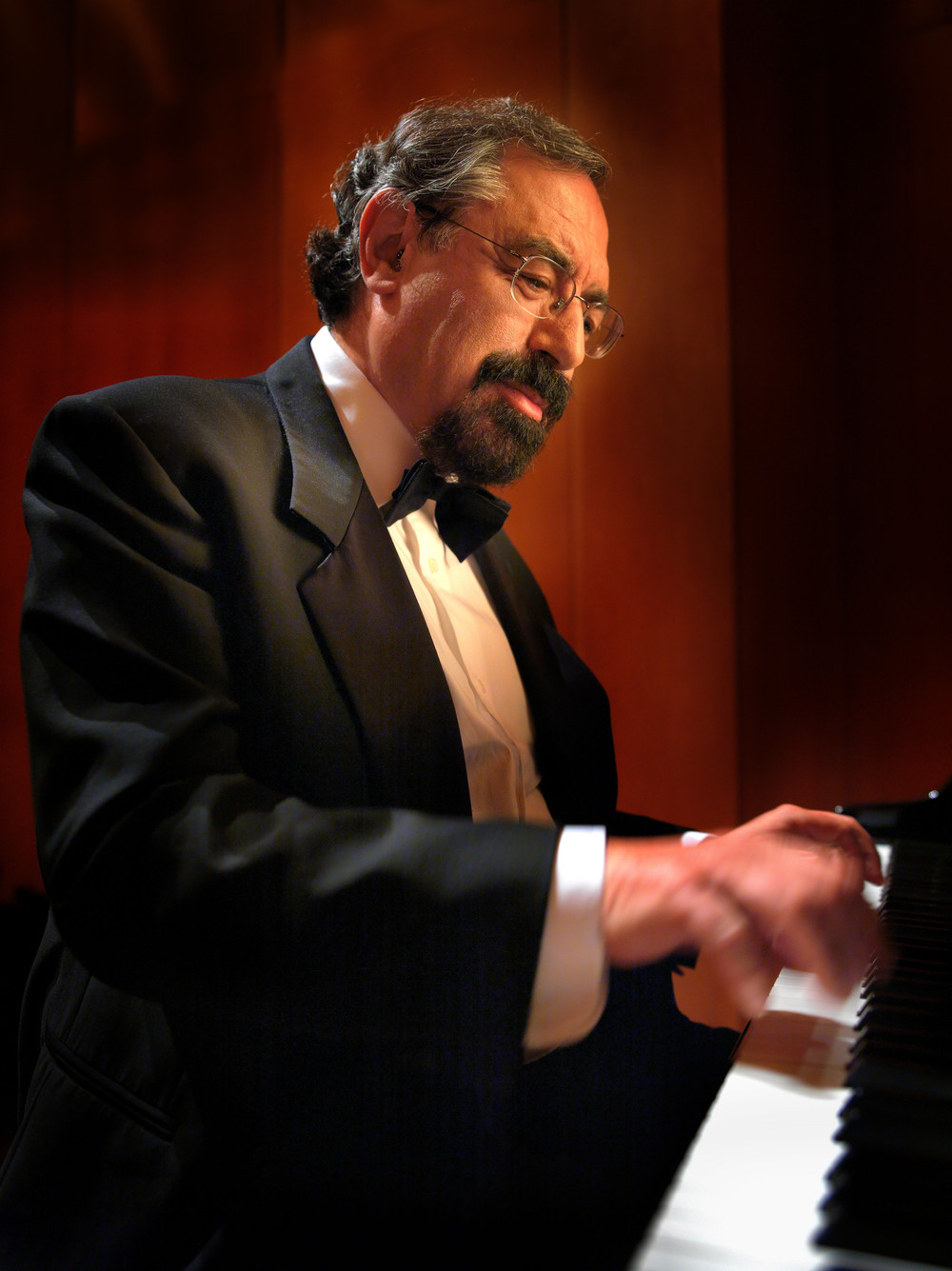
Boris Berman
Sign in to saveRussian-American pianist and teacher
Person · Open Library
- Works
- 5
Top works
- Notas desde la banqueta del pianista
- Notes from the Pianist`s Bench
- Notes from the pianist's bench
- Prokofiev's piano sonatas
via Open Library + Wikidata
Music · MusicBrainz
- Type
- Person
- Gender
- Male
- Origin
- Russia
- Active from
- 1948-04-03
Discography
- Complete Piano Music, Volume 2: Sonata no. 7, op. 83 / Visions fugitives, op. 22 / Sarcasms, op. 17 / Tales of an Old Grandmother, op. 311990
- The Complete Piano Sonatas, Volume 2: Sonatas Six to Ten1990
- Piano Concertos: no. 1 in D-flat, op. 10 / no. 4 in B-flat, op. 53 / no. 5 in G, op. 551990
- Complete Piano Music, Volume 3: Sonata no. 4, op. 29 / Music for Children, op. 65 / Six Pieces, op. 521991
- Complete Piano Music, Volume 4: Sonata no. 8, op. 84 / Four Pieces, op. 3 / Ten Pieces from Cinderella, op. 971991
- Schnittke: Piano Sonata / Stravinsky: Piano Sonata / Serenade in A / Piano-Rag-Music1991
- Complete Piano Music, Volume 51992
- Symphony of Psalms / Concerto for Piano and Wind Instruments / Symphony in C1993
- Complete Piano Music, Vol. 8: Sonata no. 9, op. 103 / Four Studies, op. 2 / Choses en soi, op. 45 / Divertissement, op. 43 bis1993
- Pour le piano / Images / Berceuse héroïque / Élégie / Six épigraphes antiques1994
via MusicBrainz · CC0
Listeners · Last.fm
- Listeners
- 8,798
- Total plays
- 117,313
Tags
Boris Berman is a Russian pianist and pedagogue (b. Moscow, April 3, 1948). He was a student of Lev Oborin at the Moscow Conservatory. He made his debut in Moscow in 1965. He joined an early music ensemble, at the time the only one in Russia, as a harpsichordist. At the same time he worked with contemporary composers such as Alfred Schnittke and Edison Denisov. He played in the first Russian performances of works by Arnold Schoenberg, Karlheinz Stockhausen, Luciano Berio and György Ligeti. <a h
Recent publications · Crossref
5 total works indexed
- The Protein Data Bank
· 2000 · cited 34,707x
- The Pittsburgh sleep quality index: A new instrument for psychiatric practice and research
· 1989 · cited 28,478x
- Global burden of 369 diseases and injuries in 204 countries and territories, 1990–2019: a systematic analysis for the Global Burden of Disease Study 2019
· 2020 · cited 15,370x
- The cBio Cancer Genomics Portal: An Open Platform for Exploring Multidimensional Cancer Genomics Data
· 2012 · cited 14,939x
- Global, regional, and national incidence, prevalence, and years lived with disability for 354 diseases and injuries for 195 countries and territories, 1990–2017: a systematic analysis for the Global Burden of Disease Study 2017
· 2018 · cited 10,798x
via Crossref · CC0
Quotes
- “Within the vast, virtually limitless piano repertoire, the piano sonatas of Sergei Prokofiev occupy a special place. Apart from Alexander Scriabin early in the century, Prokofiev was the only major twentieth-century composer to pay such consistent attention to the form, … They are a constant presence in concert programs and are considered an indispensable part of the repertoire by almost every serious concert pianist.”
- “Prokofiev had a lifelong love of the sonata form. Ever since learning the basic rules during his childhood years, he strove to master them; … In 1941, describing his Sonatinas op. 54 (1931), he remarked, “I liked the idea of writing a simple work in such a superior form as sonata.” One can learn a lot about the composer’s growth by tracing his progress from the early sonatas, which cautiously dare to bend the textbook rules, to the masterful treatment of the form in his late works.”
- “Prokofiev’s creative path traversed many countries and was affected by wars and revolutions. Life brought him into contact with some of the most prominent and influential artistic figures of his time. Observing the magnificent panorama of Prokofiev’s oeuvre, one sees that the composer’s musical style evolved significantly over the course of his creative life. The reasons for the changes of direction have been much discussed and debated.”
- “Prokofiev was not alone among the leading composers of the twentieth century in changing his style repeatedly in the course of his career: Stravinsky, Schoenberg, Bartók, and others modified their musical language drastically at various stages of their creative lives. In Prokofiev’s case, he always maintained certain stylistic facets throughout the transformations of his musical language.”
- “Examining the musical language of Prokofiev in a more detailed way, we must acknowledge that for him melody was always the most important element of music, one that determined the quality of the composition”
- “Prokofiev’s music is usually based on a firm sense of tonality. Whatever tonal uncertainty and ambiguity one experiences, mainly in developmental passages, they are mostly short-lived.”
via Wikiquote · CC BY-SA
Wikidata facts
Show 1 more fact
- date of birth
- 1948-04-03
Sources (3)
via Wikidata · CC0