bouldering mat
Sign in to saveAlso known as crash pad, crashpad, sketchpad
foam pad used for protection when bouldering
Described at
The Best Crashpad Picks and Facts
Learn the history of crashpads, how they're constructed, and the best crashpads out there—plus how to choose the right one for you.
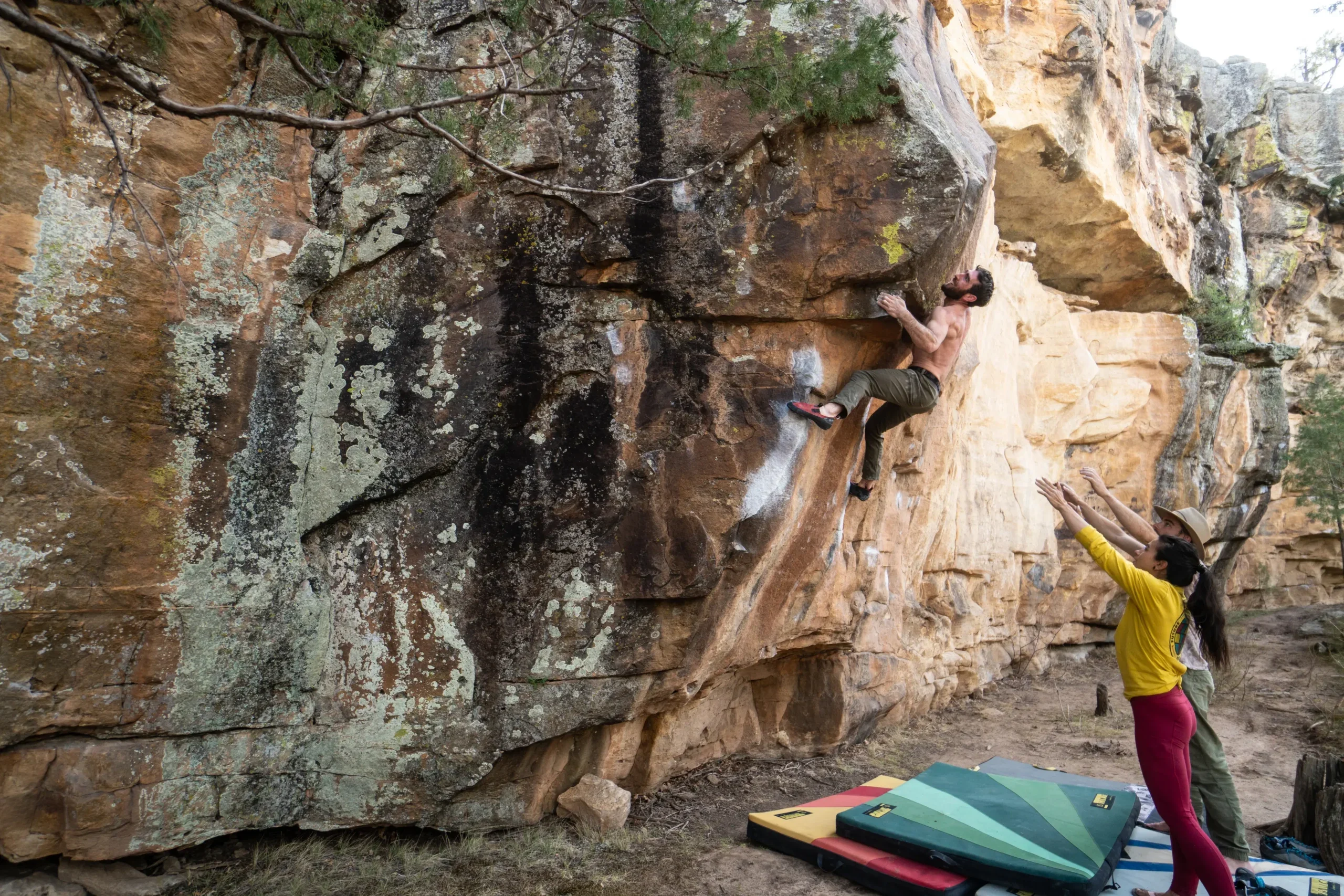
climbing.com →If you buy through our links, we may earn an affiliate commission. This supports our mission to get more people active and outside.Learn about Outside Online's affiliate link policy What type of foam should you use? Carry system? Bi-fold or Tri? Accessory pads? It's all here. My thumb wrapped around a small edge on Crimping Matters (V10), a 20-move series of granite crimps at Guanella Pass, just outside of Georgetown, Colorado. As I exited the cave, my elbows pointed skyward and I entered the upper crux: a cross to one more crimp. The landing’s 30-degree slope and jagged features made it difficult to spot, so the pad setup needed to protect me. I tried to pull through the last move but my hand opened. I was off. I slid down the seven pads we had placed on the slanted granite below. Luckily, our variety of pads, the small ones filling holes and the big ones protecting the slabs and flatter sections, covered the talus pit landing, and I was unscathed. Had my friends and I lacked the proper pads, I could’ve easily broken an ankle and ruined a climbing day, or even my season. Climbers have long been flattening out landings. When Ron Kauk did the first ascent of Thriller (V10) in Yosemite, he placed palates under the landing, then nicked some employee mattresses. Other early pad iterations included sofa cushions wrapped in duct tape and creatively placed wooden pallets. Up until the late 1980s no one bouldered with a pad. “Before pads came out you had to kind of be a masochist to be a boulderer,” said Hueco Tanks legend John “Verm” Sherman, who was also responsible for inventing the V-scale grading system. In 1992, Verm and his friend Bruce Pottenger, the head of the Kinnaloa crew who made t-shirts and chalk bags, joined forces to sell the first commercial crashpad: the Sketch Pad. The two had developed it for personal use, but then realized they had the tools to bring it to market. Like most pads today, the Sketch Pad had a nylon sleeve with pack straps and two densities of foam. It was made out of cloth material with a carpet area to wipe your feet. The pad measured 2.5 feet by 3.5 feet with roughly 2 inches of foam. “By today’s standards, those things looked like cocktail napkins,” said Sherman. Since the development of the Sketch Pad, manufacturers have enlarged the original design. There are now over 50 manufacturers worldwide providing pads with advanced harness systems, room for gear, and high-tech foam setups for maximum protection. “A real revolution in my eyes was when we started padding stuff, because that opened terrain like crazy,” said Sherman. “The pad changed everything. It brought bouldering to the masses.” The primary purpose of a crashpad is to add a foam layer between the climber and the ground, to lessen the impact of a bouldering fall. A standard crashpad has various different attributes, including the type of folding system, materials, foam types, and size. Crashpads are used on all sorts of terrain; some pads are better for flat ground while others are better for uneven, rocky landings. Each pad is constructed with certain benefits (and users) in mind. Folding systems affect the cushion of the foam, the carrying system, and the pad’s closed size. The type of folding system can influence how well a pad protects a particular landing; but it also impacts the ease of transportation. Being able to sufficiently carry the gear that I need in a condensed space is crucial for the long approaches of Rocky Mountain National Park (RMNP). In a hinge pad, a piece of nylon material holds two large sections of foam together, and the nylon then serves as the hinge, allowing you to fold the pad in half. These pads easily carry as backpacks (or unwieldy briefcases, provided they have a side handle). Hinge pads lie flat (unlike tacos), making them ideal for flat landings. They also fold up tightly and double as spacious gear carriers. The downside, however, is that straight hinge pads lack contiguous foam coverage at t
Excerpt from a page describing this subject · 40,000 chars · not written by Vinony
Wikidata facts
- Subclass of
- rock and sport climbing equipment
- Material used
- nylon
- Image
- GIO.png
Show 5 more facts
- Commons category
- Bouldering mats
- facet of
- bouldering
- nickname
- crashpad
- time of discovery or invention
- 1992-00-00
Sources (1)
via Wikidata · CC0