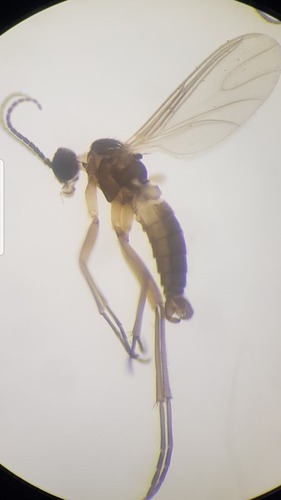
(c) Svavar Martin Andreasen, all rights reserved, uploaded by Svavar Martin Andreasen
Bradysia
Sign in to saveBradysia is a genus of fungus gnat in the family Sciaridae. They are commonly known as darkwinged fungus gnats. They are considered a major pest in greenhouse agriculture because they thrive in the moist conditions common inside greenhouses and feed on the plants being grown within. Bradysia is a large genus containing over 500 living species, with at least 65 species found in North America and 172 in Europe.
Species
GENUS
- KingdomAnimalia
- PhylumArthropoda
- ClassInsecta
- OrderDiptera
- FamilySciaridae
Bradysia is a genus of fungus gnat in the family Sciaridae. They are commonly known as darkwinged fungus gnats. They are considered a major pest in greenhouse agriculture because they thrive in the moist conditions common inside greenhouses and feed on the plants being grown within. Bradysia is a large genus containing over 500 living species, with at least 65 species found in North America and 172 in Europe. Bradysia species are a major pollinator of plants such as Aspidistra elatior.
via GBIF
Museum specimens
- Specimen records
- 3,739
- With media
- 30
- Family
- Sciaridae
- Collections
- INDRE-SSA, UCMP, UAM
- Recorded in
- Mexico, United States
Wikidata facts
Show 5 more facts
- topic's main category
- Category:Bradysia
- taxon name
- Bradysia
- taxon rank
- genus
- Commons gallery
- Bradysia
- Commons category
- Bradysia
Sources (1)
via Wikidata · CC0
~5 min read
Encyclopedic overview
2 sectionsContents
- Species
- References
Bradysia is a genus of fungus gnat in the family Sciaridae. They are commonly known as darkwinged fungus gnats. They are considered a major pest in greenhouse agriculture because they thrive in the moist conditions common inside greenhouses and feed on the plants being grown within. Bradysia is a large genus containing over 500 living species, with at least 65 species found in North America and 172 in Europe.
Bradysia species are a major pollinator of plants such as Aspidistra elatior.
Excerpted from Wikipedia’s “Bradysia” article, available under the CC BY-SA 4.0 licence.
Gallery (3)
Available in 9 languages
via Wikidata sitelinks · CC0