Encyclopedia of Life · EOL (see source)
Species
Critically Endangeredクロアイサ クロアイサ Mergus octosetaceus 保全状況評価[a 1] CRITICALLY ENDANGERED (IUCN Red List Ver.3.1 (2001)) 分類 界 : 動物界 Animalia 門 : 脊索動物門 Chordata 亜門 : 脊椎動物亜門 Vertebrata 綱 : 鳥綱 Aves 目 : カモ目 Anseriformes 科 : カモ科 Anatidae 属 : アイサ属 Mergus 種 : クロアイサ M. octosetaceus 学名 Mergus octosetaceus Vieillot, 1817 和名 クロアイサ 英名 Brazilian merganser クロアイサ(黒秋沙、Mergus octosetaceus) は、カモ目カモ科アイサ属に分類される鳥類。 目次 1 分布 2 形態 3 生態 4 人間との関係 5 関連項目 6 参考文献 7 外部リンク 分布[編集] アルゼンチン北東部、パラグアイ南部、ブラジル南部のパラナ川水系上流域[1][a 1] 形態[編集] 全長58センチメートル[1]。翼長オス18.3-18.8センチメートル、メス18-18.4センチメートル[2]。後頭から水平に羽毛が伸長する(冠羽)[1][2]。頭部から頸部の羽衣は緑黒色[2]、体上面の羽衣は緑がかった濃褐色[1]。下面は灰色の羽毛で被われ、灰褐色の横縞が入る[1]。雨覆や次列風切の色彩は白く[2]、次列風切には黒い筋模様が3本入る[1]。 虹彩は褐色[1]。嘴の色彩は黒い[1][2]。後肢の色彩は赤い[1][2]。 オスは冠羽がより伸長する[1]。 生態[編集] 流れが速く水深の浅い河川の周辺に生息する[1]。渡りは行わない[1]。昼行性[2]。 食性は動物食で、主に魚類を食べる[2]が昆虫、両生類なども食べる[1]。 繁殖形態は卵生。樹洞に巣を作る[1][2]。 人間との関係[編集] 開発による生息地の破壊、水質汚染などにより生息数は減少している[1]。1922年以降は確実な発見例が無かったため絶滅したと考えられた事もあったが、1947年に再発見された[1]。 関連項目[編集] ウィキスピーシーズにクロアイサに関する情報があります。 アイサ属 参考文献[編集] [ヘルプ] ^ a b c d e f g h i j k l m n o p 小原秀雄・浦本昌紀・太田英利・松井正文編著 『動物世界遺産 レッド・データ・アニマルズ2 アマゾン』、講談社、2001年、132頁。 ^ a b c d e f g h i 黒田長久、森岡弘之監修 『世界の動物 分類と飼育 (ガンカモ目)』、財団法人東京動物園協会、1980年、83頁。 外部リンク[編集] ^ a b The IUCN Red List of
via IUCN
Wikidata facts
Show 8 more facts
- taxon rank
- species
- IUCN conservation status
- Critically Endangered
- taxon name
- Mergus octosetaceus
- Commons category
- Mergus octosetaceus
- taxon common name
- merganso-brasileiro
- egg incubation period
- 33
- litter size
- 7
- taxon range
- South America
via Wikidata · CC0
~10 min read
Encyclopedic overview
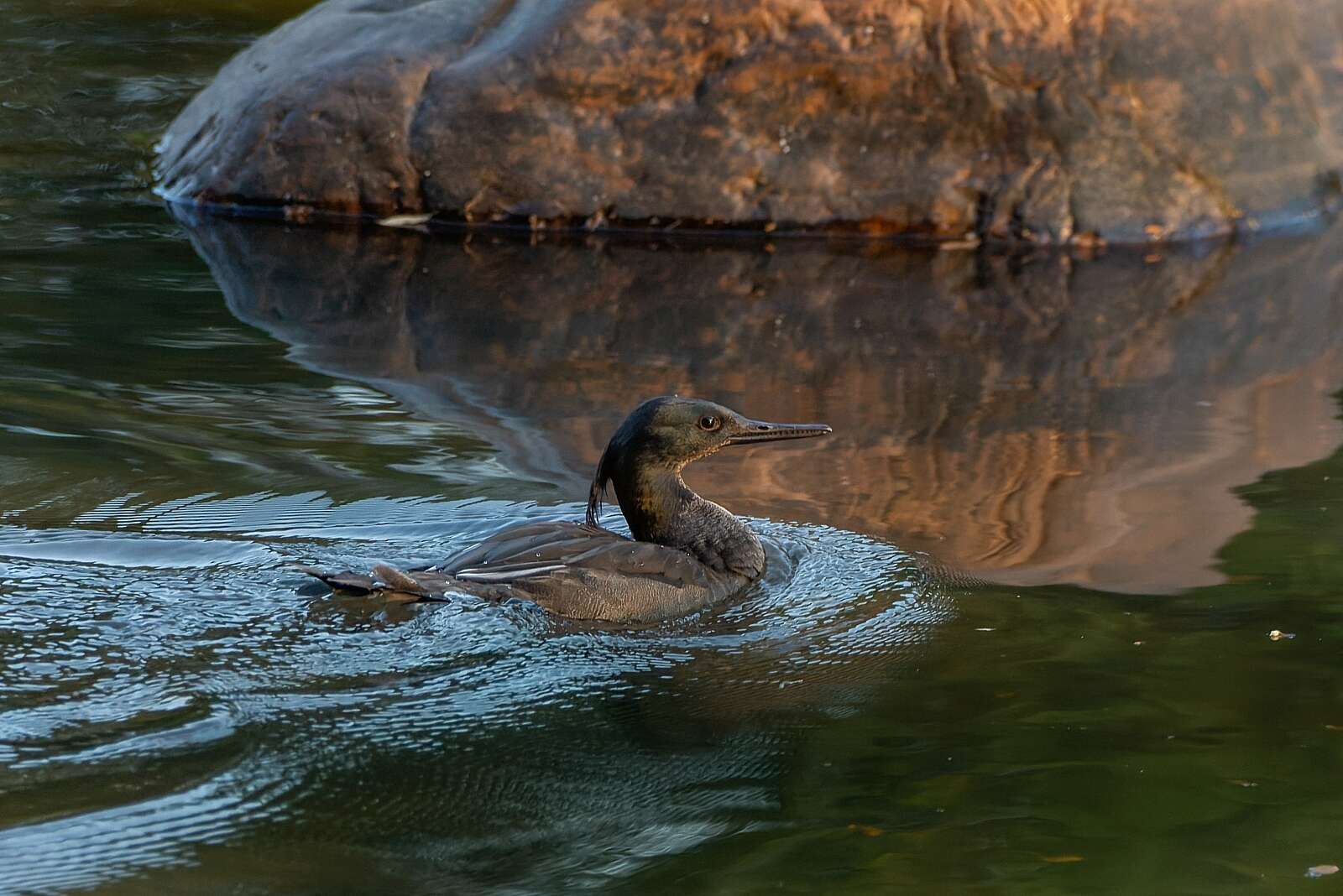
The Brazilian merganser (Mergus octosetaceus) is a South American diving duck in the Mergus genus. It is one of the most threatened waterfowl species in the world, with possibly fewer than 250 birds in the wild and a small number kept in captivity in Brazil and Czechia. It has a long, sharp-edged beak with a great number of tooth-like edges.
Description
Excerpted from Wikipedia’s “Brazilian Merganser” article, available under the CC BY-SA 4.0 licence.