
Brigitte Bardot
Sign in to saveAlso known as Brigitte Anne-Marie Bardot, BB, Brigitte Anne Marie Bardot, B.B.
Brigitte Anne-Marie Bardot, often referred to by her initials B.B., was a French actress, singer, model, and animal rights activist. She became one of the best-known symbols of the sexual revolution and gained international fame for portraying characters associated with hedonistic lifestyles. Although she withdrew from the entertainment industry in 1973, she remained a major pop culture icon. She appeared in 47 films, performed in several musicals, and recorded more than 60 songs. She was awarded the Legion of Honour in 1985.
OverviewAI-generated
Brigitte Bardot was a French singer, autobiographer, and film actor. Born Brigitte Anne-Marie Bardot in the 15th arrondissement of Paris in 1934, she was educated at the Conservatoire de Paris. Her professional career included work as a recording artist and model. She was married to Roger Vadim, Jacques Charrier, and Gunter Sachs, and had an unmarried partnership with Gilbert Bécaud and Serge Gainsbourg. Bardot had one child and a sibling named Mijanou Bardot.
Her literary contributions include thirteen works, such as *Vies Privees*, *Lágrimas de combate*, *Mes as de coeur*, *Pourquoi?*, and *Tears of Battle*. She received several awards, including the Bambi Award, the Order of the Golden Ark, the David di Donatello for Best Foreign Actress, and the Knight of the Legion of Honour. Bardot was a vegetarian who spoke French. She passed away in 2025.
Synthesized by Vinony from 41 facts across 6 sources: Wikidata, Open Library, Firecrawl, VIAF, MusicBrainz, Vinony graph. Generated from structured data (not the Wikipedia text) and checked against those facts — may still contain errors.
Person · Open Library
- Works
- 13
Top works
- Vies Privees
- Lágrimas de combate
- Mes as de coeur
- Pourquoi?
- Tears of Battle
via Open Library + Wikidata
Film & TV
Paris, France
Brigitte Anne-Marie Bardot (September 28, 1934 – December 28, 2025) was a French actress, singer, model and animal rights activist. In her early life, Bardot was an aspiring ballet dancer. She started her acting career in 1952 and, after appearing in 16 films, became world-famous due to her role in her then-husband Roger Vadim's controversial film And God Created Woman. She later starred in…
Known for
- Brigitte Bardot - Le combat en héritage — Self (archive footage)2026
- Bardot — Narrator (voice)2025
- Les Scandaleuses — Self2024
- Godard Cinema2023
- La TV des 70's : Quand Giscard était président — Self (archive footage)2022
- Deneuve, la reine Catherine — Self (archive footage)2022
- Jean-Louis Trintignant - Mystérieux et insaisissable2022
- Fantômas: A Thoroughly Modern Villain2022
- Belmondo: The Incorrigible2022
- Brigitte Bardot confidentiel2022
via TMDB
Music · MusicBrainz
- Type
- Person
- Gender
- Female
- Country
- France
- Active from
- 1934
- Active to
- 2025
Discography
via MusicBrainz · CC0
Authority record · VIAF
- Lifespan
- 1934–2025
- Nationality
- FR
- Role / Field
- Motion picture actors and actresses, 모델 사람 model, Zpevacky, Spevacky, Pop singer, Film
- Language
- fre, fra
- Gender
- Female
Recorded by 33 libraries
via VIAF · OCLC
Wikipedia views (30d)
91,767 totalvia Wikimedia Pageviews API
Described at
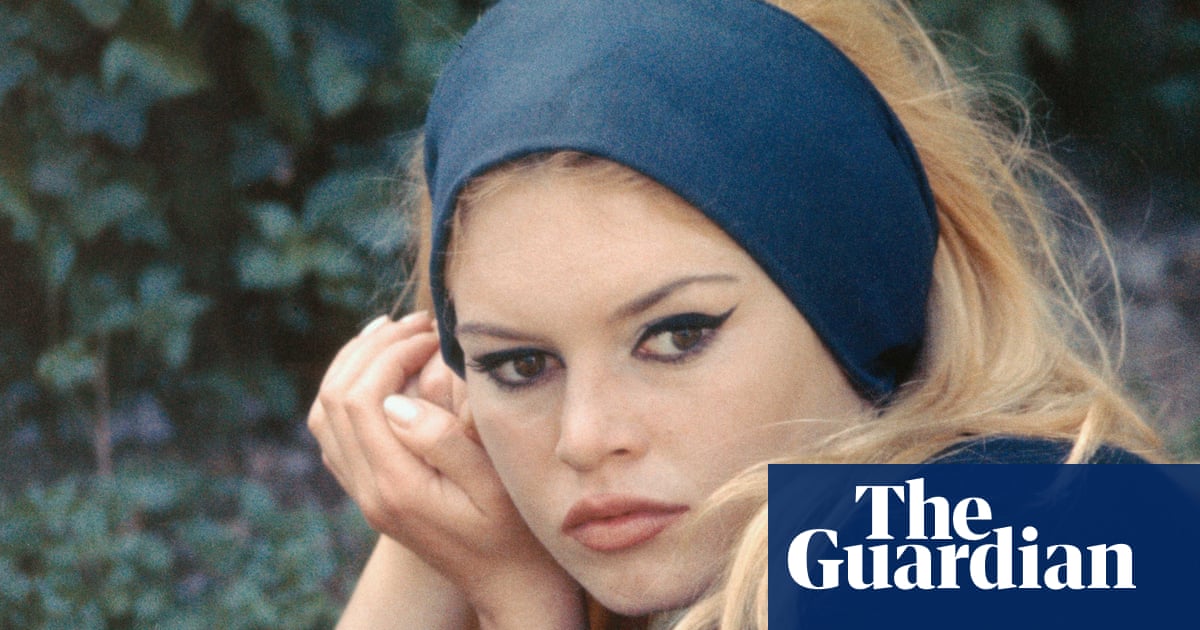
Brigitte Bardot, French screen legend, dies aged 91 | Brigitte Bardot | The Guardian
Emmanuel Macron leads tributes to actor who became an international sex symbol and later embraced animal rights and far-right politics
theguardian.com →Brigitte Bardot in Jean-Luc Godard’s Le Mépris (Contempt) in 1963. Photograph: Nana Productions/Rex Features Brigitte Bardot in Jean-Luc Godard’s Le Mépris (Contempt) in 1963. Photograph: Nana Productions/Rex Features Brigitte Bardot, the French actor and singer who became an international sex symbol before turning her back on the film industry and embracing the cause of animal rights activism and far-right politics, has died aged 91. Paying tribute to Bardot on Sunday, the French president, Emmanuel Macron, wrote on social media that France was mourning “a legend of the century”. “Her films, her voice, her dazzling glory … her sorrows, her generous passion for animals, her face that became Marianne, Brigitte Bardot embodied a life of freedom,” Macron said. Bardot’s death, at her Saint-Tropez home, La Madrague, on the French Riviera, was announced by her foundation. “The Brigitte Bardot Foundation announces with immense sadness the death of its founder and president, Madame Brigitte Bardot, a world-renowned actress and singer, who chose to abandon her prestigious career to dedicate her life and energy to animal welfare and her foundation,” it said. Her cause of death was not made public. Bardot was briefly hospitalised in October for what her office called a “minor” procedure. The town hall in Saint-Tropez, where Bardot had holidayed as a child and where she later shot the film And God Created Woman, said the actor had “helped make Saint-Tropez shine across the world”. The town said Bardot was its “most radiant ambassador” and part of “the collective memory of Saint-Tropez, which we must preserve”. Bardot shot to international fame in 1956 with And God Created Woman, written and directed by her then husband, Roger Vadim, and for the next two decades was said to have embodied the idea of the archetypal “sex kitten”. In the early 1970s, however, she announced her retirement from acting and became an outspoken campaigner on animal rights, and increasingly active politically on the far right. Jordan Bardella, the president of Marine Le Pen’s far-right National Rally party (RN), which Bardot supported, wrote: “Brigitte Bardot was a woman of heart, conviction and character. An ardent patriot, devoted to animals that she protected throughout her life, she embodied a whole French era, but also above all a certain idea of courage and freedom.” Le Pen, whom Bardot once described as “the Joan of Arc of the 21st century”, wrote on social media that Bardot was “exceptional for her talent, courage, frankness and beauty”. “She was incredibly French,” she said. “Free, indomitable, whole. She will be hugely missed.” Such was Bardot’s role in the far right’s cultural pantheon that tributes were also paid to her from Italy’s government, where the deputy prime minister, Matteo Salvini, called her “a timeless star, but above all a woman who was free, nonconformist, protagonist of courageous battles in defence of our traditions”. The Italian culture minister, Alessandro Giuli, said: “Brigitte Bardot was not only one of the great protagonists of world cinema, but also an extraordinary interpreter of western fundamental freedoms.” He said she “resolutely defended her vision of cultural and social values and civic engagement”. But it was Vadim’s And God Created Woman, in which Bardot played an uninhibited teenager in Saint-Tropez, that consolidated her image and turned her into an international icon. The film was a huge hit in France, as well as internationally, and catapulted Bardot into the front rank of French screen performers. As well as for cinema audiences, Bardot swiftly became an inspiration for intellectuals and artists ; not least the young John Lennon and Paul McCartney, who demanded their then girlfriends dye their hair blond in imitation of her. The columnist Raymond Cartier wrote a lengthy article about “le cas Bardot” in Paris-Match in 1958, while Simone de Beauvoir published her famous essay Brigitte Bardot and the Loli
Excerpt from a page describing this subject · 16,868 chars · not written by Vinony
Wikidata facts
- Instance of
- human
- Given name
- Brigitte
- Gender
- female
- Citizenship
- France
- Place of birth
- 15th arrondissement of Paris
- Place of death
- Saint-Tropez
- Sibling
- Mijanou Bardot
- Languages spoken
- French
- Native language
- French
- Religion
- Catholicism
- Notable work
- The Legend of Frenchie King
- Field of work
- animal protection
- Instrument
- voice
- Official website
- www.brigitte-bardot.fr
- Image
- Brigitte Bardot - 1962.jpg
- Number of children
- 1
- Convicted of
- incitement to ethnic or racial hatred
Show 19 more facts
- Commons category
- Brigitte Bardot
- date of birth
- 1934-09-28
- lifestyle
- vegetarianism
- birth name
- Brigitte Anne-Marie Bardot
- Commons gallery
- Brigitte Bardot
- unmarried partner
- Serge Gainsbourg
- name in native language
- Brigitte Bardot
- topic's main category
- Category:Brigitte Bardot
- filmography
- Brigitte Bardot filmography
- start of work period
- 1952-00-00
- social media followers
- 14300
- end of work period
- 1982-00-00
- on focus list of Wikimedia project
- Wikipedia:Vital articles/Level/4
- nickname
- BB
- P12749
- Augusto Roa Bastos
- date of death
- 2025-12-28
- described at URL
- baike.sogou.com/v409050.htm
- cause of death
- cancer
- manner of death
- natural causes
Sources (15)
via Wikidata · CC0
~40 min read
Encyclopedic overview
Brigitte Anne-Marie Bardot ( French: [bʁiʒit anmaʁi baʁdo]; 28 September 1934 – 28 December 2025), often referred to by her initials B.B., was a French actress, singer, model, and animal rights activist. She became one of the best-known symbols of the sexual revolution and gained international fame for portraying characters associated with hedonistic lifestyles. Although she withdrew from the entertainment industry in 1973, she remained a major pop culture icon. She appeared in 47 films, performed in several musicals, and recorded more than 60 songs. She was awarded the Legion of Honour in 1985.
Born and raised in Paris, Bardot was an aspiring ballerina during her childhood. She began her acting career in 1952 and achieved international recognition in 1957 for her role in And God Created Woman (1956), catching the attention of many French intellectuals and earning her the nickname "sex kitten". She was the subject of philosopher Simone de Beauvoir's 1959 essay The Lolita Syndrome, which described her as a "locomotive of women's history" and built upon existentialist themes to declare her the most liberated woman of France. She won a 1961 David di Donatello Best Foreign Actress Award for her work in The Truth (1960). Bardot later starred in Jean-Luc Godard's film Le Mépris (1963). For her role in Louis Malle's film Viva Maria! (1965), she was nominated for the BAFTA Award for Best Foreign Actress. French president Charles de Gaulle called Bardot "the French export as important as Renault cars".
Excerpted from Wikipedia’s “Brigitte Bardot” article, available under the CC BY-SA 4.0 licence.
Gallery (14)
Available in 127 languages
- Español
- Français
- Deutsch
- 中文
- 日本語
- Русский
- Português
- Italiano
- العربية
- हिन्दी
- Afrikaans
- Albanian
- Albanian
- Amharic
- Aragonese
- Armenian
- Asturian
- Aymara
Show 108 more
- Azerbaijani
- Bahasa Indonesia
- Bangla
- Bashkir
- Basque
- bat_smg
- be_x_old
- Belarusian
- Bislama
- Bosnian
- Breton
- Bulgarian
- Catalan
- Cebuano
- Chuvash
- Corsican
- Croatian
- Czech
- Danish
- Egyptian Arabic
- Esperanto
- Estonian
- Faroese
- Fiji Hindi
- Filipino
- Finnish
- Galician
- Georgian
- gpe
- Greek
- Guarani
- Haitian Creole
- Hawaiian
- Hebrew
- Hungarian
- hyw
- Iban
- Icelandic
- Ido
- Iloko
- Interlingua
- Interlingue
- Irish
- Javanese
- Kabardian
- Kashmiri
- Kazakh
- Latin
- Latvian
- Limburgish
- Lithuanian
- Luxembourgish
- Macedonian
- Malagasy
- Malay
- Malayalam
- Manx
- Marathi
- Mingrelian
- Mongolian
- Neapolitan
- Nederlands
- Norwegian
- Norwegian Nynorsk
- Novial
- Occitan
- Pampanga
- Picard
- Piedmontese
- Polski
- Quechua
- Romanian
- Scots
- Serbian
- Serbian (Latin)
- Sicilian
- Silesian
- simple
- skr
- Slovak
- Slovenian
- Sranan Tongo
- Svenska
- Swahili
- Tajik
- Tamil
- Tatar
- Tiếng Việt
- Türkçe
- Ukrainian
- Urdu
- Uzbek
- Venetian
- Volapük
- Waray
- Welsh
- Western Frisian
- Western Panjabi
- Wu Chinese
- Yakut
- Yiddish
- Yoruba
- Zaza
- zh_min_nan
- zh_yue
- فارسی
- ไทย
- 한국어
via Wikidata sitelinks · CC0