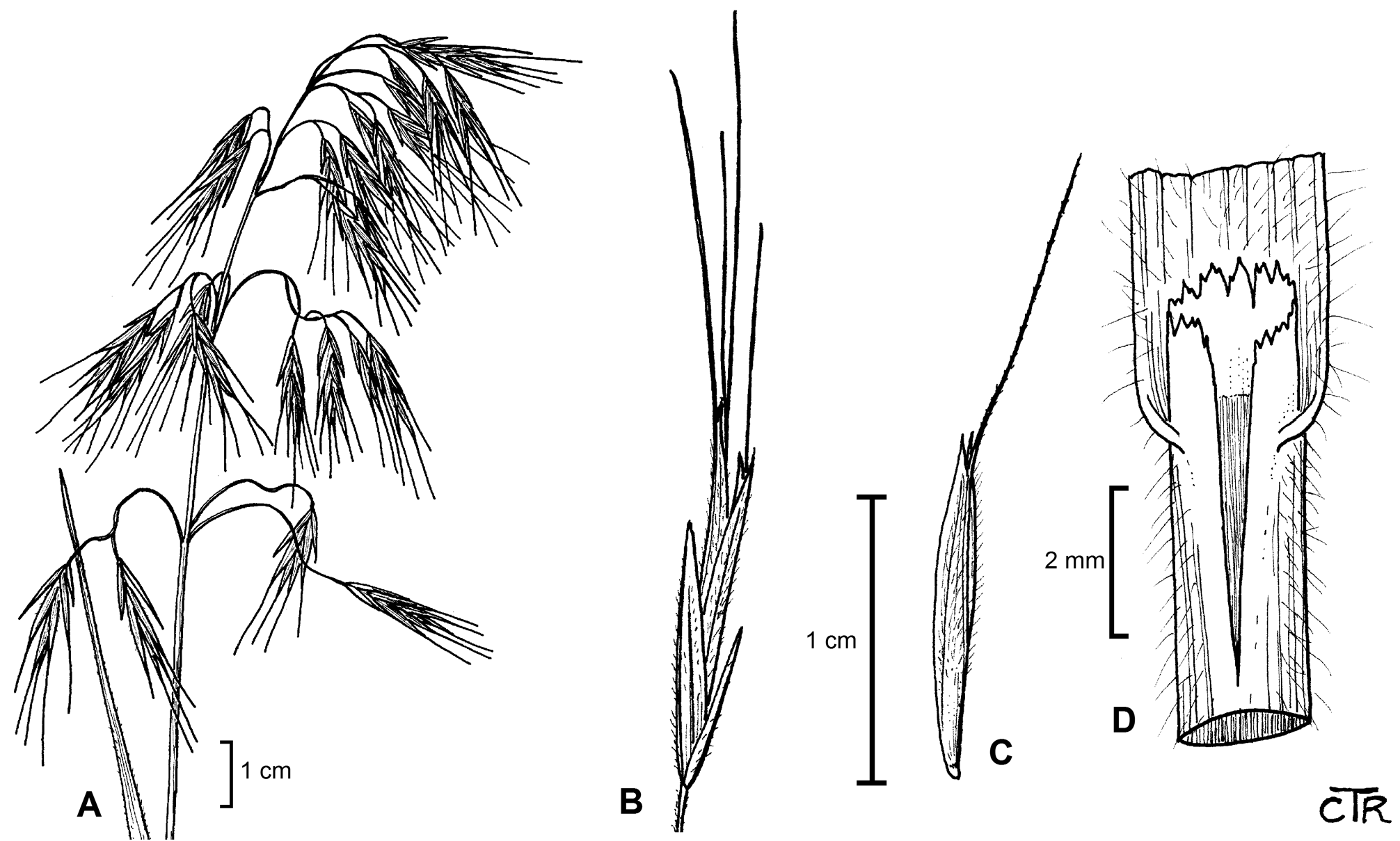
Saarela, Jeffery M.;Peterson, Paul M.;Valdés-Reyna, Jesus
Bromus tectorum
Sign in to saveAlso known as Drooping Brome, Downy Brome, Downy Chess, cheatgrass
Species of grass
OverviewAI-generated
*Bromus tectorum*, commonly known as Cheatgrass, Drooping Brome, or field brome, is a species of plant in the family Poaceae. It belongs to the genus *Bromus* and is classified within the order Poales, class Liliopsida, and phylum Tracheophyta. The species is also referred to by the names Dach-Trespe, sveřep střešní, and kattokattara.
The taxon range includes China, Switzerland, Xinjiang, and the Tibet Autonomous Region. Records from iDigBio indicate presence in the United States, Canada, and Mexico, while the species is noted as invasive to Oregon and Canada. An Encyclopedia of Life description lists Chile Central. The species has been documented in collections at institutions such as the University of Alberta Museums and CAS.
Synthesized by Vinony from 36 facts across 8 sources: Wikidata, GBIF, iNaturalist, Gbif Occ, Encyclopedia of Life, Plants of the World, iDigBio, Vinony graph. Generated from structured data (not the Wikipedia text) and checked against those facts — may still contain errors.
Species
Cheatgrass
SPECIES
- KingdomPlantae
- PhylumTracheophyta
- ClassLiliopsida
- OrderPoales
- FamilyPoaceae
Chile Central
via GBIF · Kew POWO
Museum specimens
- Specimen records
- 14,490
- With media
- 9,494
- Family
- Poaceae
- Collections
- UNIVERSITY OF ALBERTA MUSEUMS, UAAAN, FC-UABC, IB-CUCBA-UDG, CAS, BHSC
- Recorded in
- United States, Canada, Mexico
Wikidata facts
Show 10 more facts
- Commons category
- Bromus tectorum
- taxon rank
- species
- taxon name
- Bromus tectorum
- taxon common name
- strešni glistnik
- Commons gallery
- Bromus tectorum
- invasive to
- Canada
- taxon range
- Tibet Autonomous Region
- short name
- B. tectorum
- taxon author citation
- Ledeb.
Sources (9)
via Wikidata · CC0
~19 min read
Encyclopedic overview
(Learn how and when to remove this message)
Bromus tectorum, known as downy brome, drooping brome, or cheatgrass, is a winter annual grass native to Europe, southwestern Asia, and northern Africa, but has become invasive in many other areas. It now is present in most of Europe, southern Russia, Japan, South Africa, Australia, New Zealand, Iceland, Greenland, North America, and western Central Asia. In the eastern US, B. tectorum is common along roadsides and as a crop weed, but usually does not dominate an ecosystem. It has become a dominant species in the Intermountain West and parts of Canada, and displays especially invasive behavior in the sagebrush steppe ecosystems, where it has been listed as noxious weed. B. tectorum often enters the site in an area that has been disturbed, and then quickly expands into the surrounding area through its rapid growth and prolific seed production.
Excerpted from Wikipedia’s “Bromus tectorum” article, available under the CC BY-SA 4.0 licence.