Described at
Brown rot: Causes, Symptoms & Control | RHS Advice
Brown rot is a fungal disease of apples, pears, plums, cherries and some other fruit and ornamental trees, causing a brown, spreading rot in fruit.
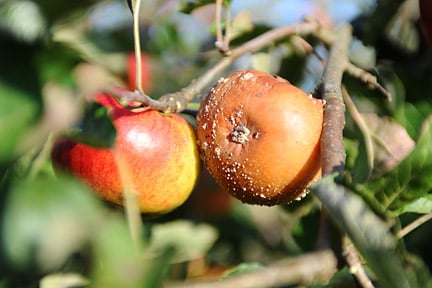
rhs.org.uk →Brown rot is a fungal disease of apples, pears, plums, cherries and some other fruit and ornamental trees, causing a brown, spreading rot in fruit. It is caused by the same fungi that cause blossom wilt of the flowers and fruit spurs. A fungal disease that can affect apples, pears, plums, cherries and some related fruit and ornamental trees, causing a brown, spreading rot in the fruits, often with light brown pustules of spores visible. Many fruit trees and their ornamental cultivars are affected, including apples, pears, plums, cherries, nectarines, peaches, quinces and apricots. A fungal disease that can affect apples, pears, plums, cherries and some related fruit and ornamental trees, causing a brown, spreading rot in the fruits, often with light brown pustules of spores visible. in the fruit, spreading out from wounds, especially those made by birds, codling moth and apple scab infection Infection can spread between touching fruit in a cluster Affected fruit either fall, or remain hanging on the tree in a mummified state Buff-coloured pustules of the causal fungi on the fruit surface, often in concentric rings. Usually seen under wet conditions At flowering time the same fungi cause blossom wilt , where blossoms and leaves on fruiting spurs turn brown and shrivel Severity varies greatly from year to year, depending on weather conditions at flowering Minimise carry-over of the pathogens by removing and disposing of all brown rotted fruit promptly. To dispose of fruit, you can bury them at least 30cm (1ft) below the soil surface, or put them in the local council green waste Plant-based waste that is suitable for composting, such as dead leaves, clippings from pruning or grass mowing and discarded annuals. Many local councils have green waste recycling schemes if home composting isn't an option. (although check first as some councils will not accept large volumes of rotting fruit). Do not allow rotted fruit to remain on the tree Brown rot A fungal disease that can affect apples, pears, plums, cherries and some related fruit and ornamental trees, causing a brown, spreading rot in the fruits, often with light brown pustules of spores visible. No fungicides are available to amateur gardeners for the control of brown rot. Fruit becomes infected through wounds. Affected fruits mummify and may remain hanging on the tree, and where they touch the bark Bark is the outermost layer of woody plants (trees, shrubs and woody climbers). It is several cells thick and provides protection against physical damage, disease and environmental stresses. Bark comes in a wide variety of colours and patterns, and these can help gardeners when identifying plants. The fissures and crevices of bark on older plants also creates valuable habitat for many garden creatures as well as lichens and small plants. they cause small infections (cankers). The fungus remains in the dead fruit and cankers over winter and releases spores in the spring to cause the blossom wilt phase of the disease. These infections in turn release spores to infect wounded fruit. Apple powdery mildew is a fungal disease of apple trees and some related trees and shrubs. It can cause several different symptoms, depending on the time of year. Infection can sometimes lead to significant yield loss and reduced fruit quality. Pruning an apple or pear tree can be daunting for many gardeners. Rather than be put off completely or panic and inadvertently harm the tree back by excessive pruning, instead try our easy guide and enjoy a well-shaped, productive tree. Apple canker is a fungal disease causing disfiguring and sunken patches of dead bark on the branches of apple and some other trees. Infections often begin at wounds or buds. Apple scab and pear scab are two fungal diseases that cause dark, scabby marks on the fruit and leaves of apples, pears and some other ornamental fruits. They are so similar that they are dealt with in the same way. If handled carefully and placed in
Excerpt from a page describing this subject · 25,265 chars · not written by Vinony
Wikidata facts
- Subclass of
- plant disease
- Image
- Monilinia disease of apple 01.jpg
Show 2 more facts
- described at URL
- www.rhs.org.uk/advice/profile?PID=114
- afflicts
- Pyrus communis
via Wikidata · CC0