Encyclopedia of Life · EOL (see source)
Bunchosia
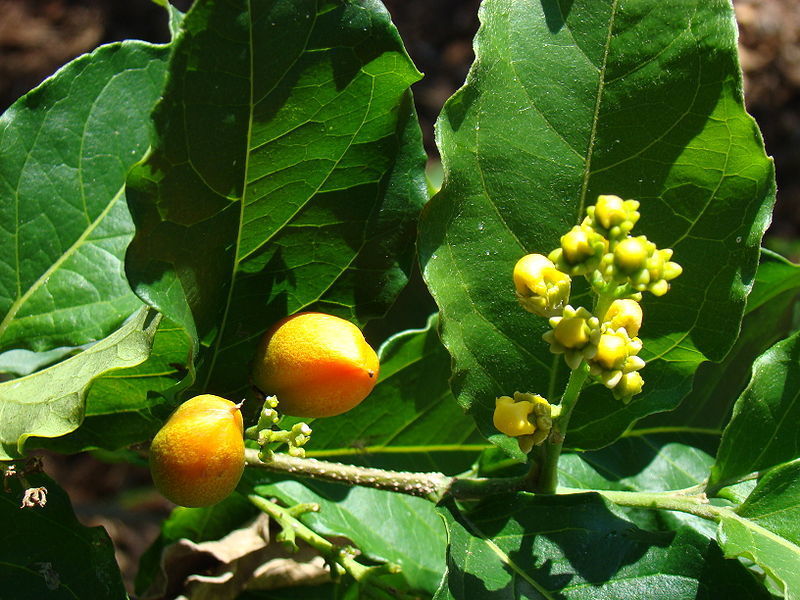
Sign in to saveBunchosia is a genus in the Malpighiaceae, a family of about 71 genera of flowering plants in the order Malpighiales. It currently (December 2025) contains 92 species of trees and shrubs, which are native to relatively dry woodlands, savannas, and wet forests. Their range extends from Mexico and the Caribbean to Peru, southern Brazil and northeast Argentina. Bunchosia is one of three arborescent genera of Malpighiaceae with fleshy, bird-dispersed fruits, the other two being Malpighia and Byrsonima.
Species
GENUS
- KingdomPlantae
- PhylumTracheophyta
- ClassMagnoliopsida
- OrderMalpighiales
- FamilyMalpighiaceae
Bunchosia là một chi thực vật có hoa trong họ Malpighiaceae.[2] Mục lục 1 Loài 2 Hình ảnh 3 Chú thích 4 Liên kết ngoài Loài Chi Bunchosia gồm các loài: Hình ảnh Chú thích ^ “Bunchosia Rich. ex Kunth”. Germplasm Resources Information Network. United States Department of Agriculture. Ngày 17 tháng 9 năm 1996. Truy cập ngày 29 tháng 6 năm 2010. ^ The Plant List (2010). “Bunchosia”. Truy cập ngày 25 tháng 9 năm 2013. Liên kết ngoài Phương tiện liên quan tới Bunchosia tại Wikimedia Commons Dữ liệu liên quan tới Bunchosia tại Wikispecies Bài viết Họ Sơ ri này vẫn còn sơ khai. Bạn có thể giúp Wikipedia bằng cách mở rộng nội dung để bài được hoàn chỉnh hơn. x t s
via GBIF · Kew POWO
Museum specimens
- Specimen records
- 1,512
- With media
- 780
- Family
- Malpighiaceae
- Collections
- CICY, ECOSUR, INECOL, DERN-IMECBIO-CUCSUR-UDG, UNICACH, IIB-UV
- Recorded in
- Mexico
Wikidata facts
- Instance of
- taxon
- Parent taxon
- Malpighiaceae
- Image
- Bunchosia nitida 1.jpg
Show 6 more facts
- topic's main category
- Category:Bunchosia
- taxon rank
- genus
- Commons category
- Bunchosia
- taxon common name
- 文雀木属
- taxon name
- Bunchosia
Sources (1)
via Wikidata · CC0
~2 min read
Encyclopedic overview
5 sectionsContents
- Etymology
- Selected species
- Formerly placed here
- References
- External links
Bunchosia is a genus in the Malpighiaceae, a family of about 71 genera of flowering plants in the order Malpighiales. It currently (December 2025) contains 92 species of trees and shrubs, which are native to relatively dry woodlands, savannas, and wet forests. Their range extends from Mexico and the Caribbean to Peru, southern Brazil and northeast Argentina. Bunchosia is one of three arborescent genera of Malpighiaceae with fleshy, bird-dispersed fruits, the other two being Malpighia and Byrsonima.
==Etymology== Antoine Laurent De Jussieu explained the name of the genus as from the resemblance of the paired seeds, flat on one side and convex on the other, to coffee beans. He stated that the name was from one of the old Arabic words for coffee: bunchos. At least one species is said to have poisonous seeds.
Excerpted from Wikipedia’s “Bunchosia” article, available under the CC BY-SA 4.0 licence.
Gallery (3)
Available in 10 languages
via Wikidata sitelinks · CC0