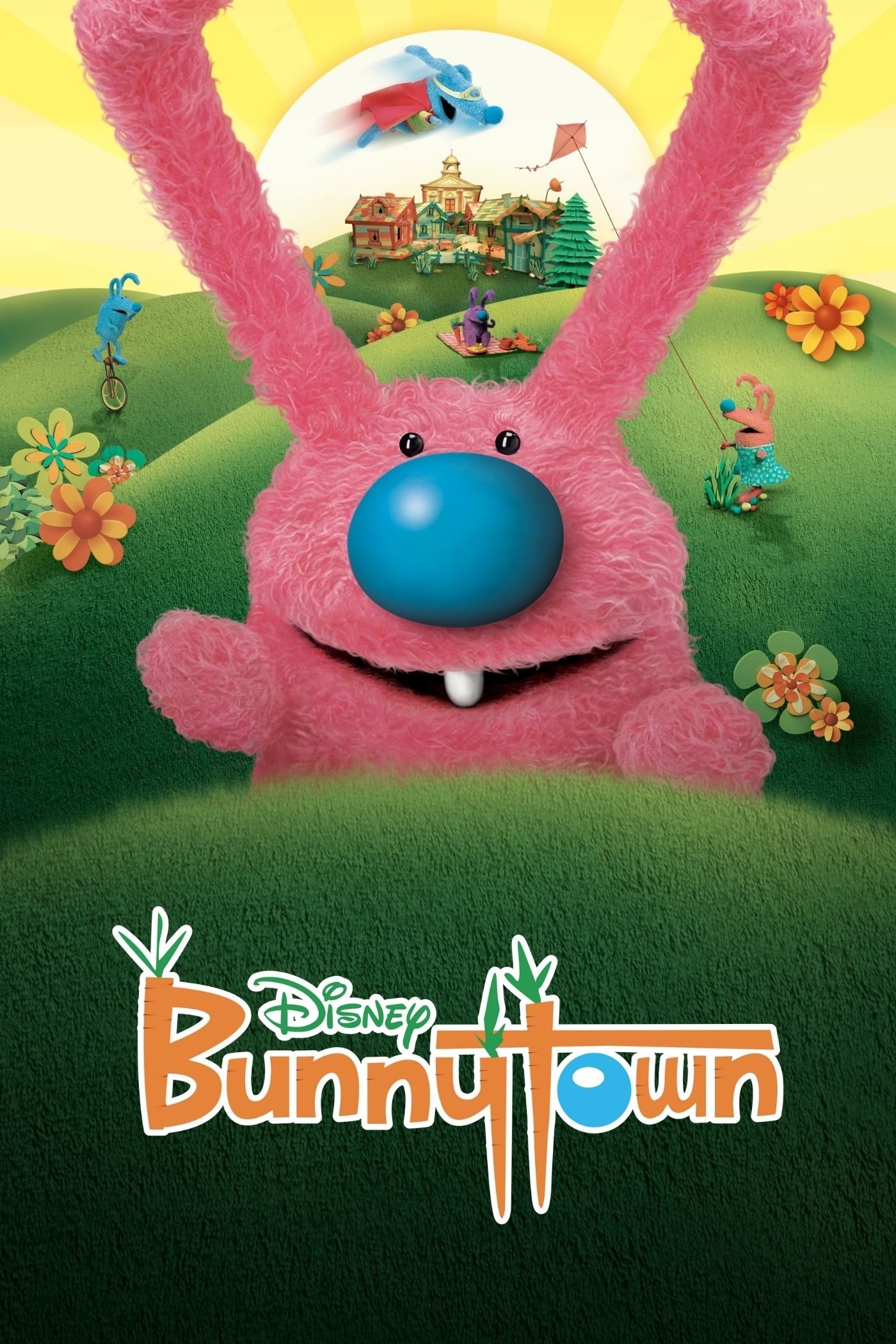
Poster from TMDB · Courtesy of TMDB
Bunnytown
Sign in to saveBunnytown is a children's television program produced as a co-production between Spiffy Pictures in the United States and Baker Coogan Productions in the United Kingdom for Playhouse Disney. It premiered in the United Kingdom on November 3, 2007 and in the United States on November 10, 2007. The series received generally positive reviews from critics.
TV series · TMDB
★ 5.5Bunnytown is a children's television program that airs on Playhouse Disney in the United States and Great Britain, as well as more than seventy other countries. The program, created by David Rudman, his brother Adam and Todd Hannert, under their Spiffy Pictures banner, began airing in Canada on November 3, 2007, and in the USA a week later. It is produced by future Jim Henson Company employee Bill Barretta. UK viewers got a premiere of the program on January 13, 2008 on the Playhouse Disney channel sublet of pay-broadcaster Family Channel. In France, the series began on January 27, 2008, and kept its original title Bunnytown. The show is produced at Ontario, Canada with many of the "Peopletown" segment exterior scenes done at Clarence Park and Verulamium Park in nearby St Albans. It is rated TV-Y in the USA and C in Canada as per their respective countries.
- Aired
- 2007–2008
- Seasons
- 2 · 36 episodes
- Status
- Ended
- Network
- Disney Junior
- Genres
- Kids, Family, Animation
This product uses the TMDB API but is not endorsed or certified by TMDB.
Key facts
- Television.image
- Bunnytown.jpg
- Television.genre
- Children's television series
- Television.creator
- David RudmanAdam RudmanTodd Hannert
- Television.director
- David Rudman
- Television.starring
- Alice Dinnean-VernonEric JacobsonMark JefferisNigel PlaskittDavid RudmanVictoria WillingMak Wilson
- Television.open_theme
- Bunnytown
- Television.end_theme
- ''It's a Bunnytown Life''
- Television.composer
- Todd HannertTerry Fryer
- Television.country
- United StatesUnited Kingdom
- Television.language
- English
- Television.num_seasons
- 1
- Television.num_episodes
- 26
- Television.executive_producer
- David RudmanAdam RudmanTodd Hannert
- Television.company
- Baker Coogan ProductionsSpiffy Pictures
- Television.location
- Elstree Studios
- Television.camera
- Multi-camera
- Television.runtime
- 24 minutes
- Television.network
- Playhouse Disney
via Wikipedia infobox
Wikidata facts
- Instance of
- television series
- Country of origin
- Canada
- Original language
- English language
- Creator
- David Rudman
- Duration
- 24
- Distribution format
- video on demand
- Official website
- movies.disney.com/bunnytown
Show 8 more facts
- number of episodes
- 26
- number of seasons
- 1
- original broadcaster
- Disney Channel
- start time
- 2007-11-10
- end time
- 2008-11-08
- distributed by
- Hulu
- title
- Bunnytown
- different from
- Zajączkowo
Sources (7)
via Wikidata · CC0
~8 min read
Encyclopedic overview
13 sectionsContents
- Format
- Cast
- Puppeteers
- Live-action cast
- Episodes
- Production
- Release
- Broadcast
- Home media
- Reception
- Critical response
- Accolades
- References
Bunnytown is a children's television program produced as a co-production between Spiffy Pictures in the United States and Baker Coogan Productions in the United Kingdom for Playhouse Disney. It premiered in the United Kingdom on November 3, 2007 and in the United States on November 10, 2007. The series received generally positive reviews from critics.
==Format== The basic format features between ten and twelve segments as follows: A running gag setting up some sort of problem played out in four parts such as bunnies getting ready to race, drumming, etc. For example, the bunnies get ready for a race in the first episode "Hello Bunnies!" but they end up disco dancing in the first part (events with disco balls usually happen in the third part in most episodes), sleeping in the second, flying in the third and finally racing in the fourth part before the ending song but there is a tape at the finish line which flies them back to the start of the race, but they failed again. Red and Fred, a silent comedy-slapstick pratfall team in Peopletown made up of a fat ginger haired man and a smaller, thin dark haired male, played by Ed Gaughan and Andrew Buckley. This is done in the vein of Laurel and Hardy, who have the same style as Red and Fred. On the US broadcast, they are known as "Two Best Friends". Before this scene, a bunny named Bart Bunnytoes travels through an underground tunnel system to reach Peopletown, where he watches the events before leaving. The Adventures of Super-Bunny, created new for Bunnytown follows the format of Little Bad Bunny stealing carrots from Bunnytown, and Super-Bunny comes to the rescue. The Bunnytown Hop, done by a rock-and-roll band inspired by mega groups such as Earth, Wind and Fire. Characters from earlier segments may take part in this song. Super Silly Sports, also held in Peopletown, hosted by Pinky Pinkerton (portrayed by Scottish actress Polly Frame), best known for her wearing a pink Alice band in her blonde bouffant hairdo along with a matching neck scarf and sportsjacket over a white tennis dress, along with pink and white-striped above-the-knee socks. An example of this spoofing of sports contests and their telecasts within is a staring contest between an 11-year-old boy and an Idaho potato (because both of them have "eyes"). Pinky's signature exclamation is "Oh me, oh my!" done multiple times. Just like in the Red and Fred segments, Bart travels through the underground tunnels to watch the events. After the payoff of the running gag, all of the bunnies gather to sing the closing song "It's a Bunnytown Life", followed by a bunny blowing on a party horn. The Bunnytown segments Two Best Friends (Red and Fred) and Super Silly Sports were formerly shown in bumper segments on Disney Junior.
Excerpted from Wikipedia’s “Bunnytown” article, available under the CC BY-SA 4.0 licence.