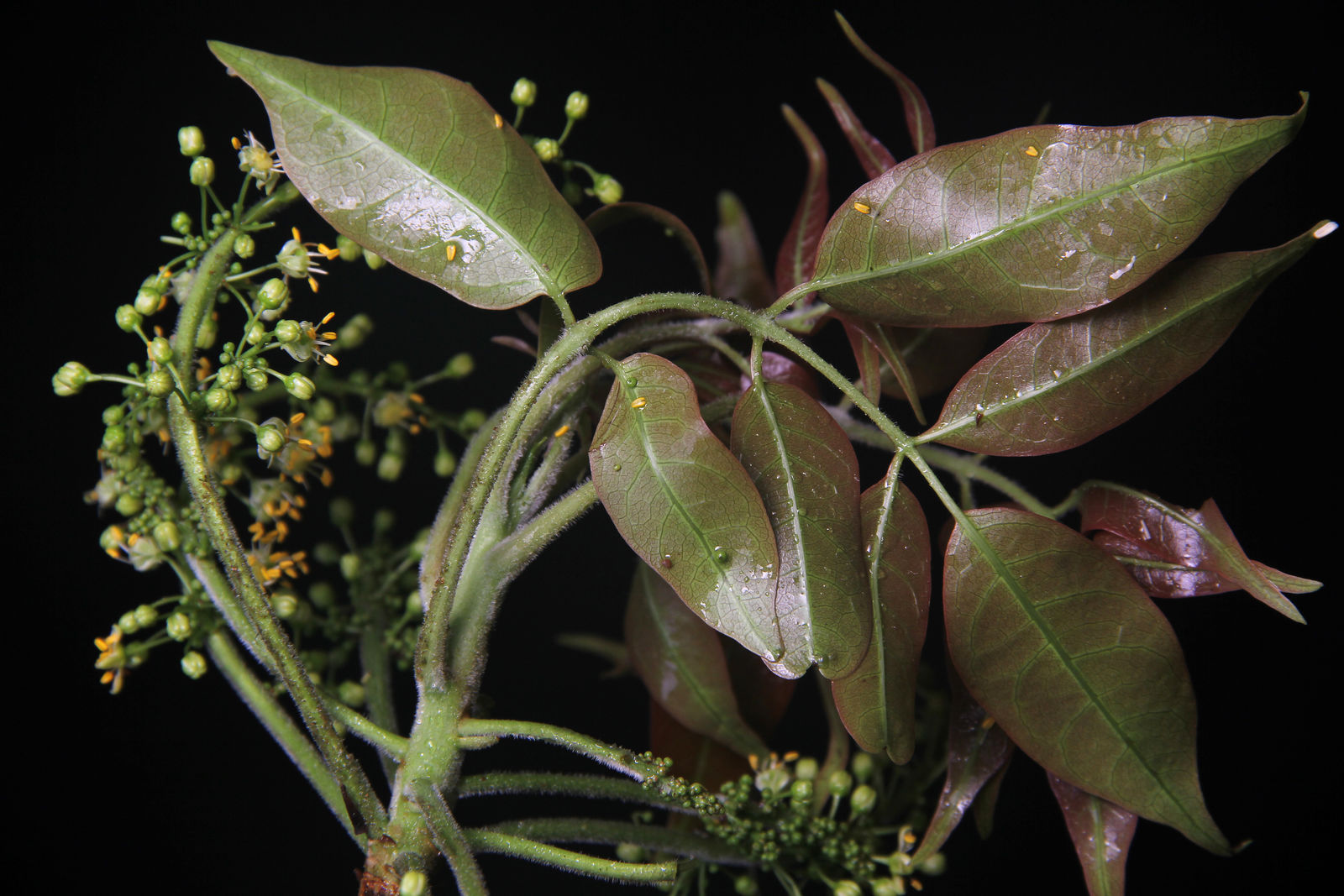
Bursera · Kew POWO · Kew Plants of the World Online
Bursera
Sign in to saveBursera is a genus with about 100 described species of flowering shrubs and trees varying in size up to high. It is the type genus for Burseraceae. The trees are native (often for many species endemic) to the Americas, from the southern United States south through to northern Argentina, in tropical and warm temperate forest habitats. It is named after the 17th-century Danish botanist Joachim Burser.
Species
GENUS
- KingdomPlantae
- PhylumTracheophyta
- ClassMagnoliopsida
- OrderSapindales
- FamilyBurseraceae
Common Name: aceitillo
via GBIF · Kew POWO
Museum specimens
- Specimen records
- 1,388
- With media
- 675
- Family
- Burseraceae
- Collections
- CIBNOR, SDNHM, GH, IBUNAM, ECOSUR, INECOL
- Recorded in
- Mexico, United States
Research
176 papers- Plant Extracts as Skin Care and Therapeutic Agents.International journal of molecular sciences · 2023
- Lignans from Bursera fagaroides: Chemistry, Pharmacological Effects and Molecular Mechanism. A Current Review.Life (Basel, Switzerland) · 2021
- An Ethnopharmacological, Phytochemical and Pharmacological Review on Lignans from Mexican Bursera spp.Molecules (Basel, Switzerland) · 2018
- Bursera copallifera Extracts Have Cytotoxic and Migration-Inhibitory Effects in Breast Cancer Cell Lines.Integrative cancer therapies · 2018
- Essential Oil of Bursera morelensis Promotes Cell Migration on Fibroblasts: In Vitro Assays.Molecules (Basel, Switzerland) · 2023
via PubMed
Wikidata facts
- Instance of
- taxon
- Parent taxon
- Burseraceae
- Image
- Bursera simaruba0.jpg
Show 6 more facts
- Commons category
- Bursera
- taxon name
- Bursera
- taxon rank
- genus
- topic's main category
- Category:Bursera
- taxon common name
- 裂榄属
Sources (1)
via Wikidata · CC0
~3 min read
Encyclopedic overview
5 sectionsContents
- Species
- Formerly placed here
- Uses
- Gallery
- References
Bursera is a genus with about 100 described species of flowering shrubs and trees varying in size up to high. It is the type genus for Burseraceae. The trees are native (often for many species endemic) to the Americas, from the southern United States south through to northern Argentina, in tropical and warm temperate forest habitats. It is named after the 17th-century Danish botanist Joachim Burser.
Several Mexican species (such as B. aloexylon and B. delpechiana) produce a type of wood known as linaloe (from Mexican Spanish , from Latin , ). They contain the aromatic oil linalool.
Excerpted from Wikipedia’s “Bursera” article, available under the CC BY-SA 4.0 licence.