Canada is a North American country spanning from the Atlantic to the Pacific Ocean with ten provinces and three territories, making it the second-largest country by area and giving it the world's longest coastline. With over 41 million people concentrated mainly in urban areas, Canada is characterized by diverse climates and geography, and shares the world's longest international land border with the United States.
AI-generated from the Wikipedia summary — may contain errors.
Weather now
7-day forecast
via Open-Meteo
Country

- Capital
- Ottawa
- Population
- 41,651,653
- Region
- Americas · North America
- Demonym
- Canadian
- Currencies
- CAD ($)
- Languages
- English, French
- Calling code
- +1
- Drives on
- Right
- Gini
- 33.3 (2017)
- FIFA code
- CAN
- TLD
- .ca
- Timezones
- UTC-08:00 · +5 more
- Borders
- USA
via REST Countries
Indicators · World Bank
- GDP
- $2.2T(2024)
- Population
- 41,288,599(2024)
- Life expectancy
- 82.1 yrs(2024)
- Unemployment
- 6.9 %(2025)
- Urban population
- 82.7 %(2024)
- Internet users
- 94.4 %(2024)
- Forest area
- 39.5 %(2023)
- Renewable energy
- 23.8 %(2021)
via World Bank Open Data · CC BY 4.0
Place details
- Region
- Northwest Territories
- Country
- Canada
- Population
- 37,058,856
via OpenStreetMap · GeoNames
Wikipedia views (30d)
484,805 totalvia Wikimedia Pageviews API
Key facts
- Country.conventional_long_name
- Canada
- Country.common_name
- Canada
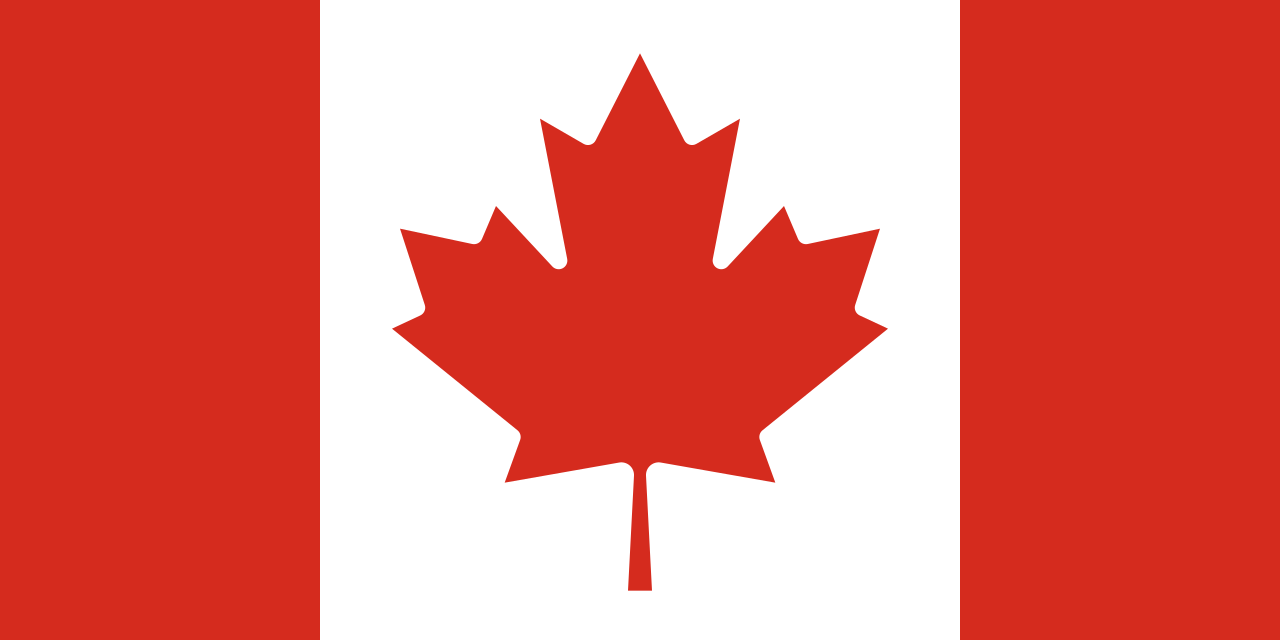
- Country.image_flag
- Flag of Canada (Pantone).svg
- Country.alt_flag
- A vertical triband design (red, white, red) with a red maple leaf in the centre.
- Country.national_motto
- "From Sea to Sea"
- Country.national_anthem
- "O Canada"
- Country.royal_anthem
- "God Save the King"
- Country.image_map
- CAN orthographic.svg
- Country.map_width
- 220px
- Country.alt_map
- A projection of North America with Canada highlighted in green
- Country.capital
- Ottawa
- Country.largest_city
- Toronto
- Country.demonym
- Canadian
- Country.government_type
- Federal parliamentary constitutional monarchy
- Country.leader_title1
- Monarch
- Country.leader_name2
- Mary Simon
- Country.leader_title3
- Prime Minister
- Country.leader_name3
- Mark Carney
via Wikipedia infobox
Research
1,510,768 papers- Canada's reckoning?Lancet (London, England) · 2024Schrecker TDOI: 10.1016/S0140-6736(24)01009-2
- Canada's pandemic response and future preparedness.BMJ (Clinical research ed.) · 2023Lee KDOI: 10.1136/bmj.p1622
- [Canada's guidance on alcohol and health : A paradigm shift].ReviewHerz · 2024Maisch BDOI: 10.1007/s00059-023-05226-x
- Canada's pathology.CMAJ : Canadian Medical Association journal = journal de l'Association medicale canadienne · 2008Chorneyko K, Butany J, Hébert PC et al.DOI: 10.1503/cmaj.080710
- Canada's pharmacare showdown.Lancet (London, England) · 2024Webster PDOI: 10.1016/S0140-6736(24)00348-9
- Canada's healthy future?Lancet (London, England) · 2015DOI: 10.1016/S0140-6736(15)00732-1
- Canada's role in global veterinary medicine.The Canadian veterinary journal = La revue veterinaire canadienne · 2019Chotowetz T
- Canada's Single-Payer Health Care System-Reply.JAMA · 2019Woolhandler S, Himmelstein DUDOI: 10.1001/jama.2019.14406
via PubMed
Wikidata facts
- Instance of
- federation
- Part of
- North America
- Named after
- Stadacona
- Official name
- Canada
- Demonym
- Ceanadach
- Award
- Nansen Refugee Award
- Participant in
- Second Boer War
- Country
- Canada
- Contains
- District of Keewatin
- Continent
- North America
- Capital
- Ottawa
- Official language
- French
- Currency
- Canadian dollar
- Population
- 40000000
- Area
- 9984670
- Elevation
- 487
- Time zone
- UTC−07:00
- Body of water
- Hudson Bay
- Head of government
- Mark Carney
- Head of state
- Charles III
- Form of government
- constitutional monarchy
- Legislature
- Parliament of Canada
- Anthem
- O Canada
- Shares border with
- Greenland
Show 95 more facts
- Highest point
- Mount Logan
- Official website
- www.canada.ca
- Image
- Canada - Location Map (2013) - CAN - UNOCHA.svg
- Life expectancy
- 81
- Nominal GDP
- 2206764000000
- Unemployment rate
- 7
- Calling code
- +1
- Licence plate code
- CDN
- Mains voltage
- 120
- Motto
- A mari usque ad mare
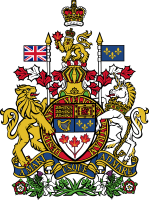
- Coat of arms
- coat of arms of Canada
- Patron saint
- North American Martyrs
- Significant event
- Canadian Confederation
- Has parts of class
- province or territory of Canada
- category of associated people
- Category:Canadian people
- foundational text
- Constitution Act, 1867
- office held by head of government
- Prime Minister of Canada
- Gini coefficient
- 33.3
- native label
- Canada
- diplomatic relation
- Nepal
- Commons gallery
- Canada
- history of topic
- history of Canada
- Commons category
- Canada
- maritime identification digits
- 316
- category for films shot at this location
- Category:Films shot in Canada
- category for people buried here
- Category:Burials in Canada
- retirement age
- 65
- railway traffic side
- right
- emergency phone number
- 911
- category for people who died here
- Category:Deaths in Canada
- official symbol
- Acer saccharum
- IPA transcription
- kanadɑ
- has seal, badge, or sigil
- Great Seal of Canada
- mobile country code
- 302
- maintained by WikiProject
- WikiProject Canada
- topic's main Wikimedia portal
- Portal:Canada
- motto
- A Mari Usque Ad Mare
- ethnic group
- Wolastoqiyik
- geography of topic
- Geography of Canada
- Stack Exchange tag
- travel.stackexchange.com/tags/canada
- highest judicial authority
- Judicial Committee of the Privy Council
- trunk prefix
- 1
- replaces
- Province of Canada
- has characteristic
- free country
- separated from
- United Kingdom
- total fertility rate
- 1.57
- compulsory education (minimum age)
- 6
- central bank
- Bank of Canada
- topic's main category
- Category:Canada
- executive body
- Government of Canada
- inception
- 1867-07-01
- top-level Internet domain
- .quebec
- category for people born here
- Category:Births in Canada
- short name
- 🇨🇦
- driving side
- left
- lowest point
- Arctic Ocean
- median income
- 70336
- language used
- French
- described by source
- New International Encyclopedia
- studied by
- Canadian studies
- literacy rate
- 99
- suicide rate
- 13.0
- GS1 country code
- 754-755
- culture
- culture of Canada
- maximum temperature record
- 49.6
- minimum temperature record
- -63.0
- category for maps or plans
- Category:Maps of Canada
- economy of topic
- economy of Canada
- water as percent of area
- 8.62
- demographics of topic
- demographics of Canada
- main regulatory text
- Constitution of Canada
- different from
- Canada
- Democracy Index
- 8.69
- hashtag
- canada
- topic has template
- Template:Canada topics
- Human Development Index
- 0.936
- P11012
- Quimper
- Happy Planet Index score
- 40.2
- Inequality-adjusted Human Development Index
- 0.860
- name
- ꠇꠣꠘꠣꠒꠣ
- has cabinet
- King's Privy Council for Canada
- P12749
- Lepontine Alps
- located in/on physical feature
- North America
- birth rate
- 9
- male population
- 19351209
- death rate
- 8.6
- rural population
- 7105599
- female population
- 19587848
- urban population
- 31833457
- Unicode character
- 🇨🇦
- described at URL
- www.newworldencyclopedia.org/entry/Canada
- Lemmy instance URL
- lemmy.ca
- Commonwealth Sport country code
- CAN
Sources (15)
via Wikidata · CC0
Travel guide
Understand
Canada is a land of vast distances and rich natural beauty. Canada's economic, cultural, linguistic and social characteristics closely resemble its neighbour to the south, the United States, but there are significant differences as well, as Canadians will be quick to tell you. For one thing, over 20% of Canadians (mostly, but by no means all, in Quebec) speak French as a first language. Also, while Canada is about the same size as the U.S. (larger if you count the many lakes), it has only about a tenth the population, most of them living within of the U.S.-Canada border. Large areas further north are quite sparsely populated, and some are nearly uninhabited wilderness.
Indigenous cultural symbolism is also generally more visible in Canada than in the U.S., and there are plenty of opportunities for tourists to engage with Indigenous cultures. Indigenous issues occupy a prominent role in mainstream Canadian political discourse.
Canada is consistently ranked as one of the wealthiest, least corrupt and most livable nations on Earth.
Get in
thumb|right|400px|Countries with visa-free access to Canada
Canada requires anybody who want to enter the country to be of "good moral character", with a strict interpretation regarding past offences. Any offence may make you inadmissible, including things not regarded as criminal offences in your home country and the country where they were committed, such as some traffic law violations. Also an active civil judgement or financial trouble, such as significant unpaid debt may make you inadmissibile. See Traveling with a criminal history#Canada.
Citizens of the following countries do not need a visa to visit Canada for a stay of (generally) up to six months, provided no work or study is undertaken and the traveller holds a passport valid for six months beyond their intended date of departure:
Andorra, Anguilla, Antigua and Barbuda, Australia, Austria, Bahamas, Barbados, Belgium, Bermuda, British Virgin Islands, Brunei, Bulgaria, Cayman Islands, Chile, Croatia, Cyprus, Czech Republic, Denmark, Estonia, Falkland Islands, Finland, France, Germany, Gibraltar, Greece, Hong Kong (BNO Passport or SAR Passport), Hungary, Iceland, Ireland, Israel (National Passport holders only), Italy, Japan, Latvia, Lithuania, Liechtenstein, Luxembourg, Malta, Monaco, Montserrat, Netherlands, New Zealand, Norway, Papua New Guinea, Pitcairn Islands, Poland, Portugal, Romania (biometric passports only), Samoa, San Marino, Singapore, Slovakia, Solomon Islands, South Korea, Spain, St. Helena, Sweden, …
Get around
Canada is huge – the second largest country in the world by area after Russia; this means that you will need several days to appreciate even a part of the country. The distances involved will boggle many travellers, though perhaps not those from other large countries.
For comparison, the distance from St. John's, Newfoundland to Vancouver (over 5,000 km or 3,000 miles as the crow flies) is considerably more than that from London to Moscow, or from Delhi to Shanghai or Istanbul.
The span of Canada's population is actually very small, however: 90% of Canada's population resides within 160 km of the southern border with the United States, and 57% of Canadians reside south of the parallel on which Seattle resides. As such, getting around in Canada is almost completely restricted to the southern "Canadian corridor", and travelling to or getting around northern Canada often requires flying.
See
thumb|[[Victoria (British Columbia)|Victoria]] Canada is a nation with many places of interest all across the country. Each province and territory is unique with each one containing its own special attractions. North American wildlife can be found all across the country.
British Columbia has much to offer ranging from Vancouver, one of the world's most cosmopolitan cities, to Haida Gwaii (Queen Charlotte Islands), an ecologist's paradise of pristine wilderness, and Vancouver Island. In the interior of the province, the towering Western Cordillera and Western Rocky Mountains provide stunning scenery and two of the famous Canadian Rocky Mountain Parks , Yoho National Park and Kootenay National Park. South-Central British Columbia is famous for the Okanagan, nationally renowned for its year-round mild climate and fine wineries. Some of the best skiing and snowboarding in Canada is to be found all across British Columbia, both at established resorts or backcountry, with Whistler being the most famous. BC has the greatest number of provincial parks in the country, and many are visited by fewer than 1,000 a year. thumb|[[Kootenay National Park]] The Canadian territories, though often expensive to reach, provide the natural tourist the least touched natural areas in the country. In Yukon, you have the majestic Northern Mountains, such as in Kluane National Park, and the relatively unknown Tombstone Territorial Park. While the Northwest Territories are relatively unknown to many adv…
Do
Canada is a country with a rich cultural heritage. In Canada, festivals and events are held annually to celebrate the multicultural landscape of this great nation. Each festival represents a single cultural facet belonging to the diverse population of Canada. These festivals are easily identified by season.
Buy
Popular souvenirs from Canada include smoked salmon and maple syrup products.
Eat
Generally speaking, table manners in Canada are in line with standard European norms.thumb|240px|Beavertail with sugar and cinnamon, [[Ottawa]]English Canadians may be mystified if you ask where you can get Canadian food. English Canadian cuisine varies radically from region to region. Some specialties include maple syrup, Nanaimo bars (chocolate-topped no-bake squares with custard or vanilla butter filling and crumb base), butter tarts (tarts made with butter, sugar, and eggs), beaver tails (fried dough topped with icing sugar), fiddleheads (curled heads of young ferns), peameal bacon (a type of back bacon made from lean boneless pork loin, trimmed fine, wet cured, and rolled in cornmeal; eaten at breakfast with eggs or for lunch as a sandwich), and Halifax donairs (sliced beef meatloaf wrapped in pitas and garnished with onions, tomatoes, and a sweet condensed milk sauce). They are an important, if somewhat humble, part of the Canadian culinary landscape. In other respects, English Canadian cuisine is similar to that of the northern United States.
Canadians may be unaware that they even have national dishes, especially in the more urbanized areas; that said, there is a rising trend among Canadian chefs and restaurateurs to offer locally produced ingredients, and most major cities have bistros that specialize in local and national cuisine. These specialties may even include game meat dishes, such as caribou, grouse, moose, venison, or wild turkey prepared in a variety of E…
Drink
The drinking age in Canada varies from province to province. In Alberta, Manitoba and Quebec the age is 18, while in the rest of the provinces and territories it is 19. Acceptable forms of ID include a Canadian driver's licence, a passport or a non-driver provincial identification card. Foreign driver's licences may not be accepted, the main exceptions being U.S. licences, so bring your passport with you if you want to drink. A peculiarity of many Canadian provinces is that liquor and beer can only be sold in licensed stores. In some provinces, supermarkets may sell only beer and wine, and many will not sell alcohol at all. Supermarkets in some provinces may have their own liquor store nearby. Prices may seem high to Americans from certain states; bringing alcohol into Canada (up to 1L of hard liquor, 1.5L of wine, or a 24 pack of beer), is advisable. American cigarettes are also quite popular to bring in as they are not sold in Canada.
Sleep
thumb|Night view of [[Toronto|Toronto's skyline]] Accommodations in Canada vary substantially in price depending on time and place. In most cities and many tourist areas, expect to pay upwards of $100 or more for a good hotel room. If inquiring always ask if taxes are included; they most often are not, and can often add 15% to the cost once local, provincial and federal levies are taken into account.
Hotels play an integral part in Canadian history, with some of the country's most well-known landmarks being hotels. The Canadian Railway Hotels are a series of grand hotels that were constructed in major cities and some resort areas in the early 1900s. See Grand_old_hotels#Canada. Most of these are still standing and owned by corporations such as Fairmont Hotels & Resorts. Prices range from $150–400 a night depending on the city and the size of the room. These hotels are architecturally stunning and sumptuously decorated, and in addition to being exceptional places to stay, are tourist attractions in their own right. Even if you are not staying in a Grand Railway hotel, it would be more than worthwhile to explore the main lobby or dine at the hotel restaurant.
In rural areas, motels (short for "motor hotel") are small, simple hotels where you might pay as little as $40–60 for a night's accommodation (especially in the offseason). These are diminishing in number as international chains have largely saturated the low-end of the market with economy, limited service hotels along m…
Stay safe
thumb|Royal Canadian Mounted Police officers in their standard uniforms Safety in Canada is not usually a problem, and some basic common sense will go a long way. Even in the largest cities, violent crime is not a serious problem, and very few people are ever armed. Violent crime needn't worry the average traveller, as it is generally confined to particular neighbourhoods and is rarely a random crime. Overall crime rates in Canadian cities remain low compared to most similar sized urban areas in the United States and much of the rest of the world (though violent crime rates are higher than most western European cities). Crime is higher overall in western provinces than in Eastern Canada, but is even higher in the Yukon, Northwest Territories and Nunavut. There have been several high-profile shootings in public/tourist areas; the fact these incidents are so heavily covered by the media is related to the fact that they are considered very rare events.
If you travel near the Canadian-U.S. border, make sure that you do not accidentally enter the United States in a place where the border is not clearly marked. If you do, you could be subject to lengthy interrogation and possible jail time.
Travel guide from Wikivoyage (CC BY-SA 4.0)
Article · 中文
加拿大(英语、法语:Canada,IPA读音:/ˈkænədə/(英)/kanada/(法))是一个位于北美洲最北部的国家,属于西半球及北半球,其领土西临太平洋,东濒大西洋,北接北冰洋,有部分领土位于北极圈内。加拿大东北方与丹麦领地格陵兰相望,並以漢斯島為界接壤,南方及西北方与美国本土及阿拉斯加州接壤,法国属地圣皮埃尔和密克隆位于其东部的岛屿之中。加拿大的领土面积达998万4670平方公里,为全球面积第二大国家,亦是发达国家之中的领土面积最大者。该国首都为渥太华,以2016年都会区人口排序,前五大城市为多伦多、蒙特利尔、温哥华、卡尔加里、埃德蒙顿。十个省和三个地区组成加拿大全國。 加拿大在1400年前即有原住民在此生活。15世纪末,英国和法国殖民者开始探索北美洲的东岸,并在此建立殖民地。1763年,当七年战争结束后,法国被迫将其几乎所有的北美殖民地割让予英国。在随后的几十年中,英国殖民者向西探索至太平洋地区,并建立了数个新的殖民地。1867年7月1日,《1867年宪法法令》通过,加拿大省拆分为安大略和魁北克两省,与新不伦瑞克、新斯科舍三个英属北美殖民地组成加拿大联邦。在随后100多年里,其它几块英属北美殖民地陆续加入联邦,组成现代加拿大。1931年12月11日,英国通过威斯敏斯特法令,令加拿大成为独立国家,但国家元首依旧是当时的英国国王乔治五世,且英国国会依旧掌握有加拿大的修宪权。1933年和1949年,加拿大民事案件和刑事案件的终审权分别从英国枢密院司法委员会移交至加拿大最高法院。1982年4月17日,加拿大女王伊丽莎白二世签署命令,将加拿大宪法修宪权移交加拿大国会,至此加拿大与英国的特殊关系终结。 加拿大是实行聯邦制、君主立憲制及議會制的國家,國王查理斯三世為國家元首及加拿大君主,而加拿大總督為其及政府的代表。加拿大是双语国家,英语和法语为官方语言,原住民的語言被認定為第一語言。由於地處高緯度及地廣人稀,该国一直奉行積極吸納外來移民的政策,以至人口亦以移民為主,有近五分之一的国民於國外出生,是世界上擁有及文化最為多元的國家之一。 得益於豐富的天然資源,加拿大是经济发达、国民富裕的国家。以国际汇率计算,加拿大的人均国内生产总值在全世界排名第十六,人类发展指数排名第十。2021年,加拿大国内生产总值为20900亿加元,它在教育、政府透明度、自由度、生活品质及经济自由的都名列前茅,被《美国新闻与世界报道》(U.S. News & World Report)杂志评为2021年最佳国家。加拿大积极参与国际事务,是联合国、北大西洋公約組織、北美空防司令部、七大工業國組織、二十国集团、亚太经济合作组织、经济合作与发展组织、英联邦和法语圈的成员国及太平洋岛国论坛的对话伙伴。
Abstract from DBpedia / Wikipedia · CC BY-SA
Gallery (39)
On the map
4 mapped locations
Available in 311 languages
- Español
- Français
- Deutsch
- 中文
- 日本語
- Русский
- Português
- Italiano
- العربية
- हिन्दी
- Abkhazian
- abstract
- Achinese
- Adyghe
- Afrikaans
- Akan
- Albanian
- Albanian
Show 292 more
- Amharic
- ami
- Angika
- Aragonese
- Aramaic
- Armenian
- Arpitan
- Assamese
- Asturian
- Atikamekw
- Avaric
- Aymara
- azb
- Azerbaijani
- Bahasa Indonesia
- Balinese
- Bambara
- Bangla
- Bashkir
- Basque
- bat_smg
- Batak Toba
- Bavarian
- be_x_old
- Belarusian
- Betawi
- Bhojpuri
- Bikol
- Bishnupriya
- Bislama
- blk
- Bosnian
- Breton
- btm
- Bulgarian
- Buriat
- Burmese
- Catalan
- cbk_zam
- cdo
- Cebuano
- Central Dusun
- Central Kurdish
- Chamorro
- Chechen
- Cherokee
- Cheyenne
- Church Slavic
- Chuvash
- Cornish
- Corsican
- Crimean Tatar
- Croatian
- Czech
- dag
- Danish
- Divehi
- dty
- Dzongkha
- Egyptian Arabic
- eml
- Erzya
- Esperanto
- Estonian
- Ewe
- Extremaduran
- Faroese
- Fiji Hindi
- Fijian
- Filipino
- Finnish
- fiu_vro
- Fon
- Friulian
- Fula
- Gagauz
- Galician
- Gan Chinese
- gcr
- Georgian
- Gilaki
- Goan Konkani
- Gothic
- gpe
- Greek
- Guarani
- Gujarati
- Haitian Creole
- Hakka Chinese
- Hausa
- Hawaiian
- Hebrew
- Hungarian
- hyw
- Iban
- Icelandic
- Ido
- Igbo
- Iloko
- Inari Sami
- Ingush
- Interlingua
- Interlingue
- Inuktitut
- Inupiaq
- Irish
- Jamaican Creole English
- Javanese
- Jju
- Kabardian
- Kabyle
- kai
- Kannada
- Kanuri
- Kara-Kalpak
- Karachay-Balkar
- Kashmiri
- Kashubian
- Kazakh
- kbp
- kge
- Khmer
- Kikuyu
- Kinyarwanda
- Komi
- Kongo
- Kotava
- Kurdish
- Kyrgyz
- Ladino
- Lao
- Latgalian
- Latin
- Latvian
- lbe
- Lezghian
- Ligurian
- Limburgish
- Lingala
- Lingua Franca Nova
- Lithuanian
- lld
- Lojban
- Lombard
- Low German
- Lower Sorbian
- Luxembourgish
- Macedonian
- Madurese
- Maithili
- Malagasy
- Malay
- Malayalam
- Maltese
- Manipuri
- Manx
- Māori
- map_bms
- Marathi
- Mari
- Mazanderani
- Minangkabau
- Mingrelian
- Mirandese
- Moksha
- Mongolian
- Moroccan Arabic
- Mossi
- N’Ko
- Navajo
- nds_nl
- Neapolitan
- Nederlands
- Nepali
- Newari
- Nigerian Pidgin
- Northern Frisian
- Northern Sami
- Northern Sotho
- Norwegian
- Norwegian Nynorsk
- Novial
- nrm
- Occitan
- Odia
- Old English
- olo
- Oromo
- Ossetic
- Pampanga
- Pangasinan
- Papiamento
- Pashto
- Pennsylvania German
- Picard
- Piedmontese
- Polski
- Pontic
- ppl
- Punjabi
- Quechua
- roa_rup
- roa_tara
- Romanian
- Romansh
- Romany
- Rundi
- Rusyn
- Samoan
- Sango
- Sanskrit
- Santali
- Sardinian
- Saterland Frisian
- Scots
- Scottish Gaelic
- Serbian
- Serbian (Latin)
- Shan
- Shona
- Sicilian
- Silesian
- simple
- Sindhi
- Sinhala
- skr
- Slovak
- Slovenian
- Somali
- Southern Sotho
- Sranan Tongo
- Standard Moroccan Tamazight
- Sundanese
- Svenska
- Swahili
- Swati
- syl
- szy
- Tachelhit
- Tahitian
- Tajik
- Talysh
- Tamil
- Taroko
- Tatar
- tay
- Telugu
- Tetum
- Tibetan
- Tiếng Việt
- Tigrinya
- Tok Pisin
- Toki Pona
- Tongan
- Tsonga
- Tumbuka
- Türkçe
- Turkmen
- Tyap
- Udmurt
- Ukrainian
- Upper Sorbian
- Urdu
- Uyghur
- Uzbek
- Venetian
- Veps
- Volapük
- Walloon
- Waray
- Wayuu
- Welsh
- West Flemish
- Western Frisian
- Western Mari
- Western Panjabi
- Wolof
- Wu Chinese
- Xhosa
- Yakut
- Yiddish
- Yoruba
- Zaza
- Zeelandic
- zh_classical
- zh_min_nan
- zh_yue
- Zhuang
- Zulu
- فارسی
- ไทย
- 한국어
via Wikidata sitelinks · CC0