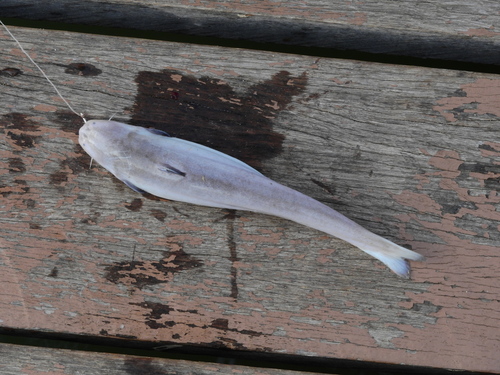
(c) Nelson Wisnik, some rights reserved (CC BY-NC), uploaded by Nelson Wisnik · cc-by-nc
candiru
Sign in to saveAlso known as vampire fish, cañero, toothpick fish, Vandellia cirrhosa
species of fish
OverviewAI-generated
Candiru, also known as Kandiru or Candirù, is a species of freshwater fish in the family Trichomycteridae. Its scientific name is *Vandellia cirrhosa*, a name established by Valenciennes in 1846. The organism belongs to the order Siluriformes, class Teleostei, and phylum Chordata. It is an accepted taxon within the genus *Vandellia*.
This tropical fish is endemic to the Amazon region in South America, with a specific range noted in Melgaço. It inhabits freshwater environments, specifically the bottom waters of sandy substrates. The species is parasitic, entering the gill covers of large fish to feed on blood. It has also been recorded entering the urethra of mammals, causing injury. The fish can grow to a length of 17 centimeters.
Synthesized by Vinony from 25 facts across 5 sources: Wikidata, iNaturalist, WoRMS, Encyclopedia of Life, Vinony graph. Generated from structured data (not the Wikipedia text) and checked against those facts — may still contain errors.
Species
Candiru-Açu
Species
- PhylumChordata
- ClassTeleostei
- OrderSiluriformes
- FamilyTrichomycteridae
卷鬚寄生鯰,又名牙籤魚,又稱藍色吸血鬼,為輻鰭魚綱鯰形目毛鼻鯰科的其中一種,為熱帶淡水魚,分布於南美洲亞馬遜河流域,本魚棲息在沙底質底層水域,體長可達17公分,屬寄生性,會進入大型魚類的鰓蓋中吸血,有時會誤入哺乳動物的尿道中,造成創傷。
via
Wikidata facts
Show 8 more facts
Sources (2)
via Wikidata · CC0
~8 min read
Encyclopedic overview
Vandellia cirrhosa, known by the common names candiru, cañero, toothpick fish, or vampire fish, is a species of parasitic freshwater catfish in the family Trichomycteridae native to the Amazon basin where it is found in the countries of Bolivia, Brazil, Colombia, Ecuador, and Peru. The name "candiru" is also used to refer to other catfish species, including the entire genus Vandellia.
This species is known for an alleged tendency to invade and parasitize the human urethra and other bodily openings; however, despite ethnological reports dating back to the late 19th century, the first documented case of the removal of a candiru from a human urethra did not occur until 1997, and even that incident has remained a matter of controversy. Scientifically, this fish only parasitizes larger fish which it shares its habitat with; it consumes their host's blood from their gill openings, thus the candiru is a hematophagic species.
Excerpted from Wikipedia’s “candiru” article, available under the CC BY-SA 4.0 licence.