Encyclopedia of Life · EOL (see source)
Carukiidae
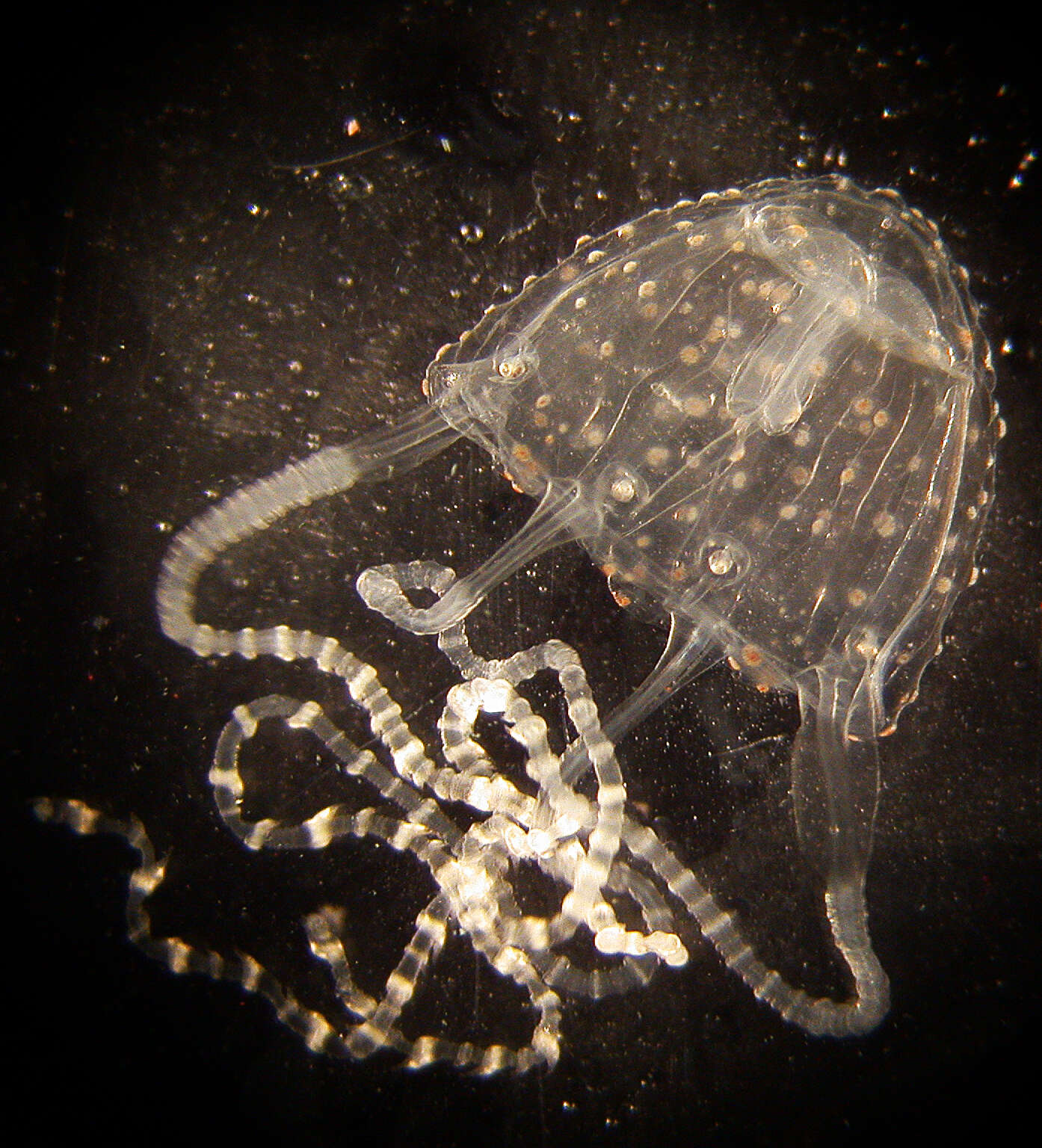
Sign in to saveCarukiidae is a family of box jellyfish within the Cubozoa class. Carukiidae can be easily classified by their lack of cirri clumps inside the cubozoan stomach, as well as the size and the placement of their nematocysts.
Species
イルカンジクラゲ科
FAMILY
- KingdomAnimalia
- PhylumCnidaria
- ClassCubozoa
- OrderCarybdeida
- FamilyCarukiidae
Le Carukiidae sono una famiglia di cubomeduse della classe Cubozoa[1]. La famiglia include alcune specie di cubomeduse che causano serie intossicazioni conosciute sotto il nome di sindrome di Irukandji, la quale può anche portare all'arresto cardiaco. Le Carukiidae si distribuiscono nella regione dell'Indo-Pacifico, dall'isola di Honshū in Giappone, al Nuovo Galles del Sud in Australia come limiti nord-sud; meno si conosce dell'estensione est-ovest di queste cubomeduse. In ogni modo, rare sono le segnalazioni fuori dal continente australiano[2]. Indice 1 Anatomia 2 Sistematica 3 Note 4 Bibliografia 5 Altri progetti 6 Collegamenti esterni Anatomia Le meduse di questa famiglia si differenziano per la forma delle corna dei ropali, le ramificazioni dei canali del velarium e nella distribuzione ed il numero di nematocisti[3]. Per esempio, la presenza di gruppi di nematocisti[4] sul velarium è indicativo: le meduse Malo ne hanno da due a quattro gruppi per ottante, le Morbakka ne possiedono da sei a otto, mentre sono praticamente assenti nel genere Carukia (a volte ne possiedono una per ottante) e totalmente assenti nelle Gerongia[3]. La famiglia Carukiidae è stata creata per raggruppare
via GBIF
Wikidata facts
- Instance of
- taxon
- Parent taxon
- Cubomedusae
- Image
- Irukandji-jellyfish-queensland-australia.jpg
Show 4 more facts
- taxon rank
- family
- taxon name
- Carukiidae
- Commons category
- Carukiidae
- topic's main category
- Category:Carukiidae
Sources (1)
via Wikidata · CC0
~1 min read
Encyclopedic overview
2 sectionsContents
- Classification
- References
Carukiidae is a family of box jellyfish within the Cubozoa class. Carukiidae can be easily classified by their lack of cirri clumps inside the cubozoan stomach, as well as the size and the placement of their nematocysts.
Carukiidae use nematocysts as a defense mechanism; they releases a venom from the tips of their nematocysts, producing the Irukandji syndrome. Even though positions of spines on the shaft of the Carukiidae cause illness, there are areas on the body that do not. The rhopalial niche openings, which discern light, do not incur any illness. The Carukiidae also have non-venomous rhopaliar horns, which are imperceptive in function and located above the rhopalial niches.
Excerpted from Wikipedia’s “Carukiidae” article, available under the CC BY-SA 4.0 licence.
Available in 10 languages
via Wikidata sitelinks · CC0