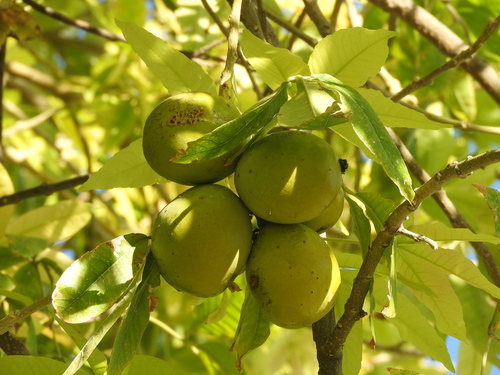
(c) Daniela Guzmán, some rights reserved (CC BY-NC), uploaded by Daniela Guzmán · cc-by-nc
Casimiroa
Sign in to saveCasimiroa is a genus of flowering plants in the family Rutaceae. It includes about 10 species native to Mexico and Central America. The genus is named for "an Otomi Indian, Casimiro Gómez, from the town of Cardonal in Hidalgo, Mexico, who fought and died in Mexico's war of independence."
Species
White sapote
GENUS
- KingdomPlantae
- PhylumTracheophyta
- ClassMagnoliopsida
- OrderSapindales
- FamilyRutaceae
via GBIF · Kew POWO
Museum specimens
- Specimen records
- 58
- With media
- 30
- Family
- Rutaceae
- Collections
- IEA-UAT, FCF-UANL, INECOL, FCN-UAQ, CAS, IBUNAM
- Recorded in
- Mexico, Honduras, United States, Colombia, Peru, Nicaragua, El Salvador, Costa Rica
Research
64 papers- Antidepressant-like effect of Casimiroa pubescens root extracts.Natural product research · 2019
- Casimiroa edulis extract modulates testosterone levels, testicular enzymes and spermatogenesis disorders in streptozotocin-induced diabetic male rats.Reproductive biology · 2025
- The complete chloroplast genome sequence of Casimiroa edulis.Mitochondrial DNA. Part B, Resources · 2019
- Methoxylated Flavones from Casimiroa edulis La Llave Suppress MMP9 Expression via Inhibition of the JAK/STAT3 Pathway and TNFα-Dependent Pathways.Journal of agricultural and food chemistry · 2024
- Age-dependent vasorelaxation of Casimiroa edulis and Casimiroa pubescens extracts in rat caudal artery in vitro.Journal of ethnopharmacology · 2011
via PubMed
Wikidata facts
- Instance of
- taxon
- Image
- Casimiroa edulis 2.jpg
Show 6 more facts
- Commons category
- Casimiroa
- taxon name
- Casimiroa
- taxon rank
- genus
- topic's main category
- Category:Casimiroa
- taxon common name
- 香肉果属
Sources (2)
via Wikidata · CC0
~2 min read
Encyclopedic overview
2 sectionsContents
- Species
- References
Casimiroa is a genus of flowering plants in the family Rutaceae. It includes about 10 species native to Mexico and Central America. The genus is named for "an Otomi Indian, Casimiro Gómez, from the town of Cardonal in Hidalgo, Mexico, who fought and died in Mexico's war of independence."
A general common name for plants of the genus is sapote. Not all sapotes are members of this genus or even family, however; many sapotes are in the family Sapotaceae, especially the genus Pouteria, and the black sapote is part of the Ebenaceae.
Excerpted from Wikipedia’s “Casimiroa” article, available under the CC BY-SA 4.0 licence.