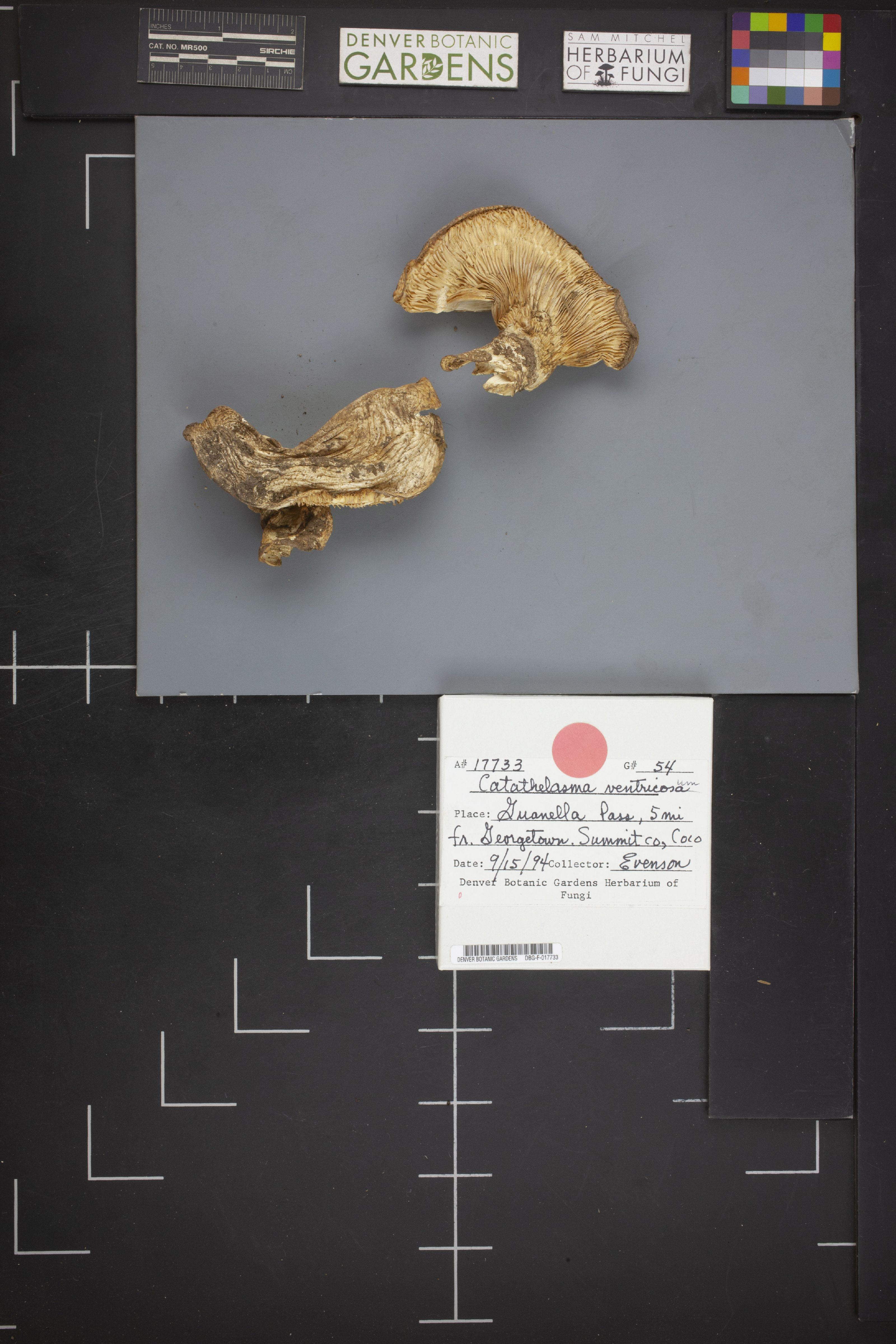
Specimen image via iDigBio · BY-NC-SA
Catathelasma
Sign in to saveCatathelasma is a genus of fungi in the family Biannulariaceae. Basidiocarps (fruit bodies) are agaricoid, with a conspicuous veil (leaving a double ring on the stem), adnate to decurrent lamellae, and amyloid basidiospores. The genus is separated on DNA characteristics as well as morphology. Species are known from North America, Europe, and Asia and are ectomycorrhizal, forming an association with the living roots of trees.
Species
GENUS
- KingdomFungi
- PhylumBasidiomycota
- ClassAgaricomycetes
- OrderAgaricales
- FamilyBiannulariaceae
via GBIF
Museum specimens
- Specimen records
- 83
- With media
- 139
- Family
- Biannulariaceae
- Collections
- F, DBG, ILLS, MICH, ARIZ, NY
- Recorded in
- United States, Canada
Wikidata facts
- Instance of
- taxon
- Parent taxon
- Tricholomataceae
- Image
- Catathelasma imperiale.JPG
Show 5 more facts
- taxonomic type
- Catathelasma evanescens
- Commons category
- Catathelasma
- taxon name
- Catathelasma
- taxon rank
- genus
- topic's main category
- Category:Catathelasma
Sources (2)
via Wikidata · CC0
~2 min read
Encyclopedic overview
6 sectionsContents
- Taxonomy
- Etymology
- Description
- Habitat and distribution
- Edibility
- References
Catathelasma is a genus of fungi in the family Biannulariaceae. Basidiocarps (fruit bodies) are agaricoid, with a conspicuous veil (leaving a double ring on the stem), adnate to decurrent lamellae, and amyloid basidiospores. The genus is separated on DNA characteristics as well as morphology. Species are known from North America, Europe, and Asia and are ectomycorrhizal, forming an association with the living roots of trees.
==Taxonomy== The genus Catathelasma was originally described in 1910 by American botanist and mycologist Ruth Ellen Harrison Lovejoy with C. evanescens as the type species.
Excerpted from Wikipedia’s “Catathelasma” article, available under the CC BY-SA 4.0 licence.