Cephalotaxaceae · Kew POWO · Kew Plants of the World Online
Cephalotaxaceae
Sign in to saveCephalotaxaceae is a small family of conifers. It is often treated as a monophyletic family including only the single genus Cephalotaxus, while others have also included Torreya and Amentotaxus in the family. Cephalotaxaceae is closely allied to the yew family Taxaceae, and is often included in a wide interpretation of Taxaceae, based on phylogenetic evidence and close morphological similarities between them. Included species were restricted to east Asia, except for two species of Torreya found in the southwest and southeast of the United States; fossil evidence shows a much wider prehistorica
Species
FAMILY
- KingdomPlantae
- PhylumTracheophyta
- ClassPinopsida
- OrderPinales
- FamilyCephalotaxaceae
via GBIF · Kew POWO
Museum specimens
- Specimen records
- 4
- With media
- 4
- Family
- Cephalotaxaceae
- Collections
- MO, NHMUK
- Recorded in
- Taiwan, China
Described at
Gymnosperm families - Cephalotaxaceae
Description of Cephalotaxaceae, generated from a DELTA database.
delta-intkey.com →Link to a page describing this subject · 5,387 chars · not written by Vinony
Wikidata facts
- Instance of
- synonym
- Image
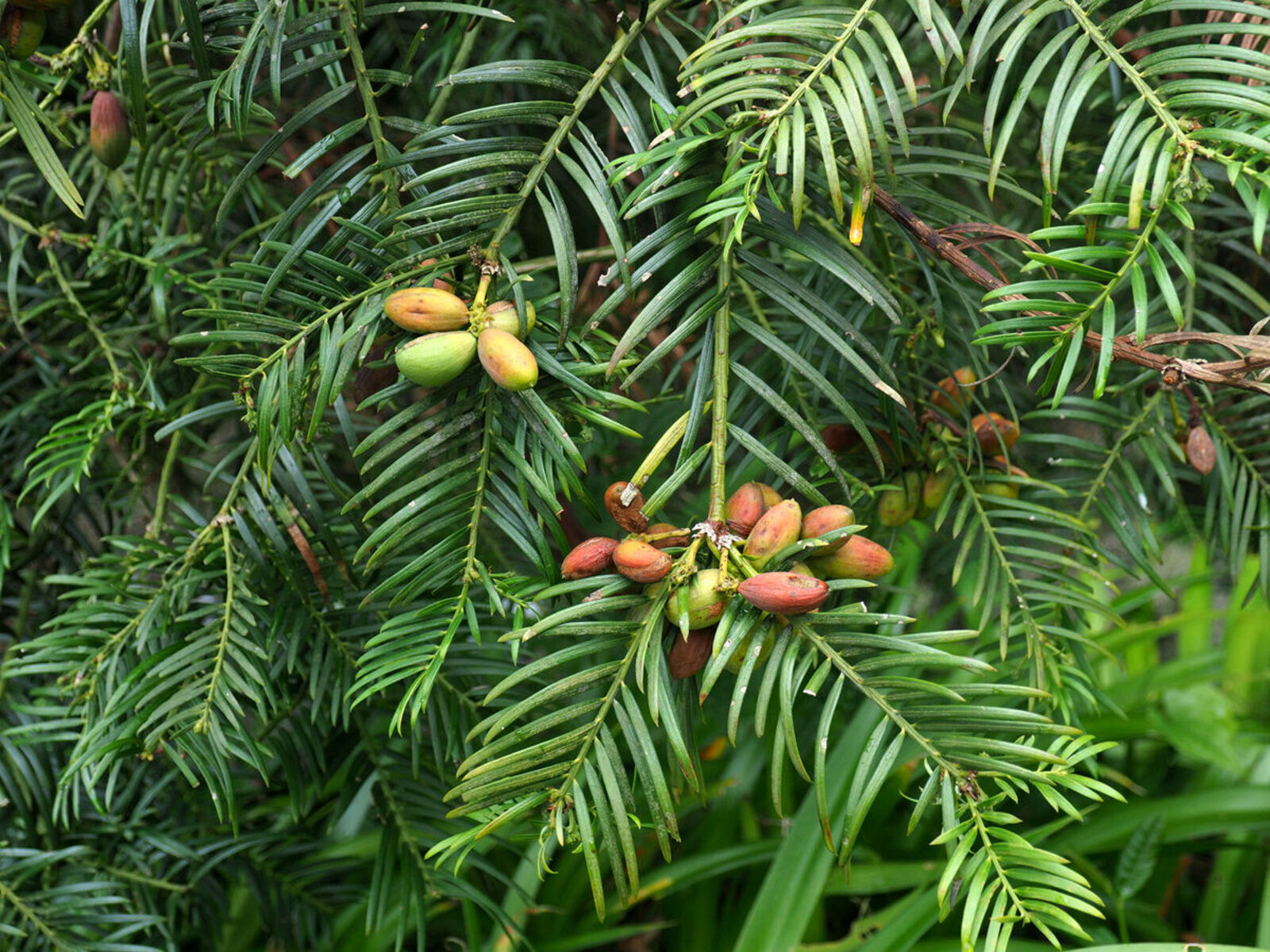
- Cephalotaxus harringtonia BotGardBln1105WithSeeds.JPG
Show 9 more facts
- taxon name
- Cephalotaxaceae
- taxon rank
- family
- topic's main category
- Category:Cephalotaxaceae
- Commons category
- Cephalotaxaceae
- described at URL
- delta-intkey.com/gymno/www/cephalot.htm
- taxonomic type
- Cephalotaxus
- taxon common name
- 三尖杉科
- taxon synonym of
- Taxaceae
Sources (1)
via Wikidata · CC0
~2 min read
Encyclopedic overview
1 sectionsContents
- References
Cephalotaxaceae is a small family of conifers. It is often treated as a monophyletic family including only the single genus Cephalotaxus, while others have also included Torreya and Amentotaxus in the family. Cephalotaxaceae is closely allied to the yew family Taxaceae, and is often included in a wide interpretation of Taxaceae, based on phylogenetic evidence and close morphological similarities between them. Included species were restricted to east Asia, except for two species of Torreya found in the southwest and southeast of the United States; fossil evidence shows a much wider prehistorical Northern Hemisphere distribution. The most notable differences between Taxaceae and Cephalotaxaceae concerned the cone aril, which fully encloses the seeds of Cephalotaxaceae, the longer maturation of Cephalotaxaceae seeds and the larger size of the mature seeds.
When considered as a distinct family, members of Cephalotaxaceae are much branched, small trees and shrubs. The leaves are evergreen, spirally arranged, often twisted at the base to appear biranked. They are linear to lanceolate, and have pale green or white stomatal bands on the undersides. The plants are monoecious, subdioecious, or dioecious. The male cones are 4–25 mm long, and shed pollen in the early spring. The female cones are reduced, with one to a few ovuliferous scales, and one seed on each ovuliferous scale. As the seed matures, the ovuliferous scale develops into a fleshy aril fully enclosing the seed. The mature aril is thin, green, purple or red, soft and resinous. Each ovuliferous scale remains discrete, so the cone develops into a short stem with one to a few berry-like seeds. They are probably eaten by birds or other animals which then disperse the hard seed undamaged in their droppings, but seed dispersal mechanisms in the family are not yet well researched.
Excerpted from Wikipedia’s “Cephalotaxaceae” article, available under the CC BY-SA 4.0 licence.
Gallery (2)
Available in 24 languages
- Español
- Français
- 中文
- 日本語
- Русский
- Português
- Azerbaijani
- Catalan
- Danish
- Egyptian Arabic
- Estonian
- Hungarian
- Macedonian
- Nederlands
- Norwegian
- Polski
- Tiếng Việt
- Türkçe
Show 5 more
via Wikidata sitelinks · CC0