(c) Amy Schnebelin, some rights reserved (CC BY), uploaded by Amy Schnebelin · cc-by
Ceratina
Sign in to saveAlso known as Small carpenter bees
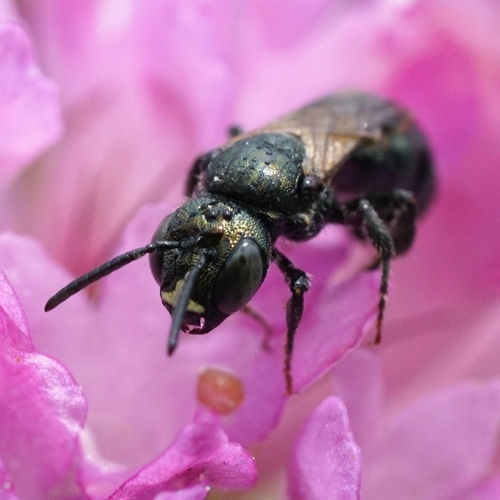
The cosmopolitan bee genus Ceratina, often referred to as small carpenter bees, is the sole lineage of the tribe Ceratinini, and is not closely related to the more familiar carpenter bees. The genus presently contains over 300 species in 23 subgenera. They make nests in dead wood, stems, or pith. Although they were considered as mostly solitary in the past, there is growing evidence that many species are facultatively eusocial.
Species
märgbin
Genus
- PhylumForaminifera
- ClassTubothalamea
- OrderMiliolida
- FamilyFischerinidae
via
Museum specimens
- Specimen records
- 20,612
- With media
- 1,076
- Family
- Apidae
- Collections
- ECOSUR
- Recorded in
- Guatemala, Mexico
Wikidata facts
- Instance of
- taxon
- Image
- Ceratina calcarata f.jpg
Show 5 more facts
- Commons category
- Ceratina
- taxon name
- Ceratina
- taxon rank
- genus
- topic's main category
- Category:Ceratina
- taxon common name
- metallbier
Sources (2)
via Wikidata · CC0
~4 min read
Encyclopedic overview
5 sectionsContents
- Distribution
- Behaviour
- Species and diversity
- References
- External links
The cosmopolitan bee genus Ceratina, often referred to as small carpenter bees, is the sole lineage of the tribe Ceratinini, and is not closely related to the more familiar carpenter bees. The genus presently contains over 300 species in 23 subgenera. They make nests in dead wood, stems, or pith. Although they were considered as mostly solitary in the past, there is growing evidence that many species are facultatively eusocial.
Ceratina are commonly dark, shining, even metallic bees, with fairly sparse body hairs and a weak scopa on the hind tibia. Most species have some yellow markings, most often restricted to the face, but often elsewhere on the body. They are very commonly mistaken for "sweat bees" (family Halictidae), due to their small size, metallic coloration, and some similarity in wing venation; they can be easily separated from halictids by the mouthparts (with a long glossa) and the hindwings (with a tiny jugal lobe).
Excerpted from Wikipedia’s “Ceratina” article, available under the CC BY-SA 4.0 licence.