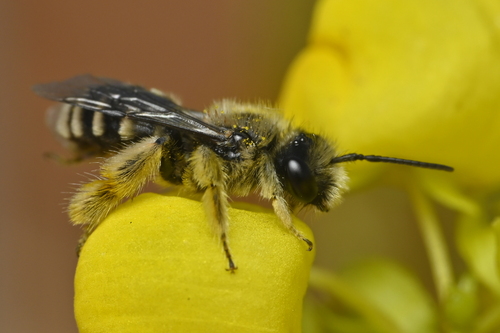
(c) sebastian-andrade-t, all rights reserved, uploaded by sebastian-andrade-t
Chalepogenus
Sign in to saveThe genus Chalepogenus, consisting of 21 species of solitary oil-collecting apid bees, demonstrates oligolecty by foraging on oil-producing flowers from the families Calceolariaceae, Iridaceae and Solanaceae. These oil-flowers are abundant in South America, where Chalepogenus is endemic. In contrast to honey bees, Chalepogenus species do not collect nectar; instead, they gather floral oil for various purposes, including provisioning their larvae, constructing nests, and sustaining foraging adult bees. Although oil collection has been reported to be performed by females only, both males and fem
Species
Herbst's Mini-Oil digger
GENUS
- KingdomAnimalia
- PhylumArthropoda
- ClassInsecta
- OrderHymenoptera
- FamilyApidae
via GBIF
Museum specimens
- Specimen records
- 10
- Family
- Apidae
- Collections
- INHS, KU
- Recorded in
- South Africa, Brazil, Argentina
Wikidata facts
- Instance of
- taxon
- Parent taxon
- Apidae
- Image
- Chalepogenus herbsti on finger (photo by Matías Ignacio Sáa Jofré).jpg
Show 3 more facts
- taxon rank
- genus
- taxon name
- Chalepogenus
- topic's main category
- Category:Chalepogenus
Sources (1)
via Wikidata · CC0
~7 min read
Encyclopedic overview
9 sectionsContents
- Distribution
- Morphology
- Oil-collecting structures
- Pollination
- [[Calceolariaceae]]
- [[Iridaceae]]
- [[Solanaceae]]
- Taxonomy
- References
The genus Chalepogenus, consisting of 21 species of solitary oil-collecting apid bees, demonstrates oligolecty by foraging on oil-producing flowers from the families Calceolariaceae, Iridaceae and Solanaceae. These oil-flowers are abundant in South America, where Chalepogenus is endemic. In contrast to honey bees, Chalepogenus species do not collect nectar; instead, they gather floral oil for various purposes, including provisioning their larvae, constructing nests, and sustaining foraging adult bees. Although oil collection has been reported to be performed by females only, both males and females have specialised oil-collecting structures.
== Distribution == Species of Chalepogenus are restricted to South America.
Excerpted from Wikipedia’s “Chalepogenus” article, available under the CC BY-SA 4.0 licence.