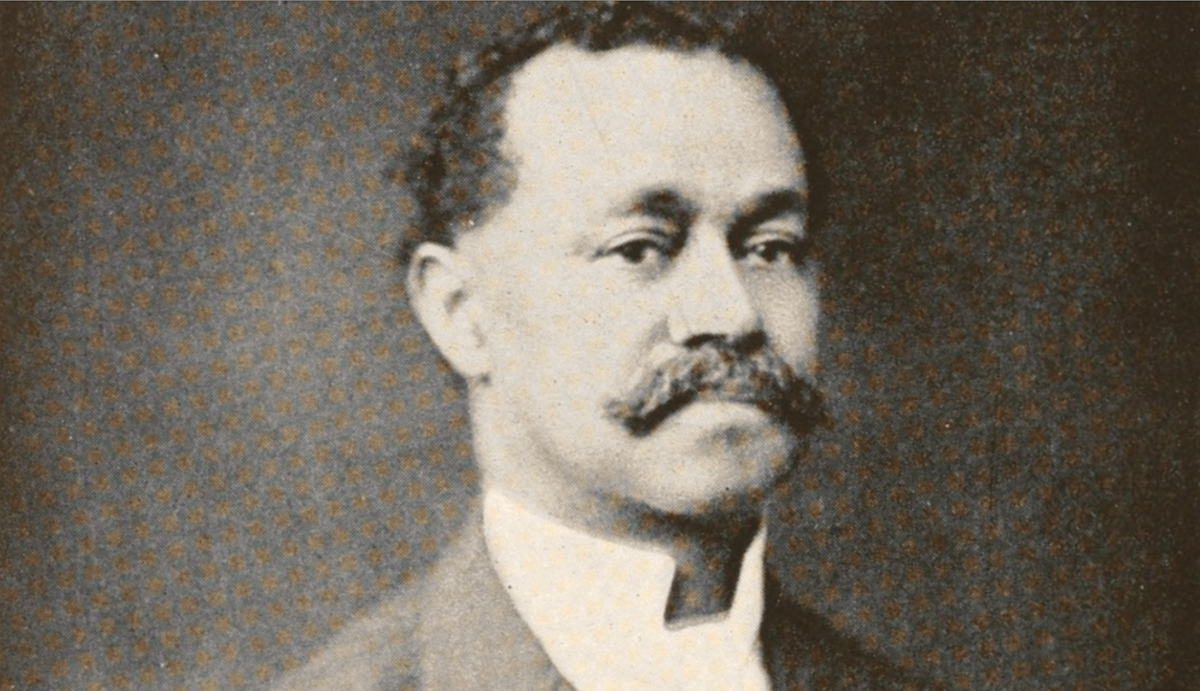
Charles Henry Turner
Sign in to saveAlso known as C. H. Turner, Charles H. Turner
American zoologist (1867-1923)
Person · Open Library
- Works
- 2
Top works
- The homing of ants
- Selected papers and biography of Charles Henry Turner, 1867-1923
via Open Library + Wikidata
Described at
How a High School Teacher Changed Early 20th-Century Insect Science
This story was originally published on The Conversation and appears here under a Creative Commons license.
atlasobscura.com →Charles Henry Turner was the first scientist to prove certain insects could remember, learn, and feel. Courtesy of Charles I. Abramson, CC BY-ND This story was originally published on The Conversation and appears here under a Creative Commons license . On a crisp autumn morning in 1908, an elegantly dressed African American man strode back and forth among the pin oaks, magnolias, and silver maples of O’Fallon Park in St. Louis, Missouri . After placing a dozen dishes filled with strawberry jam atop several picnic tables, biologist Charles Henry Turner retreated to a nearby bench, notebook and pencil at the ready. Following a midmorning break for tea and toast (topped with strawberry jam, of course), Turner returned to his outdoor experiment. At noon and again at dusk, he placed jam-filled dishes on the park tables. As he discovered, honeybees ( Apis mellifera ) were reliable breakfast, lunch, and dinner visitors to the sugary buffet. After a few days, Turner stopped offering jam at midday and sunset, and presented the treats only at dawn. Initially, the bees continued appearing at all three times. Soon, however, they changed their arrival patterns , visiting the picnic tables only in the mornings. This simple but elegantly devised experiment led Turner to conclude that bees can perceive time and will rapidly develop new feeding habits in response to changing conditions. These results were among the first in a cascade of groundbreaking discoveries that Turner made about insect behavior. A daily dose of hidden gems to visit, extraordinary places to eat and wondrous stories from around the world. Bees were not well understood at the turn of the 20th century. Illustration published by Popular Encyclopedia, 1894. mikroman6/Moment via Getty Images/Courtesy The Conversation Turner was born in Cincinnati in 1867, a mere two years after the Civil War ended. The son of a church custodian and a nurse who was formerly enslaved, he grew up under the specter of Jim Crow—a set of formal laws and informal practices that relegated African Americans to second-class status . The social environment of Turner’s childhood included school and housing segregation, frequent lynchings, and the denial of basic democratic rights to the city’s nonwhite population. Despite immense obstacles to his educational goals and professional aspirations, Turner’s tenacious spirit carried him through. Despite his brilliance, Turner was unable to secure long-term employment in higher education. The University of Chicago refused to offer him a job , and Booker T. Washington was too cash-strapped to hire him at the all-Black Tuskegee Normal and Industrial Institute in Alabama . Sumner High School in St. Louis, Mo., circa 1908. Courtesy Missouri Historical Society Among Turner’s most significant findings was that wasps, bees, sawflies and ants—members of the Hymenoptera order—are not simply primitive automatons , as so many of his contemporaries thought. Instead, they are organisms with the capacities to remember, learn, and feel. To investigate, Turner pounded rows of wooden dowels into the O’Fallon Park lawn. Atop each rod, he affixed a red disk dipped in honey. Soon, bees began traveling from far away to his makeshift “flowers.” Turner then added a series of “control” rods topped with blue disks that bore no honey. The bees paid little heed to the new “flowers,” demonstrating that visual signals provided guidance when the bees were too distant to smell their targets. Although a honeybee’s ability to detect red remains controversial , scientists have determined that Turner’s bees were likely responding to something called achromatic stimuli , which allowed them to discern among various shades and tints . Alongside his scientific publications, Turner wrote extensively on African American education. In his 1902 essay “Will the Education of the Negro Solve the Race Problem? ” Turner contended that trade schools were not the pathway to Black empowerment. Inst
Excerpt from a page describing this subject · 40,000 chars · not written by Vinony
Wikidata facts
- Instance of
- human
- Given name
- Charles
- Family name
- Turner
- Gender
- male
- Citizenship
- United States
- Place of birth
- Cincinnati
- Place of death
- Chicago
- Occupation
- entomologist
- Educated at
- University of Chicago
- Languages spoken
- English language
- Image
- Charles Henry Turner at Sumner High School, St. Louis, Mo. Aug. 9, 1921.jpg
Show 5 more facts
- date of death
- 1923-02-14
- date of birth
- 1867-02-03
- ethnic group
- African Americans
- Commons category
- Charles Henry Turner (zoologist)
Sources (2)
via Wikidata · CC0