
Image by MACGYVER57 on Pixabay · Pixabay License
Charles Keene
Sign in to saveAlso known as Charles Samuel Keene, Charles S. Keene, C. Keene
English artist and illustrator (1823–1891)
Person · Open Library
- Born
- 1823
- Died
- 1891
- Works
- 19
Top works
- Humorists of the pencil: Charles Keene, Phil May [and] L. Raven-Hill
- Very much abroad
- Difficulties overcome
- Mr. Punch with rod and gun
- Mr. Punch's Scottish humour
via Open Library + Wikidata
Described at

Charles Samuel Keene – Guided By Art
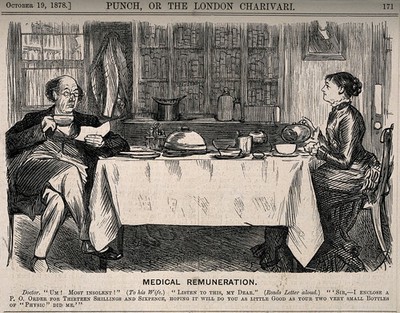
beguidedbyart.com →I doubt that any of us are familiar with Charles Samuel Keene and his art practice. So, I imagine that it would come as a great surprise to discover that there are 1,519 of his works in the NGV Collection. Most of these are satirical sketches but there are also self-portraits and even a portrait of ‘Keene sketching’ by James McNeill Whistler. My interest in Keene was piqued when I was looking for images of ‘gnomes’ for my post ‘On being a hermit’. Keene did sketch gnomes and his illustrations were included in a book – ‘The Legends of Number Nip (1864)’ – but unfortunately his ‘Study for the Gnome (1865)’ in the NGV collection is listed as ‘image not available (yet). The NGV collection also contains a copy of the book by Mark Lemon (with drawings by Keene) and its contents tantalisingly read: ‘Gnome King and the Princess of Silesia’; ‘Gnome and the tailor’; ‘Gnome and his debtor’; ‘Number Nip and the glass seller; and ‘headless rogue and the Countess’. The legends are translations of fairy stories by Johann Karl Musæus who, with the Brothers Grimm, was one of the foremost collectors of German folk stories in the late 18th century. Bernard Hall acquired a small number of Keene’s works for the NGV in 1905, the same year he purchased Boulevard Montmartre by Camille Pissarro. But the majority of Keene’s works were bought in 1951 from the collection of Lionel Lindsay. At the time, Lindsay had the only significant private collection of Keene’s works left in the world. The acquisition cost A£4431 and was regarded as an important purchase. Charles Samuel Keene (1823-1891) was born in Hornsey, north London. The son of a solicitor, he was educated at the Ipswich school until the age of 16 when the death of his father forced him to be articled to the London solicitor in his father’s office. Clearly, the law was not Keene’s chosen profession and within a short period, he was moved to the office of an architect. Although he stayed with the architect until he was19 years of age, his bias towards art was described as ‘invincible’! Early on, Keene had showed artistic leanings but he was not trained in art. As a self-taught artist, he spent his spare time drawing and painting watercolours of historical and nautical subjects. His mother, acting as his agent, found a purchaser for the pictures which led to Keene being apprenticed to the wood-engravers, Whympers for five years. During this time, he designed the illustrations to an edition of ‘Robinson Crusoe’. At the conclusion of his apprenticeship, Keene worked for the ‘Illustrated London News’ and other periodicals. In early 1850, Keene started work for the periodical ‘Punch’ ultimately becoming one of its principal contributors – his works being signed with the well-recognized initials “C.K.”. This association continued for 40 years. A volume containing many of his ‘Punch’ drawings appeared in 1881 under the title ‘Our People’. Keene was essentially an artist of the lower and middle classes, and, as his obituary says, ‘drew with unerring and not unkindly appreciation the well-to-do city man, and the gay young clerk, the medical student, the old lady of the omnibus, the railway porter, the cabdriver, ‘Arry and ‘Arriet, and the street ragamuffin’. While the bulk of Keene’s work was for ‘Punch’, he also contributed illustrations for the writers George Eliot and William Thackeray and for other publications. Described as a shy retiring man, Keene never married and lived a simple and quiet life confining his associations to a few old friends. He was neither ambitious nor interested in popularity or society, and he was reluctant to self-promote. As far as he could prevent it, no drawing of his was ever exhibited in public or sold. Despite this reticence, and lack of exhibition history, the jury of the Paris Exhibition in 1890 bestowed a gold medal on him for his artistic ability. He was recognised for: ‘ his absolute command of [his] medium; his rigid suppression of the superfluous; his unfalte
Excerpt from a page describing this subject · 9,035 chars · not written by Vinony
Wikidata facts
- Instance of
- human
- Given name
- Charles
- Gender
- male
- Citizenship
- United Kingdom
- Place of birth
- Hornsey
- Place of death
- London
- Occupation
- visual artist
- Languages spoken
- English language
- Field of work
- caricature
- Military branch
- British Army
- Image
- Photo of Charles Keene.jpg
- Work location
- Great Britain
Show 7 more facts
- Commons category
- Charles Keene
- date of birth
- 1823-08-10
- date of death
- 1891-01-04
- Commons Creator page
- Charles Keene
- described by source
- Encyclopædia Britannica 11th edition
- writing language
- English language
- described at URL
- beguidedbyart.com/charles-samuel-keene
via Wikidata · CC0
Works in European collections
23 objects attributed to Charles Keene, held across European museums, libraries & archives · via Europeana




Available in 7 languages
via Wikidata sitelinks · CC0