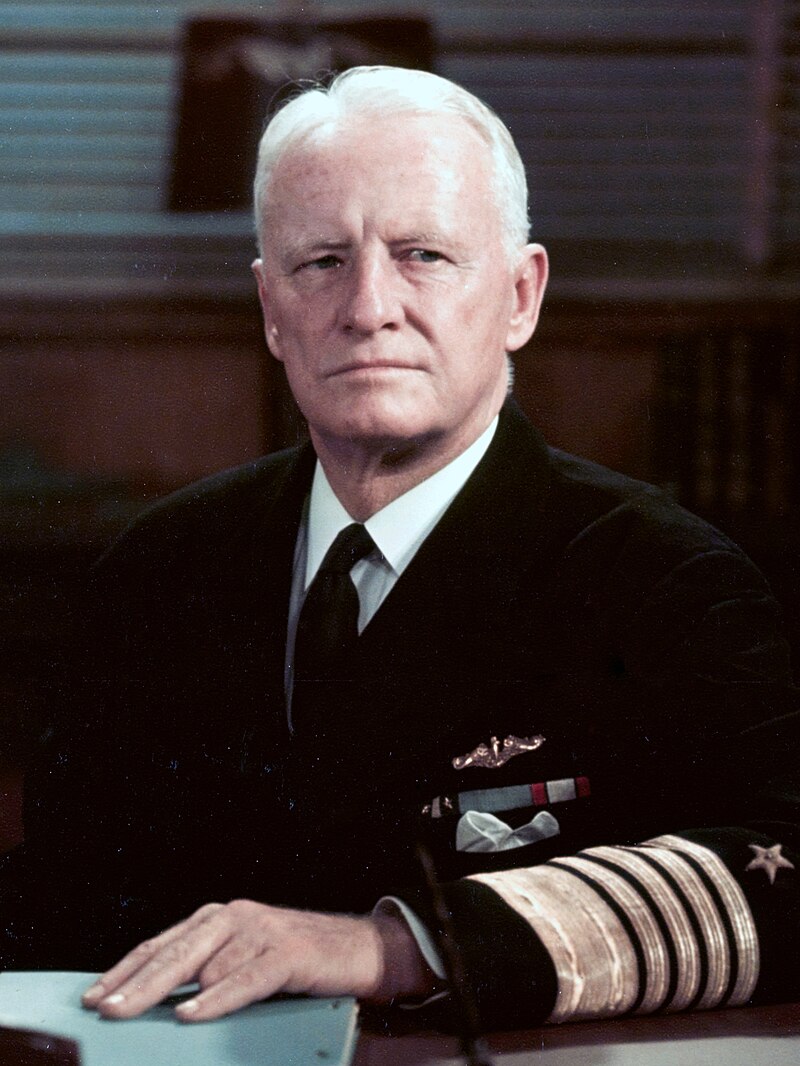
File:Chester_Nimitz_as_CNO_(cropped).jpg · Wikimedia Commons · See Wikimedia Commons
Chester W. Nimitz
Sign in to saveAlso known as Chester William Nimitz, Chester William Nimitz, Sr., Chester Nimitz, Admiral Chester William Nimitz
United States Navy fleet admiral (1885–1966)
Chester W. Nimitz was a U.S. Navy fleet admiral who served during World War II and is remembered as one of the Navy's most important leaders of that era. He matters historically because of his significant role in directing American naval operations during the war, particularly in the Pacific Theater.
AI-generated from the Wikipedia summary — may contain errors.
Wikidata facts
- Instance of
- human
- Gender
- male
- Citizenship
- United States
- Place of birth
- Fredericksburg
- Place of death
- Yerba Buena Island
- Occupation
- naval officer
- Position held
- Chief of Naval Operations
- Languages spoken
- English language
- Conflict
- Battle of Okinawa
- Military branch
- United States Navy
- Image
- Adm Chester Nimitz-1942.jpg
- Significant event
- posthumous birth
Show 11 more facts
- Commons category
- Chester Nimitz
- date of birth
- 1885-02-24
- date of death
- 1966-02-20
- Commons gallery
- Chester Nimitz
- cause of death
- stroke
- place of burial
- Golden Gate National Cemetery
- manner of death
- natural causes
- name in native language
- Chester William Nimitz
- start of work period
- 1905-00-00
- commander of (DEPRECATED)
- United States Pacific Fleet
- end of work period
- 1947-00-00
Sources (7)
via Wikidata · CC0
~30 min read
Encyclopedic overview
Chester William Nimitz (/ˈnɪmɪts/; 24 February 1885 – 20 February 1966) was a fleet admiral in the United States Navy. He played a major role in the naval history of World War II as Commander in Chief, US Pacific Fleet, and Commander in Chief, Pacific Ocean Areas, commanding Allied air, land, and sea forces during World War II.
Nimitz was the leading U.S. Navy authority on submarines. Qualified in submarines during his early years, Nimitz later oversaw the conversion of these vessels' propulsion from gasoline to diesel, and then later was key in acquiring approval to build the world's first nuclear-powered submarine, USS Nautilus, whose propulsion system later completely superseded diesel-powered submarines in the United States. Beginning in 1917, Nimitz was the Navy's leading developer of underway replenishment techniques, the tool which during the Pacific war would allow the American fleet to operate away from port almost indefinitely. The chief of the Navy's Bureau of Navigation from 1939 to 1942, Nimitz served as the chief of naval operations from 1945 until 1947. He was the United States' last surviving officer who served in the rank of fleet admiral. The USS Nimitz supercarrier, the lead ship of her class, is named after Nimitz.
Excerpted from Wikipedia’s “Chester W. Nimitz” article, available under the CC BY-SA 4.0 licence.