Christina Warinner
Sign in to savearchaeological geneticist
Person · Open Library
- Works
- 1
Top works
- Method and Theory in Paleoethnobotany
via Open Library + Wikidata
Listeners · Last.fm
- Listeners
- 149
- Total plays
- 157
<a href="https://www.last.fm/music/Christina+Warinner">Read more on Last.fm</a>
Described at
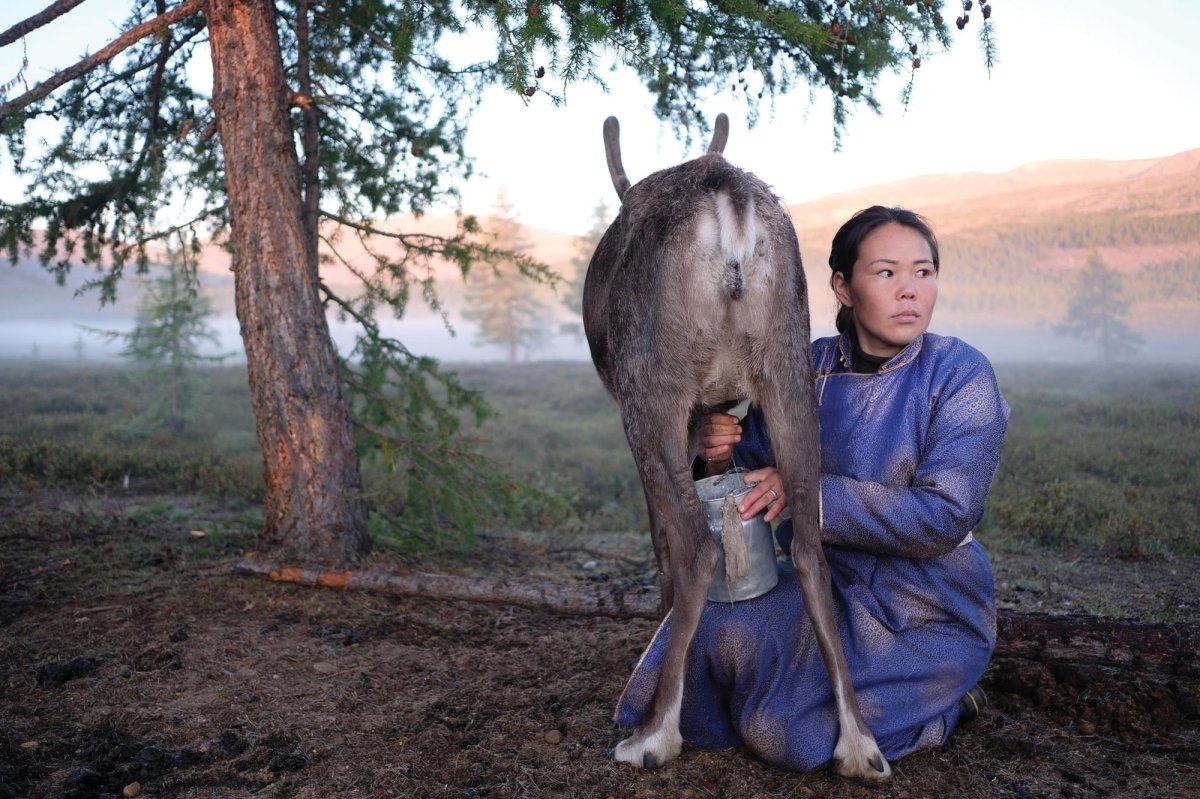
The answer to lactose intolerance might be in Mongolia
Most Mongolians are lactose intolerant, and yet their diet relies on dairy. A mysterious world of bacteria could be at play.
getpocket.com →Mongolians subsist on a dairy-heavy diet, even though most are lactose intolerant. Matthäus Rest Lake Khövsgöl is about as far north of the Mongolian capital of Ulaanbaatar as you can get without leaving the country. If you’re too impatient for the 13-hour bus ride, you can take a prop plane to the town of Murun, then drive for three hours on dirt roads to Khatgal, a tiny village nestled against the lake’s southern shore. The felt yurts that dot the surrounding green plains are a throwback to the days—not so long ago—when most Mongolians lived as subsistence herders. In July 2017, archaeogeneticist Christina Warinner headed there to learn about the population’s complex relationship with milk. In Khatgal, she found a cooperative called Blessed by Yak, where families within a few hours’ drive pooled the bounty from their cows, goats, sheep, and yaks to supply tourists with heirloom dairy products. Warinner watched for hours as Blessed by Yak members transformed the liquid into a dizzying array of foods. Milk was everywhere in and around these homes: splashing from swollen udders into wooden buckets, simmering in steel woks atop fires fueled by cow dung, hanging in leather bags from riblike wooden rafters, bubbling in specially made stills, crusting as spatters on the wood-lattice inner walls. The women even washed their hands in whey. “Working with herders is a five-senses experience,” Warinner says. “The taste is really strong; the smell is really strong. It reminds me of when I was nursing my daughter, and everything smelled of milk.” Each family she visited had a half-dozen dairy products or more in some stage of production around a central hearth. And horse herders who came to sell their goods brought barrels of airag, a slightly alcoholic fizzy beverage that set the yurts abuzz. Airag, made only from horse milk, is not to be confused with aaruul , a sour cheese, created from curdled milk, that gets so hard after weeks drying in the sun that you’re better off sucking on it or softening it in tea than risking your teeth trying to chew it. Easier to consume is byaslag , rounds of white cheese pressed between wooden boards. Roasted curds called eezgi look a little like burnt popcorn; dry, they last for months stored in cloth bags. Carefully packed in a sheep-stomach wrapper, the buttery clotted cream known as urum —made from fat-rich yak or sheep milk—will warm bellies all through the winter, when temperatures regularly drop well below zero. Warinner’s personal favorite? The “mash” left behind when turning cow or yak milk into an alcoholic drink called shimin arkhi . “At the bottom of the still, you have an oily yogurt that’s delicious,” she says. Her long trip to Khatgal wasn’t about culinary curiosity, however. Warinner was there to solve a mystery: Despite the dairy diversity she saw, an estimated 95 percent of Mongolians are, genetically speaking, lactose intolerant. Yet, in the frost-free summer months, she believes they may be getting up to half their calories from milk products. Scientists once thought dairying and the ability to drink milk went hand in hand. What she found in Mongolia has pushed Warinner to posit a new explanation. On her visit to Khatgal, she says, the answer was all around her, even if she couldn’t see it. Sitting, transfixed, in homes made from wool, leather, and wood, she was struck by the contrast with the plastic and steel kitchens she was familiar with in the US and Europe. Mongolians are surrounded by microscopic organisms: the bacteria that ferment the milk into their assorted foodstuffs, the microbes in their guts and on the dairy-soaked felt of their yurts. The way these invisible creatures interact with each other, with the environment, and with our bodies creates a dynamic ecosystem. Some of these colonies, though, are more diverse than others: Warinner is still working on sampling the Khatgal herders’ microbiomes, but another team has already gathered evidence that the Mongolian
Excerpt from a page describing this subject · 20,874 chars · not written by Vinony
Wikidata facts
- Instance of
- human
- Given name
- Christina
- Gender
- female
- Citizenship
- United States
- Occupation
- archaeologist
- Educated at
- University of Zurich
- Languages spoken
- English language
- Native language
- English language
- Field of work
- archeogenetics
- Official website
- www.christinawarinner.com
- Image
- Warinner-headshot-3.png
Show 4 more facts
- date of birth
- 2000-00-00
- Commons category
- Christina Warinner
- social media followers
- 1057
via Wikidata · CC0