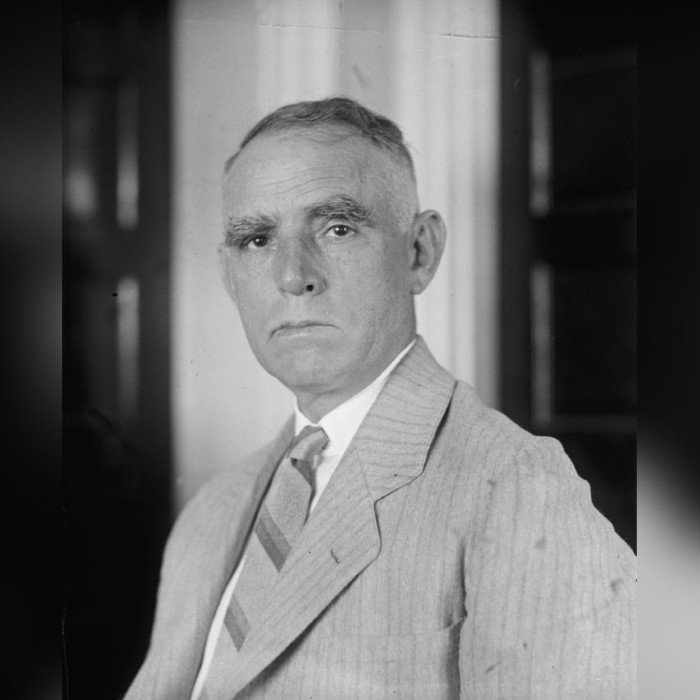
Clark Calvin Griffith · TheSportsDB · Courtesy of TheSportsDB
Clark Calvin Griffith
Sign in to saveAlso known as The Old Fox, Clark Griffiths, Clark C. Griffith, Clark Griffith, Clark Calvin Old Fox Griffith, Clark Calvin "Old Fox" Griffith
Major League Baseball player, manager, owner, executive (1869–1955)
Sports profile
- Sport
- Baseball
- Nationality
- United States
via TheSportsDB
Described at
Clark Griffith – Society for American Baseball Research
sabr.org →Clark Calvin Griffith was born on November 20, 1869 in Clear Creek, Missouri, to Isaiah and Sarah Anne (Wright) Griffith. The family, including Clark’s four older siblings, moved from Illinois before he was born, intent upon farming in Oklahoma. They ended up settling in Missouri, staking out 40 acres near the settlement of Nevada, close to the Kansas border. Isaiah Griffith planned to farm the land, but the Clear Creek soil was not conducive to productive farming and he was forced to rely upon hunting to provide for his family. In February, 1872, when Clark was just two, his father was killed in a hunting accident, mistakenly shot by a neighbor youth. His mother, at the time of the accident expecting once more, struggled to raise six children in the rugged frontier. For several years she persevered, farming the land, while her eldest son Earl hunted for game to feed the family. Adding to their hardship, as he grew older, Clark became afflicted with a persistent ailment, eventually diagnosed, informally, as malarial fever. He was forced to bed for long periods, unable to assist with chores. Ultimately, the hard life, coupled with Clark’s health problems, prompted the Griffiths move back to Illinois in 1882, where they found a home in the town of Normal, near Bloomington. Clark was about 12 at the time. During his early years in Missouri, he was introduced to baseball, made popular there by soldiers returning from the Civil War. Too small and sickly to play for the local teams, Clark nonetheless developed a love for the game and acted as mascot and water boy for his hometown club. Upon moving to Illinois, he found a more sophisticated version of baseball played there and, although still considered too small to play for his high school club in Normal, he played wherever possible in pickup games, earning a reputation first as a catcher and then as a pitcher. At 17, he was offered ten dollars to pitch for the Hoopeston, Illinois club against hated rival Danville. Clark took the money and won the game and by the end of 1887, he had entered organized ball, pitching for the Bloomington Reds. He became that club’s star pitcher in 1888 when it joined the Central Inter-State League. At this time, he was also enrolled at Illinois Wesleyan University, but never completed his studies there. In July, Bloomington played an exhibition game against Milwaukee, a Western Association team, and Clark so impressed Milwaukee manager, James Hart (later owner of the Chicago Cubs), that he was offered a contract for $225 a month. Griffith starred for Milwaukee during the next three seasons until he caught the eye of Charlie Comiskey . Comiskey convinced him to jump to the American Association in 1891, where he pitched well, going 11-8 for the St. Louis Browns, but was released in mid-July when he developed a sore arm. He caught on with the Boston club near season’s end, but when the Association disbanded, Clark was again looking for work. He toiled successfully the next two years in places like Tacoma, Washington; Missoula, Montana; and Oakland, but the leagues, like many in that era, were unstable, and the paychecks uncertain. With Oakland in 1893, Clark won 30 games, while also performing in Wild West skits on stage in San Francisco’s Barbary Coast neighborhood after the league disbanded in August. By early September, though, he was signed by Cap Anson ‘s Chicago National League club. There he found lasting fame as a pitcher, made numerous friends, and learned about showmanship and gamesmanship from the legendary Anson. Over the next eight seasons, Griffith won 152 games, six consecutive times winning over 20, and became a star. Never a power pitcher, Clark relied on wiles and control to get batters out, utilizing a variety of breaking balls, trick pitches, and deceptive deliveries to befuddle his opponents. A master of the quick pitch, he would toss a strike over the plate before the batter was set. He claimed to have invented the screwball whil
Excerpt from a page describing this subject · 21,097 chars · not written by Vinony
Wikidata facts
- Instance of
- human
- Family name
- Griffith
- Gender
- male
- Citizenship
- United States
- Place of birth
- Clear Creek Township
- Place of death
- Washington, D.C.
- Occupation
- baseball player
- Sport
- baseball
- Member of team
- Cincinnati Reds
- Position played
- pitcher
- League
- Major League Baseball
- Country for sport
- United States
- Image
- Clark Griffith LCCN2016840561 (cropped).jpg
Show 4 more facts
- Commons category
- Clark Griffith
- date of birth
- 1869-11-20
- date of death
- 1955-10-27
- described at URL
- sabr.org/bioproj/person/clark-griffith
Sources (2)
via Wikidata · CC0