Claude McKay
Sign in to saveAlso known as Hugh Hope, Festus Claudius McKay, C. E. Edwards
Jamaican American writer, poet (1889–1948)
Person · Open Library
- Born
- 1890
- Died
- 1948
- Works
- 40
Top works
- Prentice Hall Literature--Timeless Voices, Timeless Themes--The American Experience
- The poetry of the Negro, 1746-1970
- Complete poems
- The United States in Literature [with three long stories] -- Seventh Edition
- Prentice Hall Literature--The American Experience
via Open Library + Wikidata
Listeners · Last.fm
- Listeners
- 715
- Total plays
- 2,439
Claude McKay (born Festus Claudius McKay) (September 15, 1889 – May 22, 1948) was a Jamaican-American writer and poet. He was a seminal figure in the Harlem Renaissance and wrote four novels: Home to Harlem (1928), a best-seller which won the Harmon Gold Award for Literature, Banjo (1929), Banana Bottom (1933) and in 1941 the manuscript of a novel that has not yet been published called Amiable With Big Teeth: A Novel of the Love Affair Between the Communists and the Poor Black Sheep of Harlem. <
Described at
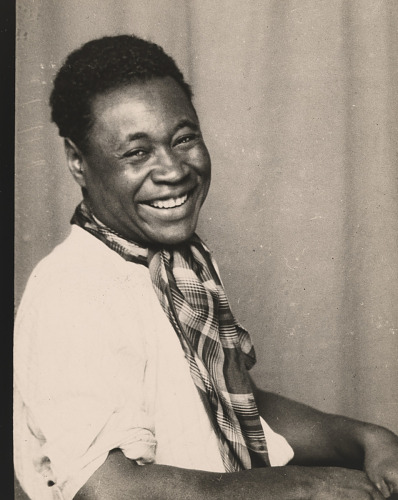
Claude McKay (1889-1948) | Humanist Heritage - Exploring the rich history and influence of humanism in the UK
Exploring the rich history and influence of humanism in the UK
heritage.humanists.uk →Claude McKay was a Jamaican-born poet and socialist, whose Constab Ballads was published by Watts & Co. in 1912. Though a convert to Catholicism in his final years, McKay was a freethinker for the majority of his life, embodying humanist ideals of rationalism, liberty, and cooperation, and becoming a member of the Rationalist Press Association while in London. In England and abroad, he associated with many of the period’s leading radicals, including socialist suffragette Sylvia Pankhurst. In America, he was a formative influence on the writers of the Harlem Renaissance. His acquaintance with Walter Jekyll, an ex-clergyman who had renounced his faith and moved to Jamaica, was formative for McKay’s reading and writing. ‘During those years’, wrote McKay: …Mr. Jekyll was translating Schopenhauer and I read a lot from his translation. Then he suggested Spinoza’s Ethics , which I read, skipping the mathematical hypotheses, and for a time considered myself a pantheist. Also at that time the Rationalist Press of London was publishing six-penny reprints of Herbert Spencer’s works, which I devoured greedily as they appeared. Jekyll was interested in African-Caribbean literature, and in 1906 had published Jamaican Song and Story: Annancy Stories, Digging Songs, Ring Tunes, and Dancing Tunes . He supported the publication of McKay’s first collection, Songs of Jamaica (1912), written in Jamaican dialect. In the same year, Watts & Co. published McKay’s second work Constab Ballads. Socialist and suffragette Sylvia Pankhurst, whose Workers’ Dreadnought McKay wrote for while in London. In early 1920, McKay began working for Sylvia Pankhurst’s newspaper The Workers’ Dreadnought . He described Pankhurst as having ’a personality as picturesque and passionate as any radical in London.’ Another friend was writer, philosopher, and founder of the Cambridge Heretics C.K. Ogden, who published some of McKay’s poems in the Cambridge Magazine . McKay’s most influential collection, Harlem Shadows , appeared in 1922, and was a founding text of the Harlem Renaissance (an African American intellectual and cultural revival). Other leading lights of the movement, including Zora Neale Hurston and Countee Cullen, were similarly humanist in outlook to McKay. Another Harlem figure, and personal friend of McKay’s was Hubert Harrison, an influential activist, internationalist, and humanist. Up against laws put in place by the fervently religious Anthony Comstock prohibiting the ‘vice’ of disseminating LGBT content in writing, authors such as McKay were under threat of criminal prosecution for their work. Yet, McKay did not hide his bisexual desires and is speculated to have had a sexual relationship with the writer John ‘Buffy’ Glasco while living in Paris in 1929. His sexuality is imbued in his writing, such as the scene in McKay’s Home to Harlem (1928) where ‘the dark dandies were loving up their pansies’. McKay was a freethinker from childhood, and turned his pen in poetry and fiction towards sometimes scathing critiques of Christianity. Like other writers of his generation, including W.E.B Du Bois , McKay was outspoken in his criticism of Christianity’s role in racial oppression, and the hypocrisy of Christians who failed to condemn it. Claude McKay is one of the historical figures featured in Picturing Nonconformity: LGBT Humanist Heritage , created for the 45th anniversary of LGBT Humanists in 2024. Explore the exhibition .
Excerpt from a page describing this subject · 11,302 chars · not written by Vinony
Wikidata facts
- Instance of
- human
- Given name
- Claude
- Family name
- McKay
- Gender
- male
- Citizenship
- Colony of Jamaica
- Place of birth
- Clarendon Parish
- Place of death
- Chicago
- Occupation
- novelist
- Employer
- Workers' Dreadnought
- Languages spoken
- English language
- Religion
- Catholicism
- Movement
- communist
- Image
- Claude McKay 1920.jpg
Show 12 more facts
- date of birth
- 1989-09-15
- date of death
- 1948-05-22
- cause of death
- myocardial infarction
- manner of death
- natural causes
- archives at
- Beinecke Rare Book & Manuscript Library
- ethnic group
- African Americans
- Commons category
- Claude McKay
- place of burial
- Calvary Cemetery
- writing language
- English language
- sexual orientation
- bisexuality
- Commons Creator page
- Claude McKay
- described at URL
- heritage.humanists.uk/claude-mckay
Sources (6)
via Wikidata · CC0