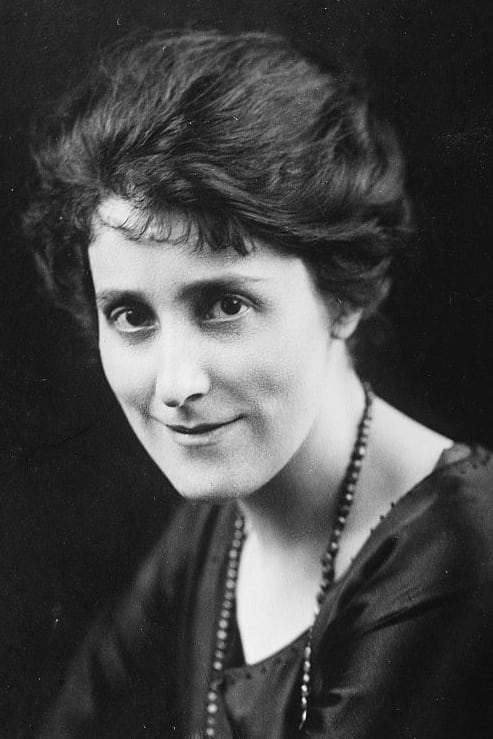
Profile via TMDB · Courtesy of TMDB
Person · Open Library
- Born
- 21 February 1888
- Died
- 28 March 1965
- Works
- 72
Top works
- More Stories to Remember -- Volume II
- A bill of divorcement
- The Scoop / Behind the Screen
- The Mindworm
- Will Shakespeare
via Open Library + Wikidata
Film & TV
Blackheath, London, England, UK
From Wikipedia, the free encyclopedia Clemence Dane was the pseudonym of Winifred Ashton (21 February 1888 – 28 March 1965), an English novelist and playwright. After completing her education, she went to Switzerland to work as a French tutor, but returned home after a year. She studied art in London and Germany. After the First World War, she taught at a girls' school, and began writing. She…
via TMDB
Listeners · Last.fm
- Listeners
- 5
- Total plays
- 37
<a href="https://www.last.fm/music/Clemence+Dane">Read more on Last.fm</a>
Described at
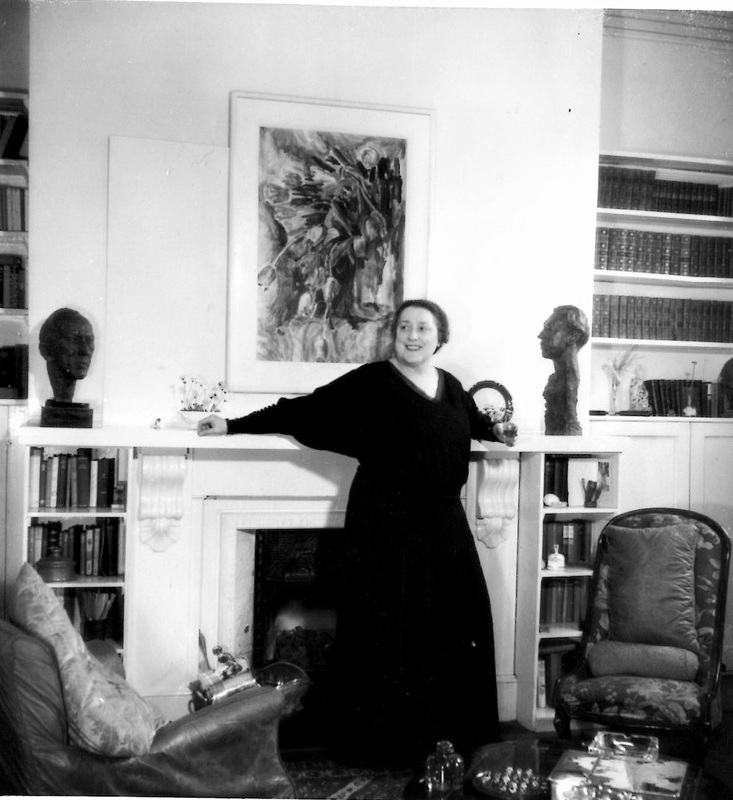
Clemence Dane: The real ‘Madame Arcati’ - The Bread & Roses Theatre
breadandrosestheatre.co.uk →Rose Collis writes about Clemence Dane, the ground-breaking artist that her one-woman-show Wanting the Moon (18-24 Sep) is based on. Clemence Dane (aka Winifred Ashton) is, in my opinion, the ‘invisible woman’ of British 20th century culture. She was described by her great friend Noel Coward as ‘a wonderful unique mixture of artist, writer, games mistress, poet and egomaniac.’ However, that hardly scratches the surface of this polymath’s remarkable achievements: between the two World Wars, she was Britain’s most influential, versatile and successful female writer — novelist, playwright, screenwriter, journalist, sculptor, painter, broadcaster and lecturer. Clemence Dane She was also a hugely important figure in Coward’s life: he said, ‘I never published a book or produced a play since I have known her without first indulging myself in the warming radiance of her enthusiasm and the kindly but nonetheless perceptive shrewdness of her criticism. Yet her significance in his life and career has become woefully diminished in successive books about him. So what else made her so special? Well, amongst other things, she was the first British woman screenwriter ever to win an Oscar — in 1947, for Perfect Strangers. Her first novel, Regiment of Women (1917), about forbidden desire in a girls’ school, was inspired by her own experiences as both pupil and teacher, and directly inspired her friend Radclyffe Hall to write The Well of Loneliness . She was the inspiration for the character of eccentric medium ‘Madame Arcati’ in Coward’s Blithe Spirit , committed most memorably to the screen by the legendary Margaret Rutherford, and most recently interpreted on stage by the equally legendary Angela Lansbury. And, as if all that wasn’t enough, Dane was a highly-regarded script doctor for stage and screen, called on by Hollywood and UK producers and directors, including David O Selznick and Hitchcock. She co-wrote Garbo’s version of Anna Karenina and her first play, A Bill of Divorcement , was made into a film which launched the screen career of Katharine Hepburn. She was also a sculptor and artist of considerable note, specialising in portraits and busts of theatrical and screen subjects, including Shakespeare (which can be seen at Stratford) and Ivor Novello. Her famous portrait and bust of Coward are in the National Portrait Gallery — which is almost the starting point for how Wanting the Moon came to be created. Almost. So, as if often the case, an excellent idea went on the backburner and, as the saying goes, waited for its time to come. In the meantime, in 2012, I returned to the stage as writer/performer in my internationally-acclaimed cabaret-style show Trouser-Wearing Characters (still touring), but had continued to collect material about Dane’s life and work. And so it was, in November 2014, that she featured prominently in my ‘Queer Perspectives’ event at the National Portrait Gallery, holder of several of her art works and many photos of her. It was the enormous interest in her shown by the audience then that helped consolidate my long-held belief that she was ideal material for a quirky, witty solo show. At first glance, I didn’t think we had a great deal in common (especially physically) but, as I went through old and new material I had sourced, I discovered there were crossovers. She was an absolute workaholic. Check. This often proved detrimental to her health, including sufferniggallstones and nervous breakdowns. Check. She often worked on numerous projects in different disciplines simultaneously. Check. She was a lifelong card-carrying feminist. Check. Unimpressed by ‘traditional’ family ties, she valued her friendships and poured as much passion and energy into them as her work. Check. I could string a line here and say how difficult it was to write — but that would be a big fat lie. In truth, it was one of the easiest pieces of work I’ve completed to date. And, with magnificent support from Keith Drinkel, who k
Excerpt from a page describing this subject · 8,289 chars · not written by Vinony
Wikidata facts
- Instance of
- human
- Given name
- Winifred
- Family name
- Ashton
- Gender
- female
- Citizenship
- United Kingdom
- Place of birth
- Blackheath
- Place of death
- London
- Occupation
- actor
- Languages spoken
- English language
- Native language
- English language
- Field of work
- essay
- Image
- Clemence Dane 01.jpg
Show 8 more facts
- date of birth
- 1888-02-21
- date of death
- 1965-03-28
- Commons category
- Clemence Dane
- nominated for
- Academy Award for Best Story
- birth name
- Winifred Ashton
- archives at
- Victoria and Albert Museum
- pseudonym
- Clemence Dane
Sources (3)
via Wikidata · CC0