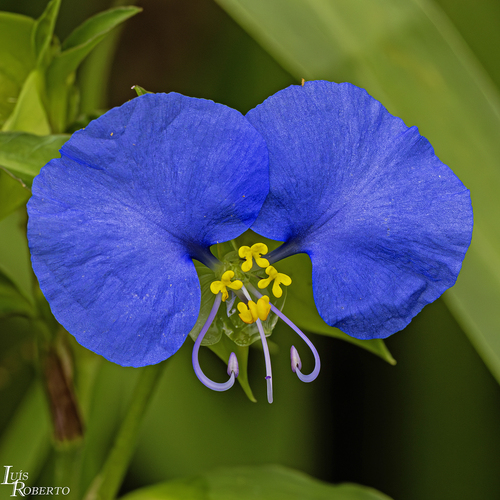
(c) Luís Roberto da Silva, some rights reserved (CC BY-NC), uploaded by Luís Roberto da Silva · cc-by-nc
Commelina
Sign in to saveAlso known as dayflower
Commelina is a genus of approximately 208 species commonly called dayflowers due to the short lives of their flowers. They are less often known as '''widow's tears'. It is by far the largest genus of its family, Commelinaceae. The Swedish taxonomist Carl Linnaeus of the 18th century named the genus after the two Dutch botanists Jan Commelijn and his nephew Caspar, each representing one of the showy petals of Commelina communis''.
Species
whitemouth dayflower
GENUS
- KingdomPlantae
- PhylumTracheophyta
- ClassLiliopsida
- OrderCommelinales
- FamilyCommelinaceae
Common Name: Wandering Jew
via GBIF · Kew POWO
Museum specimens
- Specimen records
- 4,576
- With media
- 2,720
- Family
- Commelinaceae
- Collections
- CICY, INECOL, FCB-BUAP, IEA-UAT, FC-UNAM, GH
- Recorded in
- Mexico, Belice
Research
361 papers- The genus Commelina: Focus on distribution, morphology, traditional medicinal uses, phytochemistry, and Ethno-pharmacological activities: An updated literature review.Heliyon · 2024
- Anti-anxiety Properties of Selected Medicinal Plants.Current pharmaceutical biotechnology · 2022
- Commelina benghalensis (Wandering Jew) Linn exhibits abortifacient potentials and hepatotoxicity in pregnant Wistar rats via elevating indicators of oxidative stress and activating proinflammatory cytokines.Journal of ethnopharmacology · 2023
- Methanol Extract of Commelina Plant Inhibits Oral Cancer Cell Proliferation.Antioxidants (Basel, Switzerland) · 2022
- The complete chloroplast genome assembly of Commelina caroliniana Walter (Commelinaceae).Mitochondrial DNA. Part B, Resources · 2024
via PubMed
Wikidata facts
- Instance of
- taxon
- Parent taxon
- Commelineae
- Image
- Commelina communis 001.jpg
Show 7 more facts
- taxonomic type
- Commelina communis
- taxon rank
- genus
- taxon name
- Commelina
- Commons category
- Commelina
- topic's main category
- Category:Commelina
- taxon common name
- komelina
via Wikidata · CC0
~4 min read
Encyclopedic overview
2 sectionsContents
- Description
- References
Commelina is a genus of approximately 208 species commonly called dayflowers due to the short lives of their flowers. They are less often known as '''widow's tears'. It is by far the largest genus of its family, Commelinaceae. The Swedish taxonomist Carl Linnaeus of the 18th century named the genus after the two Dutch botanists Jan Commelijn and his nephew Caspar, each representing one of the showy petals of Commelina communis.
The dayflowers are herbs that may be either perennial or annual. They are characterised by their zygomorphic flowers and by the involucral bracts called spathes that surround the flower stalks. These spathes are often filled with a mucilaginous liquid. Each spathe houses either one or two scorpioid cymes, with the upper cyme being either vestigial or bearing from one to several typically male flowers, and the lower cyme bearing several flowers. All members of the genus have alternate leaves.
Excerpted from Wikipedia’s “Commelina” article, available under the CC BY-SA 4.0 licence.