Encyclopedia of Life · EOL (see source)
Cordulephya
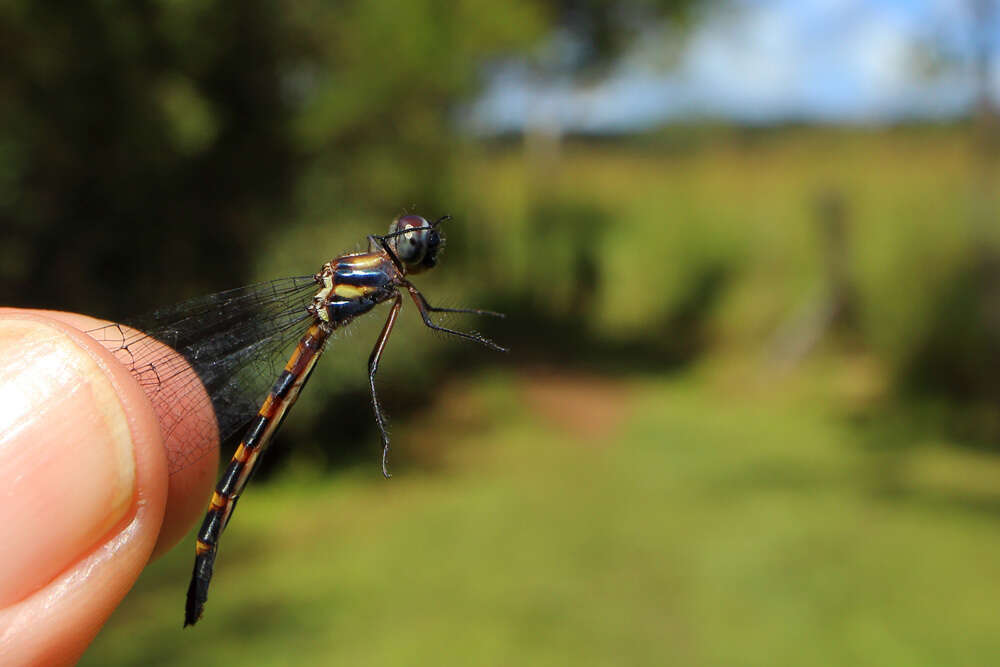
Sign in to saveCordulephya is a genus of dragonflies in the family Austrocorduliidae, endemic to eastern Australia. Species are small to tiny, black or purplish-black with yellowish markings. Unusually for Anisoptera, they rest with their wings folded above the body, similar to some damselflies. They are commonly known as shutwings.
Species
GENUS
- KingdomAnimalia
- PhylumArthropoda
- ClassInsecta
- OrderOdonata
- FamilyCorduliidae
Cordulephya est un genre de libellules de la famille des Synthemistidae (sous-ordre des Anisoptères, ordre des Odonates)[1]. Liste des espèces Selon World Odonata List[1] : Cordulephya bidens Sjöstedt, 1917 Cordulephya divergens Tillyard, 1917 Cordulephya montana Tillyard, 1911 Cordulephya pygmaea Selys, 1870. Notes et références ↑ a et b Martin Schorr, Martin Lindeboom, Dennis Paulson, « World Odonata List », University of Puget Sound (consulté le 2 juillet 2017)
via GBIF
Wikidata facts
- Instance of
- taxon
- Image
- Common Shutwing side view (8742834800).jpg
Show 4 more facts
- taxon name
- Cordulephya
- taxon rank
- genus
- topic's main category
- Category:Cordulephya
- Commons category
- Cordulephya
Sources (1)
via Wikidata · CC0
~1 min read
Encyclopedic overview
3 sectionsContents
- Species
- Taxonomy
- References
Cordulephya is a genus of dragonflies in the family Austrocorduliidae, endemic to eastern Australia. Species are small to tiny, black or purplish-black with yellowish markings. Unusually for Anisoptera, they rest with their wings folded above the body, similar to some damselflies. They are commonly known as shutwings.
==Species== The genus includes four recognised species: Cordulephya bidens – tropical shutwing Cordulephya divergens – clubbed shutwing Cordulephya montana – mountain shutwing Cordulephya pygmaea – common shutwing
Excerpted from Wikipedia’s “Cordulephya” article, available under the CC BY-SA 4.0 licence.
Available in 10 languages
via Wikidata sitelinks · CC0