Image from GBIF · CC BY
Corystes cassivelaunus
Sign in to saveAlso known as Masked crab
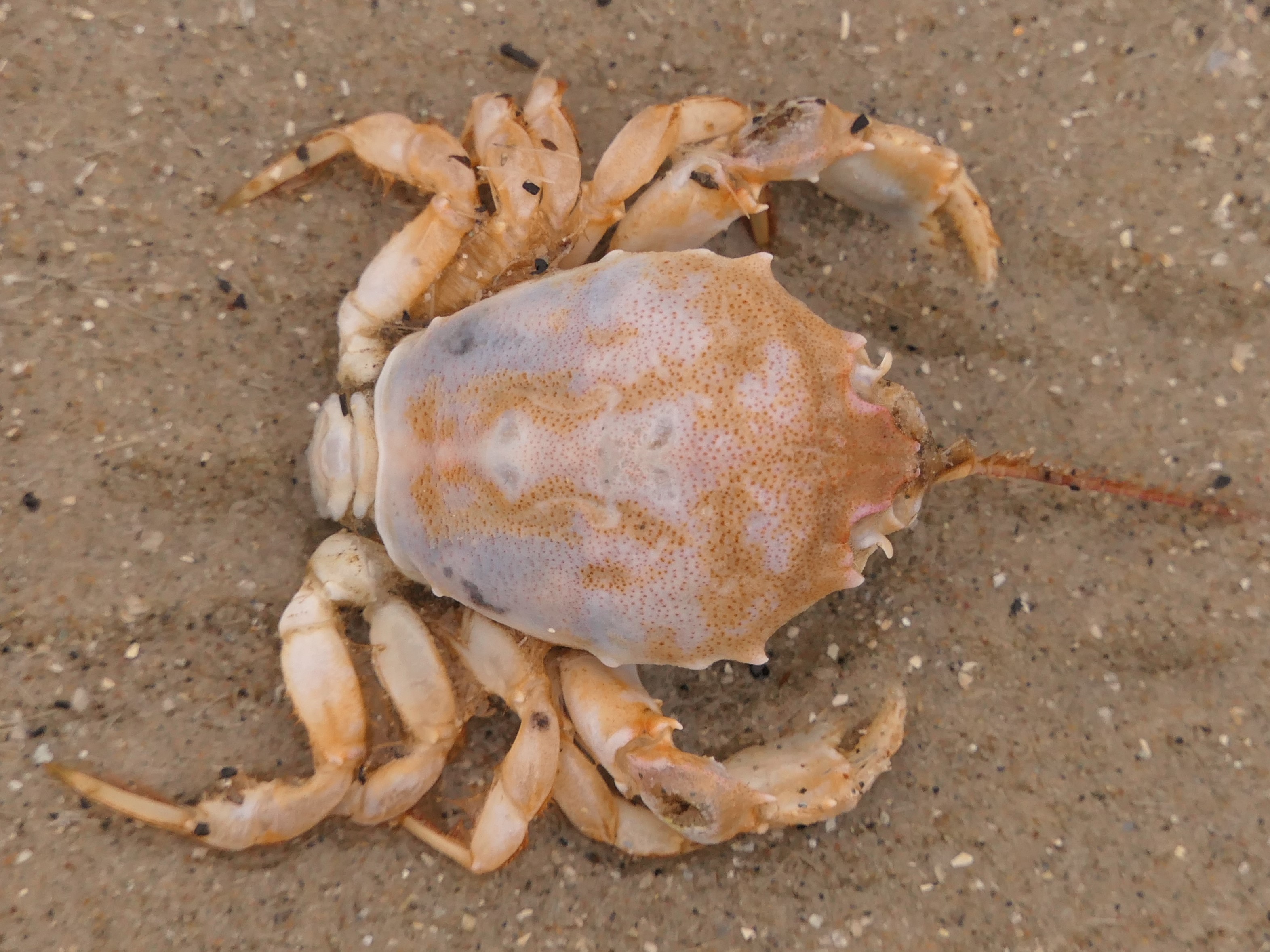
Corystes cassivelaunus, the masked crab, helmet crab or sand crab, is a burrowing crab of the North Atlantic and North Sea from Portugal to Norway, which also occurs in the Mediterranean Sea. It may grow up to long (carapace length). The name "masked crab" derives from the patterns on the carapace which resemble a human face (a case of pareidolia), in a similar manner to heikegani. It is the only species in the genus Corystes.
Species
helmet crab
SPECIES
- KingdomAnimalia
- PhylumArthropoda
- ClassMalacostraca
- OrderDecapoda
- FamilyCorystidae
via GBIF
Museum specimens
- Specimen records
- 221
- With media
- 73
- Family
- Corystidae
- Collections
- CMN, USNM, NHMUK, MZLU, RBINS-SCIENTIFIC HERITAGE, GNM
- Recorded in
- United Kingdom, Italy, Sweden, Portugal, Netherlands, Belgium, Unitde Kingdom, Denmark
Wikidata facts
Show 6 more facts
- taxon name
- Corystes cassivelaunus
- taxon rank
- species
- Commons category
- Corystes cassivelaunus
- Commons gallery
- Corystes cassivelaunus
- taxon common name
- Masked crab
- regional conservation status
- Near Threatened
Sources (1)
via Wikidata · CC0
~1 min read
Encyclopedic overview
1 sectionsContents
- References
Corystes cassivelaunus, the masked crab, helmet crab or sand crab, is a burrowing crab of the North Atlantic and North Sea from Portugal to Norway, which also occurs in the Mediterranean Sea. It may grow up to long (carapace length). The name "masked crab" derives from the patterns on the carapace which resemble a human face (a case of pareidolia), in a similar manner to heikegani. It is the only species in the genus Corystes.
C. cassivelaunus lives buried in sandy substrates, where it feeds on the infaunal invertebrates such as polychaete worms and bivalve molluscs. It uses its two antennae to form a breathing tube that allows oxygenated water down into the substrate. The chelipeds of males are much longer than the body, while those of females are only about as long as the carapace.
Excerpted from Wikipedia’s “Corystes cassivelaunus” article, available under the CC BY-SA 4.0 licence.
Gallery (2)
Available in 9 languages
via Wikidata sitelinks · CC0