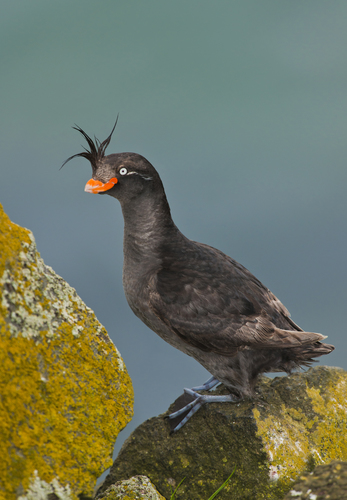
(c) ivanparr, all rights reserved, uploaded by ivanparr
OverviewAI-generated
The Crested Auklet (*Aethia cristatella*) is a species of bird within the family Alcidae and order Charadriiformes. It belongs to the class Aves and phylum Chordata, with the genus *Aethia* serving as its parent taxon. The species was described by Pallas in 1769 and is currently accepted in taxonomic records. Other common names for this organism include carfil copog, Schopfalk, and Mérgulo empenachado.
Physically, the Crested Auklet has a wingspan of 45 and a mass of 54.2. Its habitat is marine. The IUCN Red List assessed the species as Least Concern in 2020. The taxon is also referred to by the short name *A. cristatella*.
Synthesized by Vinony from 27 facts across 5 sources: Wikidata, iNaturalist, WoRMS, IUCN Red List, Vinony graph. Generated from structured data (not the Wikipedia text) and checked against those facts — may still contain errors.
Species
Least Concerncrested auklet
Species
- PhylumChordata
- ClassAves
- OrderCharadriiformes
- FamilyAlcidae
via IUCN
Wikidata facts
Show 7 more facts
- taxon rank
- species
- IUCN conservation status
- Least Concern
- Commons category
- Aethia cristatella
- taxon name
- Aethia cristatella
- taxon common name
- mérgulo-de-penachos
- wingspan
- 45
- short name
- A. cristatella
Sources (3)
via Wikidata · CC0
~13 min read
Encyclopedic overview
The crested auklet (Aethia cristatella) is a small seabird of the family Alcidae, distributed throughout the northern Pacific and the Bering Sea. The species feeds by diving in deep waters, eating krill and a variety of small marine animals. It nests in dense colonies of up to 1 million individuals in the Bering Sea and the Sea of Okhotsk. It often breeds in mixed-species colonies with the least auklet, a smaller congener.
The species is known for its sexual ornaments, found in both males and females. These include colorful plumage with a forehead crest, a striking scent recalling citrus fruit, and a loud trumpet call, all of which appear to have evolved through sexual selection. The total population is around 6 million, almost half in North America. It is in general considered to be of least concern, though the Alaskan population faces additional threats from predation and oil spills.
Excerpted from Wikipedia’s “Crested Auklet” article, available under the CC BY-SA 4.0 licence.