Encyclopedia of Life · EOL (see source)
Cryptochetidae
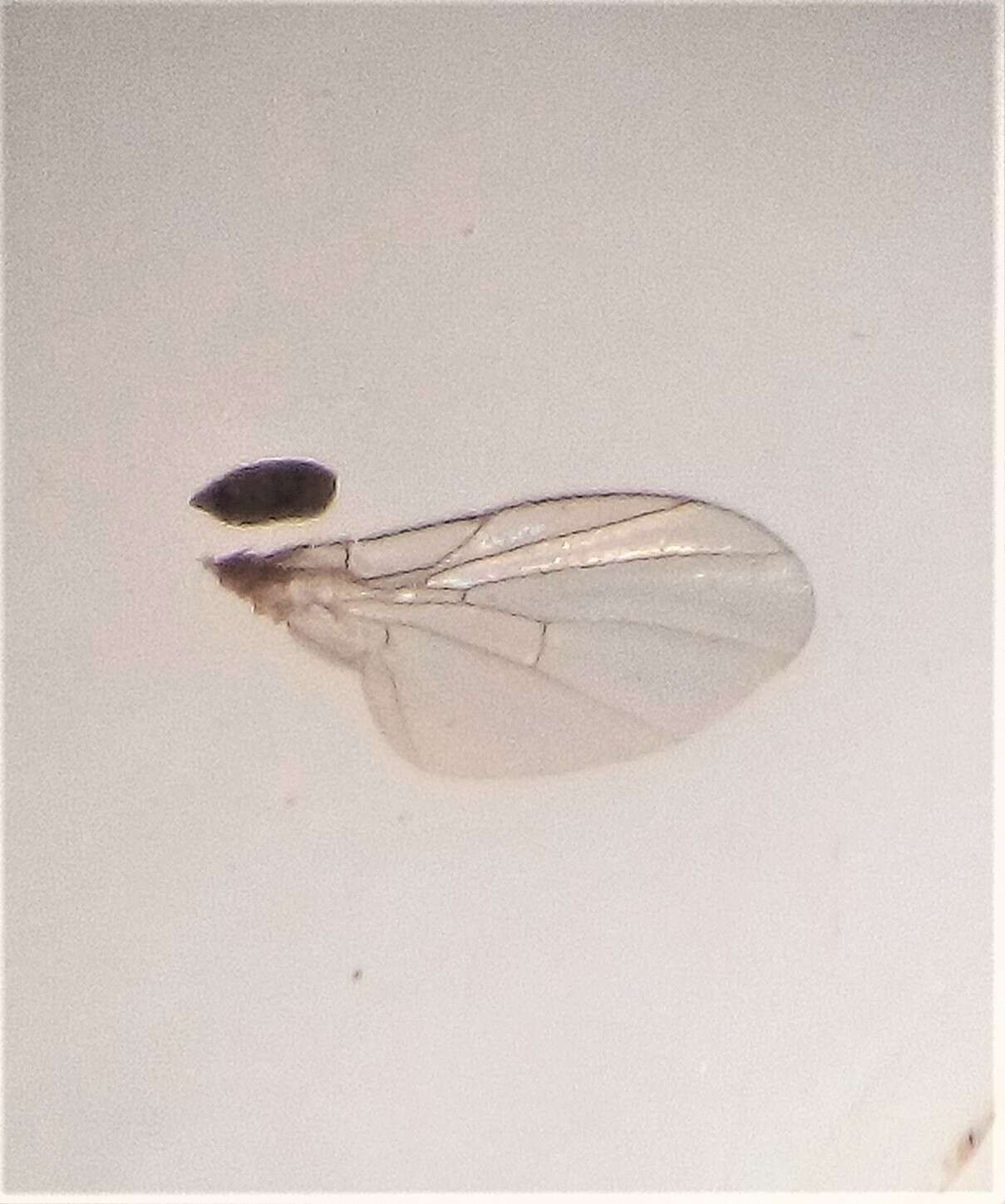
Sign in to saveThe Cryptochetidae are a small family of tiny flies (generally 2 to 4 mm long). Some twenty to thirty species are known. Generally they are metallic blue black, stoutly built, with the head broad and high and with clear wings. Like other species in the superfamily Lonchaeoidea, the Cryptochetidae have antennae with a cleft in the second segment. Unlike practically all Schizophora however, they lack an arista, or if they do have one, it is too small to distinguish with any confidence. The family name refers to this unusual distinction; "Cryptochetidae" literally means "those with hidden br
Species
FAMILY
- KingdomAnimalia
- PhylumArthropoda
- ClassInsecta
- OrderDiptera
- FamilyCryptochetidae
The Cryptochetidae are a small family of tiny flies (generally 2 to 4 mm long). Some twenty to thirty species are known. Generally they are metallic blue black, stoutly built, with the head broad and high and with clear wings.[1] Like other species in the superfamily Lonchaeoidea, the Cryptochetidae have antennae with a cleft in the second segment. Unlike practically all Schizophora however, they lack an arista, or if they do have one, it is too small to distinguish with any confidence. The family name refers to this unusual distinction; "Cryptochetidae" literally means "those with hidden bristles". The adult flies also are unusual among insects in that they have only a single pair of abdominal spiracles — this is not a serious physiological challenge in such small insects. Again in resemblance to other Lonchaeoidea, the Cryptochetidae do not have more than one proclinate orbital bristle on each side. The frons is densely setulose. The costa has a break at the end of the subcosta. The sixth abdominal sternite in the male is symmetrical and it has an 8th tergite. In the female the seventh tergite and sternite are fused, and the eighth segment is elongated. The larvae are of biologic
via GBIF
Museum specimens
- Specimen records
- 42
- Family
- Cryptochetidae
- Collections
- AM, EMEC
- Recorded in
- South Africa, Australia, United States
Wikidata facts
- Instance of
- taxon
- Parent taxon
- Ephydroidea
- Image
- Cryptochetum iceryae.jpg
Show 7 more facts
- taxon rank
- family
- taxon name
- Cryptochetidae
- Commons category
- Cryptochetidae
- topic's main category
- Category:Cryptochetidae
- Commons gallery
- Cryptochetidae
- taxon common name
- Scale Parasite Flies
- diel cycle
- diurnality
Sources (2)
via Wikidata · CC0
~2 min read
Encyclopedic overview
2 sectionsContents
- Genera
- References
The Cryptochetidae are a small family of tiny flies (generally 2 to 4 mm long). Some twenty to thirty species are known. Generally they are metallic blue black, stoutly built, with the head broad and high and with clear wings. Like other species in the superfamily Lonchaeoidea, the Cryptochetidae have antennae with a cleft in the second segment. Unlike practically all Schizophora however, they lack an arista, or if they do have one, it is too small to distinguish with any confidence. The family name refers to this unusual distinction; "Cryptochetidae" literally means "those with hidden bristles". The adult flies also are unusual among insects in that they have only a single pair of abdominal spiracles — this is not a serious physiological challenge in such small insects.
Again in resemblance to other Lonchaeoidea, the Cryptochetidae do not have more than one proclinate orbital bristle on each side. The frons is densely setulose. The costa has a break at the end of the subcosta. The sixth abdominal sternite in the male is symmetrical and it has an 8th tergite. In the female the seventh tergite and sternite are fused, and the eighth segment is elongated.
Excerpted from Wikipedia’s “Cryptochetidae” article, available under the CC BY-SA 4.0 licence.