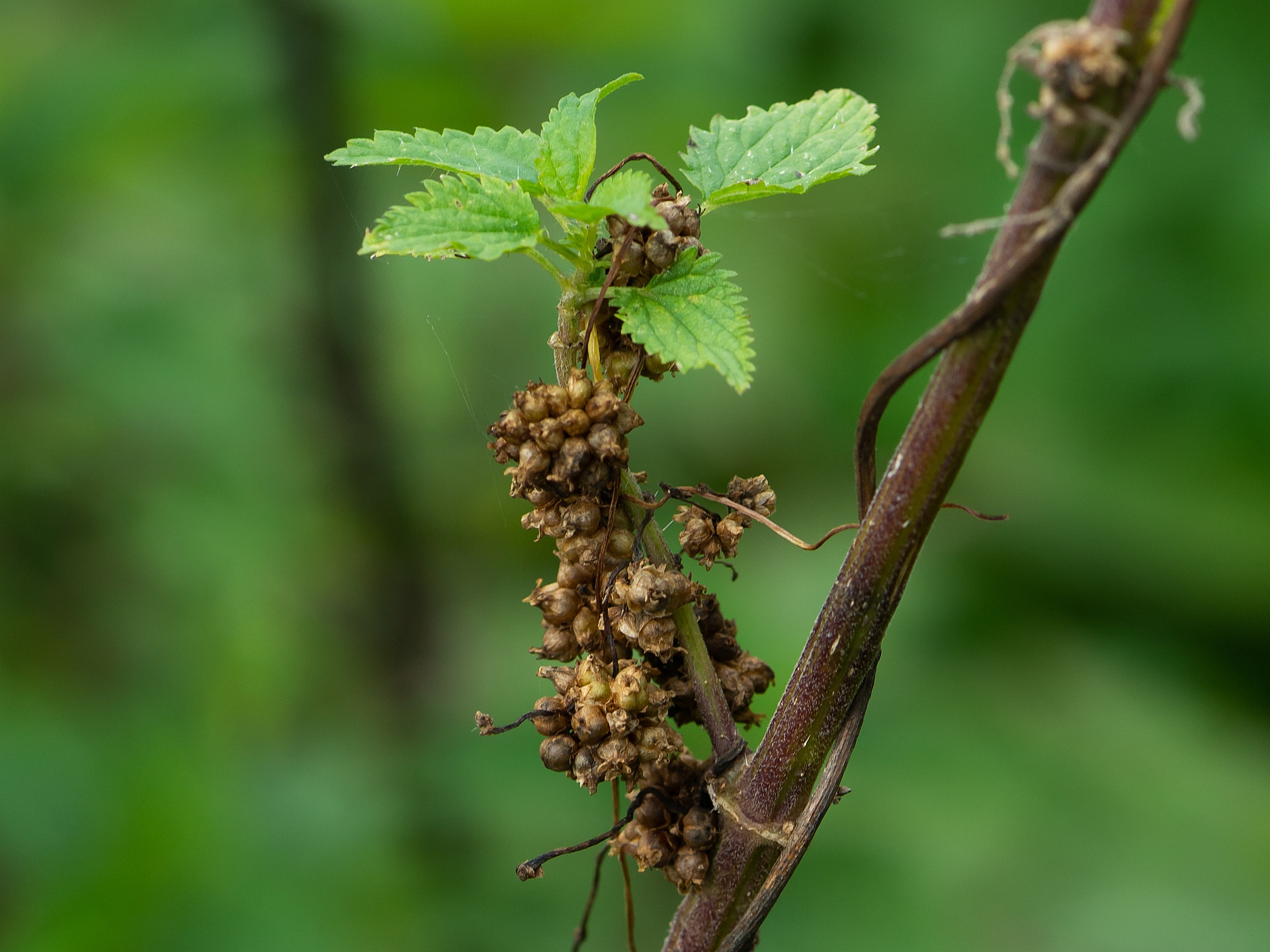
Image from GBIF · CC BY-NC
OverviewAI-generated
Cuscuta europaea is a species of herbaceous plant within the family Convolvulaceae. It belongs to the genus Cuscuta and is classified under the order Solanales, class Magnoliopsida, and phylum Tracheophyta. The species is part of the kingdom Plantae. Common names for this taxon include greater dodder, Europäische Seide, Nessel-Seide, and Cuscute d'Europe. Its inflorescence consists of glomerules, and it has use as a medicinal plant.
The taxon range for Cuscuta europaea includes China, Xinjiang, and the Tibet Autonomous Region. Records indicate 41,410 occurrences for this species.
Synthesized by Vinony from 22 facts across 4 sources: Wikidata, GBIF, Gbif Occ, Vinony graph. Generated from structured data (not the Wikipedia text) and checked against those facts — may still contain errors.
Species
SPECIES
- KingdomPlantae
- PhylumTracheophyta
- ClassMagnoliopsida
- OrderSolanales
- FamilyConvolvulaceae
via GBIF
Wikidata facts
- Instance of
- taxon
- Subclass of
- herbaceous plant
- Parent taxon
- Cuscuta
- Image
- Cuscuta europaea bgiu.jpg
- Has use
- medicinal plant
Show 9 more facts
- taxon rank
- species
- taxon name
- Cuscuta europaea
- Commons category
- Cuscuta europaea
- taxon common name
- 欧洲菟丝子
- Commons gallery
- Cuscuta europaea
- inflorescence
- glomerules
- taxon range
- Tibet Autonomous Region
- short name
- C. europaea
Sources (3)
via Wikidata · CC0
~3 min read
Encyclopedic overview
Cuscuta europaea, the greater dodder or European dodder, is a parasitic plant native to Europe, which belongs to the family Convolvulaceae, but was formerly classified in the family Cuscutaceae. It grows on Asteraceae, Cannabaceae, Amaranthaceae, Fabaceae, Urticaceae and other herbaceous plants, including garden plants such as Coleus and Impatiens, and more occasionally on Humulus. It is a notable parasite of lucerne (Medicago sativa). In many regions, including the Nepal Eastern Himalayas, this species are used as traditional medicine to treat hepatic diseases.
Description
Excerpted from Wikipedia’s “Cuscuta europea” article, available under the CC BY-SA 4.0 licence.