
Daniel Naroditsky
Sign in to saveAlso known as Danya Naroditsky, Daniel Aaron Naroditsky
Daniel Aaron "Danya" Naroditsky was an American chess grandmaster, commentator, and content creator. During his career, he was widely considered one of the best speed chess players in the world and was consistently ranked among the top 25 players. His major tournament wins include the 2007 World Youth Championship, the 2013 U.S. Junior Championship, and the 2025 U.S. Blitz Championship. He became one of the youngest published authors in chess history at age 14 and earned the chess grandmaster title at age 17.
OverviewAI-generated
Daniel Naroditsky was an American chess player born on 9 November 1995 in San Mateo. He held the titles of Grandmaster, International Master and FIDE Master, and had an Elo rating of 2647. He was educated at Stanford University and wrote for Chess Life and The New York Times. Naroditsky spoke English and Russian, and died on 19 October 2025 in Charlotte.
Synthesized by Vinony from 22 facts across 2 sources: Wikidata, Firecrawl. Generated from structured data (not the Wikipedia text) and checked against those facts — may still contain errors.
In the Vinony graph
Vinony's link graph records 186 inbound references to Daniel Naroditsky, and connects out to FIDE titles, YouTube and Grandmaster.
Vinony files it under 1995 births, 2025 deaths and 21st-century American chess players.
Vinony links it to 29 Wikipedia language editions.
Wikipedia views (30d)
50,902 totalvia Wikimedia Pageviews API
Key facts
- Born
- ( 1995-11-09 ) November 9, 1995, San Mateo, California , U.S.
- Died
- October 19, 2025 (2025-10-19) (aged 29), Charlotte, North Carolina , U.S.
- Alma mater
- Stanford University
- Country
- United States
- Title
- Grandmaster (2013)
- Peak rating
- 2647 (May 2017)
- Channel
- GMNaroditsky
- Followers
- 338,000 (2026)
- Handle
- @GmNaroditsky
- Display name
- Daniel Naroditsky
- Subscribers
- 529,000 (2026)
- Views
- 98.8 million (2026)
via Wikipedia infobox
Described at
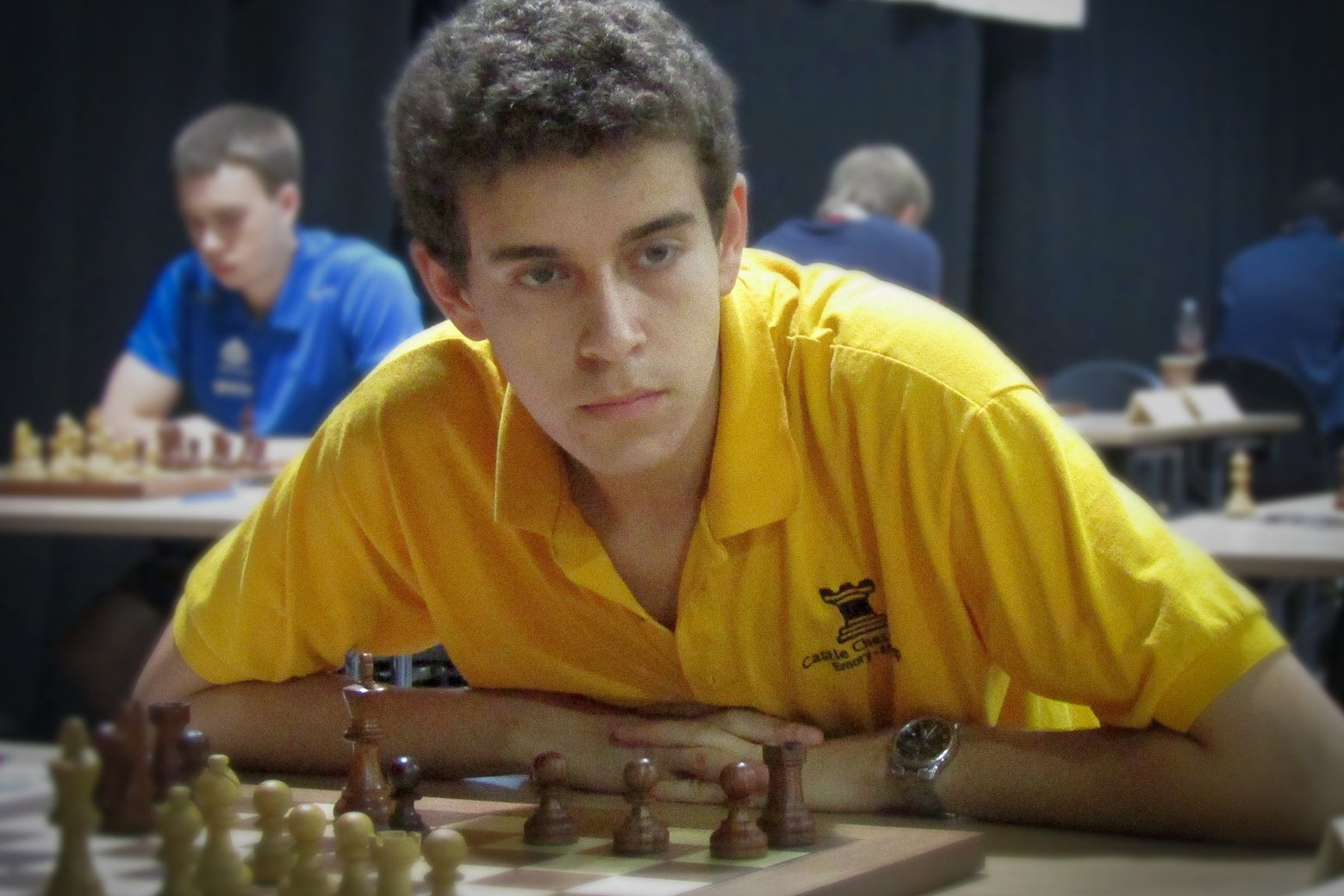
How Twitch and chess culture collided in the tragic tale of Daniel Naroditsky and Vladimir Kramnik.
Daniel Naroditsky was a young, popular chess streamer. Then his childhood hero accused him of cheating online—and his world flipped over.
slate.com →Only Slate Plus members can gift Slate stories. Become a member to share 10 free articles a month. Only Slate Plus members can gift Slate stories. Become a member to share 10 free articles a month. In his last Twitch stream, three days before his death at age 29 on Oct. 19, chess grandmaster Daniel Naroditsky was typically thoughtful and articulate—but there seemed to be something bothering him. For the past year, Naroditsky had been tormented by his childhood hero, former world champion Vladimir Kramnik, who insisted that Naroditsky was cheating while he played online. Chess computers (or “engines”) have been better at the ancient game than any human for more than two decades, and now many high-level engines are publicly available. Cheating in online games is easy enough. In slower games, players can simultaneously play their opponent’s moves against a computer in a separate window, and software exists to show computer-recommended moves overlaid on one’s own games, which saves needed time in faster formats. Algorithms on popular platforms like Chess.com and Lichess.org will quickly catch players making excessive use of engines, but employing them selectively can give cheaters a decisive and likely undetectable advantage. The comment that got under Naroditsky’s skin, however, was not another echo of Kramnik’s accusations. Rather it was a supporter saying that he should just brush the whole thing off. Naroditsky, measuring out his frustrated words while dueling other grandmasters on Chess.com in three-minute blitz games, explained that the number of people who believed Kramnik, while a minority, was “catastrophically, existentially high to the point where this is an imminent and incredibly sticky threat to my career.” He detailed the rationale behind his reputation-defending actions as if explaining the theory behind a chess move while he traded victories with similarly strong players. “Don’t let the people saying ‘Don’t let it get to you’ get to you,” he chuckled at one point. No cause of death has been announced. North Carolina’s Charlotte-Mecklenburg Police Department is investigating it as a possible overdose or suicide. Much of the chess community is pointing the blame for Naroditsky’s passing squarely at Kramnik, who has since been banned for life by Chess.com, due to his persistent bullying, often based on flimsy evidence, of Naroditsky and many others. Kramnik has denied any responsibility for Naroditsky’s death and even claims he never actually accused Naroditsky of cheating—rather, he claims that he was merely asking reasonable questions about his performance. That may be literally true, but it is difficult to watch Kramnik’s numerous videos on Naroditsky’s play, analysis, eye movements, and the like without concluding that Kramnik is implying that Naroditsky is cheating. Kramnik has also filed a complaint with the Geneva public prosecutor regarding “hundreds of terrifying private messages and public comments” he has received since Naroditsky’s death. In chess, a teacher can explain their moves—something Naroditsky was arguably the best at among YouTube creators—but even if the student doesn’t understand, the proof is in the result of the game. In the court of online commenters and murmurs among fellow players, there is no such final arbiter. “It wasn’t just Kramnik,” Dina Belenkaya, who holds the title of woman grandmaster and is a fellow streamer, told Slate. “It was all these other people who Danya was really looking up to, and they were all kind of his heroes, and they all turned against him.” That a former world champion like Kramnik was able to stir up agreement among some social media and message-board posters isn’t surprising. More perplexing is that he was able to do so among some of the game’s top players, who at least played footsie with the notion that Naroditsky cheated, despite speculative-at-best reasoning. The accuser’s key points included that Naroditsky sometimes looked to the side while he
Excerpt from a page describing this subject · 16,898 chars · not written by Vinony
Wikidata facts
- Instance of
- human
- Given name
- Daniel
- Gender
- male
- Citizenship
- United States
- Place of birth
- San Mateo
- Place of death
- Charlotte
- Occupation
- chess player
- Languages spoken
- Russian
- Sport
- chess
- Country for sport
- United States
- Image
- Daniel Naroditsky 2012.JPG
Show 10 more facts
- Commons category
- Daniel Naroditsky
- title of chess person
- FIDE Master
- date of birth
- 1995-11-09
- Elo rating
- 2619
- name in native language
- Daniel Naroditsky
- has written for
- The New York Times
- social media followers
- 500000
- date of death
- 2025-10-19
- number of viewers/listeners
- 93426942
Sources (15)
via Wikidata · CC0
~11 min read
Encyclopedic overview
Daniel Aaron "Danya" Naroditsky (November 9, 1995 – October 19, 2025) was an American chess grandmaster, commentator, and content creator. He was widely considered one of the best speed chess players in the world and was consistently ranked among the top 25 players. His major tournament wins include the 2007 World Youth Championship, the 2013 U.S. Junior Championship, and the 2025 U.S. Blitz Championship. He became one of the youngest published authors in chess history at age 14 and earned the chess grandmaster title at age 17.
Naroditsky participated in the US Chess Championship five times, where he defeated world No. 2 Fabiano Caruana in 2021. One of his biggest achievements was tying for first place in the preliminary stage of the World Blitz Championship in 2024. In online chess, he was a top player in blitz and bullet, having been the No. 1 rated player at times in both formats on Chess.com and Lichess. He regularly finished in the top 3 in both the Chess.com Bullet and Hyperbullet Championships.
Excerpted from Wikipedia’s “Daniel Naroditsky” article, available under the CC BY-SA 4.0 licence.