In the Vinony graph
Vinony's link graph records 15 inbound references to David Mackay, and connects out to Spain, England and Barcelona.
Vinony files it under 1933 births, 2014 deaths and 20th-century English architects.
Vinony links it to 6 Wikipedia language editions.
Person · Open Library
- Born
- 1920
- Works
- 126
Top works
- FLOCK OF WORDS
- Shopping
- Breakthrough. Second Wordmaker
- Breakthrough. My Sentence Maker
- My Sentence Maker - Replacement Word Cards
via Open Library + Wikidata
Listeners · Last.fm
- Listeners
- 3,789
- Total plays
- 20,932
<a href="https://www.last.fm/music/David+Mackay">Read more on Last.fm</a>
Described at
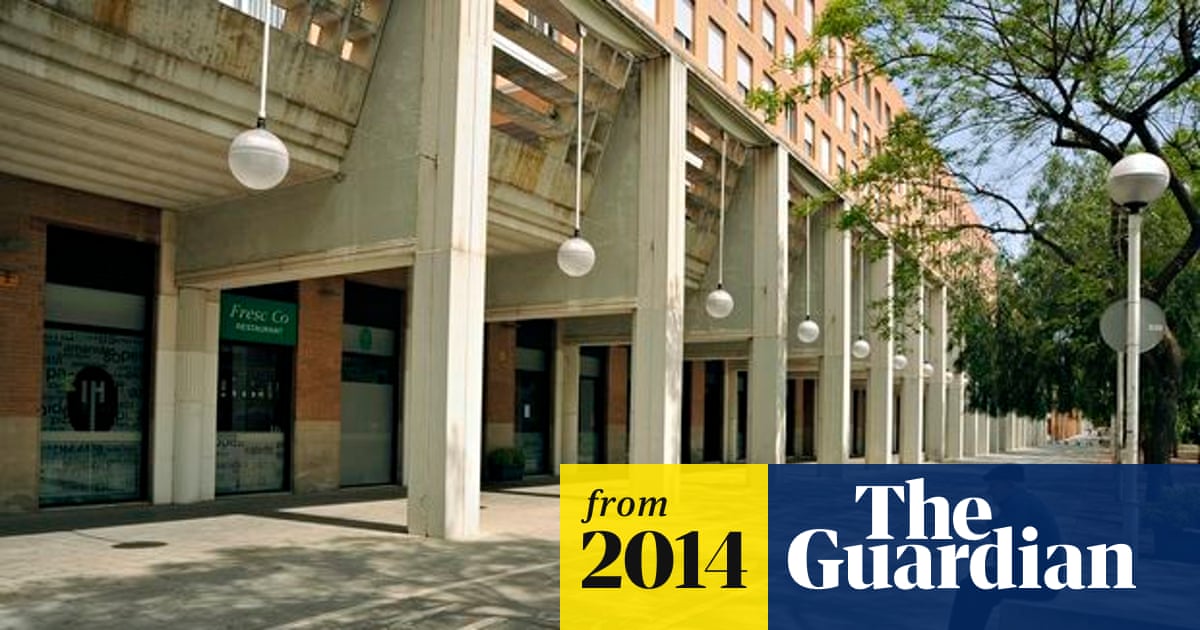
David Mackay obituary | Architecture | The Guardian
Architect in the Barcelona practice that designed the athletes’ village and harbour for the city’s Olympic Games in 1992
theguardian.com →The Olympic village in Barcelona, which involved creating a new seafront neighbourhood to replace abandoned factories. Photograph: Tano Doria The Olympic village in Barcelona, which involved creating a new seafront neighbourhood to replace abandoned factories. Photograph: Tano Doria David Mackay, who has died aged 80, was a partner in the Barcelona architecture practice MBM (Martorell, Bohigas & Mackay), which designed the athletes’ village and harbour for Barcelona’s 1992 Olympic Games and gained an international reputation for repairing and shaping cities. The career of the architect at the heart of the urban regeneration of Barcelona started in the 1960s, when he took a stand against the neglect and speculation that ravaged the city under Franco’s dictatorship. It blossomed in the 80s, when the Socialist party that ran the city council responded to pressure from below to create more public space and convert post-industrial wastelands to housing and social use. The youngest of three brothers, Mackay spent his childhood in a series of boarding schools in England, Ireland and Scotland. His parents, Sonia and Fred, lived in India and Ghana (then the Gold Coast), where his father was a colonial administrator. Mackay’s peripatetic early life made him feel he was from nowhere in particular. He would say that he contained some of all those countries and a large measure of Catalonia , where he lived for more than 50 years. After qualifying at North London Polytechnic in 1958, he moved to Barcelona with Roser Jarque, his Catalan wife, whom he had met when both were studying in London and married in 1957. In 1959 he started working with Josep Martorell and Oriol Bohigas, becoming a partner in 1962. The two architects, both eight years older than Mackay, were dedicated to introducing to Catalonia the ideas of the earlier modern movement – or rather, bringing them back: there had been a brief flowering of rationalist, social architecture between 1931 and 1936 under the Second Republic and before the civil war. In a city famed for its exotic Art Nouveau buildings, MBM followed a less glamorous path. The architects responded on social and ethical grounds to the uncontrolled speculative building boom of the 60s that destroyed much of Barcelona. Hostile to what Bohigas called the “personalised exhibitionism” of many famous architects, they fought for proper respect for, as Mackay defined it, a building’s “given environment”. The 60s saw the building of many of their housing projects, such as the huge block on the otherwise bleak Meridiana Avenue, the main entry to Barcelona from the north. Mackay told me in 1998: “Architects have given up too easily their role in the architecture of cities, of the public space. It has been left to planning ... Most public space is addressed by engineers, trying to get a car somewhere as quickly as possible.” MBM emphasised the social role of architecture: not just flashy buildings plonked anywhere, but the design of parks, such as the practice’s magnificent Creueta del Coll in the 80s, libraries, schools and housing, which created space for pedestrians. In more than 500 highly varied projects, the majority in Barcelona, the architects did not insist on leaving their own stamp, but sought to respond to the social requirements of each commission. Mackay argued: “We’re against urban planning, as it’s known. There’s a space between urban planning and architecture, which is urban design.” MBM combated the then common zoning that has left many city centres empty at night, devoid of residents. They wanted a city where people could shop, live and work in any of its zones. Modern architecture, they believed, could be used to affirm creatively the identity of a city. Though never a member of any political party, Mackay took part in the 60s and 70s movement against the Franco dictatorship, dodging the riot police on demonstrations and helping activists to contact the foreign press. With his children packed in
Excerpt from a page describing this subject · 9,084 chars · not written by Vinony
Wikidata facts
- Instance of
- human
- Given name
- David
- Gender
- male
- Citizenship
- United Kingdom
- Place of birth
- Eastbourne
- Place of death
- Barcelona
- Occupation
- architect
- Languages spoken
- English language
Show 4 more facts
- date of death
- 2014-11-12
- date of birth
- 1933-12-25
- described at URL
- www.theguardian.com/artanddesign/2014/nov/23/david-mackay
- P12749
- Geissorhiza
Sources (4)
via Wikidata · CC0