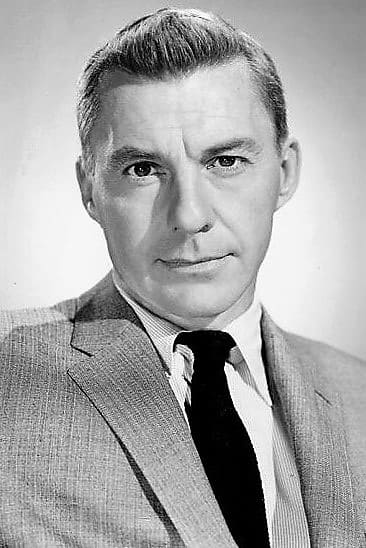
Profile via TMDB · Courtesy of TMDB
Person · Open Library
- Born
- 1949
- Works
- 44
Top works
- The California landlord's law book
- The California landlord's law book
- Beat your ticket
- California Landlord's Law Book, The: Evictions
- The California landlord's law book
via Open Library + Wikidata
Film & TV
Traverse City - Michigan - USA
David Wayne (January 30, 1914 – February 9, 1995) was an American actor with a career spanning nearly 50 years. Wayne was born Wayne James McMeekan in Traverse City, Michigan, the son of Helen Matilda (née Mason) and John David McMeekan. He grew up in Bloomingdale, Michigan. Wayne's first major Broadway role was Og the leprechaun in Finian's Rainbow, for which he won the Theatre World Award and…
Known for
- Broadway's Lost Treasures III: The Best of The Tony Awards — Grandpère Bonnard (segment "The Happy Time") (archive footage)2005
- Poker Alice — Amos1987
- The Survivalist — Dub Daniels1987
- Masters of Photography - Edward Steichen — Narrator (voice)1986
- The Golden Girls — Big Daddy1985
- Finders Keepers — Stapleton1984
- Crazy like a Fox — Jennings Hyde1984
- Finder of Lost Loves — Professor Wheeler1984
- Murder, She Wrote — Cyrus Leffingwell1984
- St. Elsewhere — George Wyler1982
via TMDB
Listeners · Last.fm
- Listeners
- 670
- Total plays
- 11,396
Tags
David Wayne (January 30, 1914 – February 9, 1995) was an American actor with a career spanning nearly 50 years. He attended Western Michigan University then worked as a statistician in Cleveland where he joined a Shakespeare repertory company. Two years later he had a minor role in "The American Way" in New York. He was rejected by the army in World War II but volunteered as an ambulance driver in North Africa. He returned to critical acclaim on <a href="https://www.last.fm/music/David+Wayne">Re
Described at

David Wayne - The Official Masterworks Broadway Site
masterworksbroadway.com →Wayne James McMeekan’s father was an insurance executive in Bloomingdale, Michigan; his mother died when he was only four. After attending Western Michigan University he worked as a statistician in Cleveland, Ohio, where The Cleveland Play House was (and remains) a vibrant center of theatrical activity. He auditioned for, and won, the part of Touchstone the clown in Shakespeare’s As You Like It , and performed in front of an audience for the first time at the 1935 Cleveland Exposition. By April 1938 David Wayne was in New York City making a Broadway debut in the ensemble of a melodrama, Escape This Night . It lasted no more than eleven performances, but it was the beginning of a remarkably steady stage career. Wayne’s next appearance, in Dance Night , was even more of a flop, but it was directed by Lee Strasberg who undoubtedly recognized his talent. He was given a small role in The American Way (1939), an extravaganza directed by George S. Kaufman, which ran for 244 performances and brought Wayne his first critical praise. Turned down by the U.S. Army at the outbreak of World War II, Wayne volunteered as an ambulance driver for the British Red Cross in North Africa; he was even reported mistakenly as having been killed in the German victory at the Battle of Tobruk. Upon his return to New York, his career picked up significantly: after several months in Lehar’s The Merry Widow and a couple of Broadway fizzles, in 1947 he landed the part of Og the Leprechaun in the Burton Lane/Yip Harburg musical, Finian’s Rainbow . It ran for over a year and a half, and brought David Wayne two very prestigious honors, the first-ever Tony Award® for Best Featured Actor in a Musical and the Theatre World Award. Wayne’s next play, Mister Roberts (1948), in which he originated the role of Ensign Pulver, starred Henry Fonda and was a huge hit. It won six Tony Awards®, including Best Play, and ran for three years. Somewhere along the way though, Wayne was replaced by Larry Blyden, for David Wayne was off to Hollywood and film stardom. He first appeared in the offbeat romance Portrait of Jennie (1948), then took on one of his most indelible roles, the caddish composer Kip Lurie in the Spencer Tracy/Katherine Hepburn classic Adam’s Rib (1949). He made three or four movies a year for the next five years, in roles ranging from the mud-caked infantryman in Up Front (1951) to the child murderer in the remake of M (1951) to the unfortunate small-town barber in Wait Till the Sun Shines Nellie (1953), and had the unique distinction of appearing in four films with Marilyn Monroe ( As Young as You Feel 1951, We’re Not Married 1952, O. Henry’s Full House 1952, How to Marry a Millionaire 1953). Another of his memorable roles was theatrical impresario Sol Hurok in Tonight We Sing (1953). In 1953 David Wayne was back on Broadway, playing the Okinawan interpreter Sakini in the Pulitzer Prize-winning Teahouse of the August Moon , and winning his second Tony Award®, this time for 1954’s Best Actor in a Play. He split his time for the rest of the 1950s among Broadway ( The Ponder Heart 1956, The Loud Red Patrick 1956, Say, Darling 1958, Send Me No Flowers 1960), Hollywood ( The Tender Trap 1955, and most notably playing Joanne Woodward’s beleaguered husband in The Three Faces of Eve in 1957), and television appearances. David Wayne acted in an exceptional theatrical event on Broadway in 1963, a revival of G.B. Shaw’s Too True to Be Good , with an all-star cast including Lillian Gish, Sir Cedric Hardwicke, Eileen Heckart, Glynis Johns, Cyril Ritchard, Ray Middleton, and Robert Preston. The director was Albert Marre. This led to a exceptional series of five plays in repertory, by playwrights like Arthur Miller and Eugene O’Neill, presented by the Lincoln Center Repertory Company at the ANTA Washington Square Theatre in 1964 and 1965, with directors Elia Kazan, José Quintero, and Harold Clurman. Wayne was in the cast of four of these: After the Fall , Marco Millions
Excerpt from a page describing this subject · 6,796 chars · not written by Vinony
Wikidata facts
- Instance of
- human
- Given name
- James
- Gender
- male
- Citizenship
- United States
- Place of birth
- Traverse City
- Place of death
- Santa Monica
- Occupation
- actor
- Educated at
- Western Michigan University
- Languages spoken
- English language
- Native language
- English language
- Award
- Grammy Hall of Fame
- Image
- David Wayne in Adams Rib trailer.jpg
- Residence
- Traverse City
Show 12 more facts
- date of birth
- 1914-01-30
- date of death
- 1995-02-09
- cause of death
- lung cancer
- manner of death
- natural causes
- Commons gallery
- David Wayne
- Commons category
- David Wayne
- nominated for
- Tony Award for Best Actor in a Musical
- birth name
- Wayne James McMeekan
- start of work period
- 1938-00-00
- time period
- 20th century
- described at URL
- www.masterworksbroadway.com/artist/david-wayne-0
- writing language
- English language
Sources (8)
via Wikidata · CC0